
Temnodontosaurus — large Early Jurassic ichthyosaur
Temnodontosaurus was a large marine reptile of the early Jurassic known from England and Germany. Noted for its long jaws, enormous eyes and whale-sized body, it was an apex predator of shallow seas.
Overview
Temnodontosaurus was a genus of ichthyosaur that swam the seas of the Early Jurassic, roughly the time interval often dated about 196–190 million years ago. As an early member of the large-bodied ichthyosaurs, Temnodontosaurus combined a streamlined, dolphin-like body with an unusually large skull and powerful jaws. Several species are recognized by paleontologists; published counts vary, commonly cited as four or five named species. Specimens come primarily from Europe and show this genus was among the largest marine predators of its time.
Image gallery
10 Images




Key characteristics
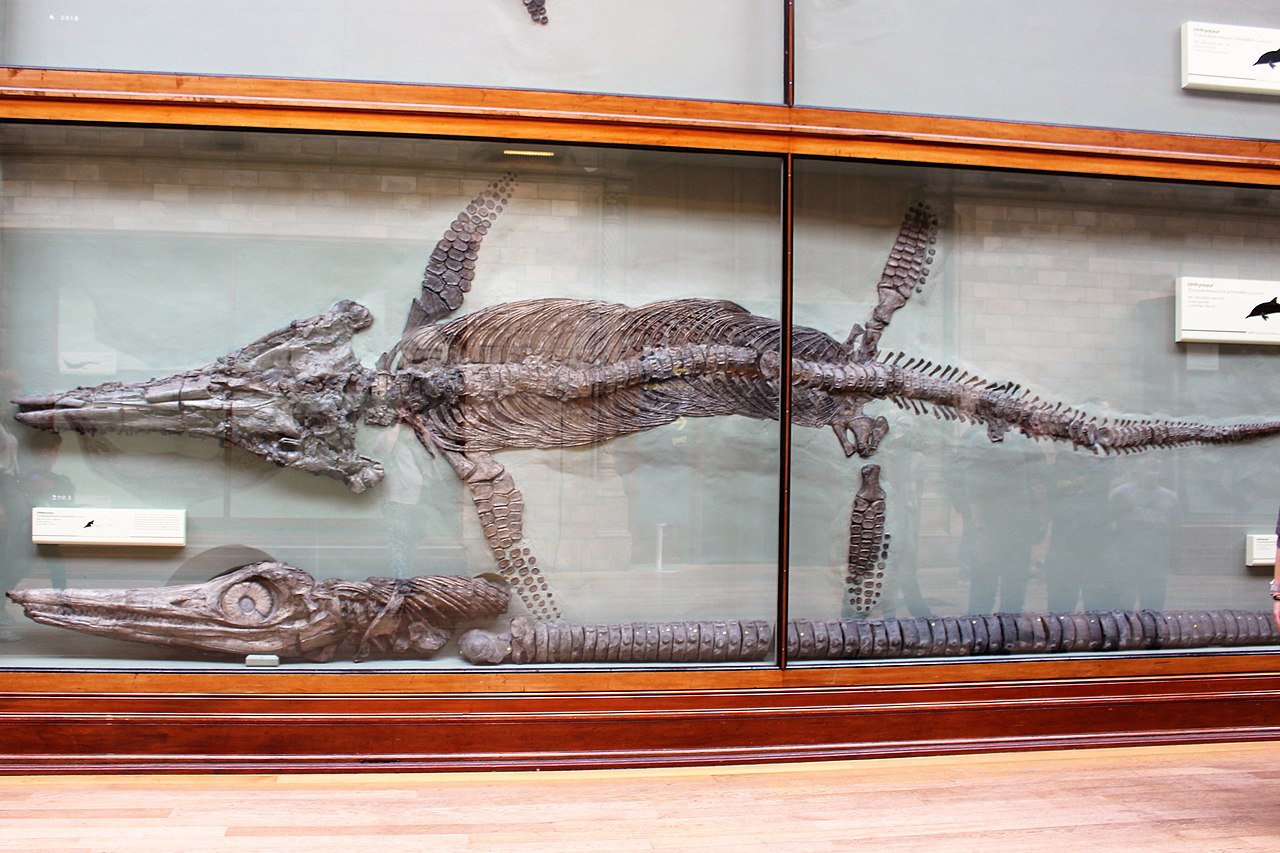
- Size: Individuals reached lengths comparable to modern large odontocetes—commonly described as in the range of 9–12 m (about 30–40 feet).
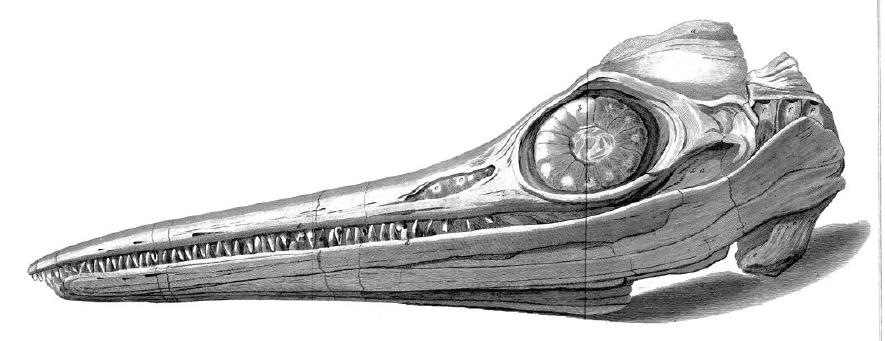
- Skull and teeth: A long snout filled with robust, conical teeth suited for grasping large prey.
- Eyes: Exceptionally large eye sockets supported big eyes, suggesting keen vision and possibly hunting in dim light or deep water.
- Body plan: A fusiform body with limb paddles and a powerful tail fluke adapted for sustained fast swimming.
Discovery and history
The first Temnodontosaurus material known to science was found in England in the early 19th century. A famous fossil hunter, Mary Anning, recovered a skeleton for which the skull had been found earlier by a relative; the animal was formally described in 1814. Later finds in other parts of Europe, especially in the well-preserved marine shales of Germany, expanded understanding of the genus and its variation.
Paleobiology: diet and behavior
Temnodontosaurus was clearly a top predator. Its strong jaws and teeth are consistent with a diet of fish and large cephalopods, and some researchers have proposed it could take other sizable vertebrate prey, possibly including smaller marine reptiles. Evidence that supports this interpretation includes tooth morphology, bite marks on fossil bones, and comparisons with modern marine predators. The very large eyes imply good visual acuity, which would help in low light or at depth.
Fossil record and distribution
Important fossils of Temnodontosaurus have been recovered from Early Jurassic deposits in England and Germany, and isolated remains turn up elsewhere in Europe. English localities associated with Mary Anning and the Dorset coast produced some of the earliest specimens, and German deposits such as the Posidonia Shale (Holzmaden area) are famous for their well-preserved ichthyosaur skeletons. These finds together provide a reasonably complete picture of anatomy and variation within the genus.
Significance and notable facts
Temnodontosaurus is often highlighted in popular and scientific accounts as one of the earliest truly large ichthyosaurs and an apex predator of Jurassic seas. It illustrates early adaptations among ichthyosaurs for pursuit swimming and macropredatory feeding. Modern comparisons to a killer whale give a useful size reference, while taxonomic and ecological details are still refined as new specimens are studied. For general context on ichthyosaurs see ichthyosaur overviews and for the temporal setting consult resources on the Early Jurassic. Additional regional information is available through collections and studies from Germany and England.
Related articles
Author
AlegsaOnline.com Temnodontosaurus — large Early Jurassic ichthyosaur Leandro Alegsa
URL: https://en.alegsaonline.com/art/96897
Sources
- ucmp.berkeley.edu : ucmp.berkeley.edu/people/motani/ichthyo/eyes.html