
Tenontosaurus (Early Cretaceous ornithopod)
Tenontosaurus was a medium-to-large herbivorous ornithopod from Early Cretaceous North America, once grouped with hypsilophodonts and now seen as a primitive iguanodont with distinctive anatomy and fossil associations.
Overview
Tenontosaurus was a medium- to large-sized herbivorous ornithopod dinosaur that lived in what is now North America during the Early Cretaceous. It is known from numerous skeletons representing juveniles and adults, which show a blend of primitive and more derived traits. Once treated as a member of a loosely defined group called "hypsilophodonts," modern research places it among the more basal members of the iguanodont lineage, sometimes described as a primitive iguanodont.
Image gallery
10 Images
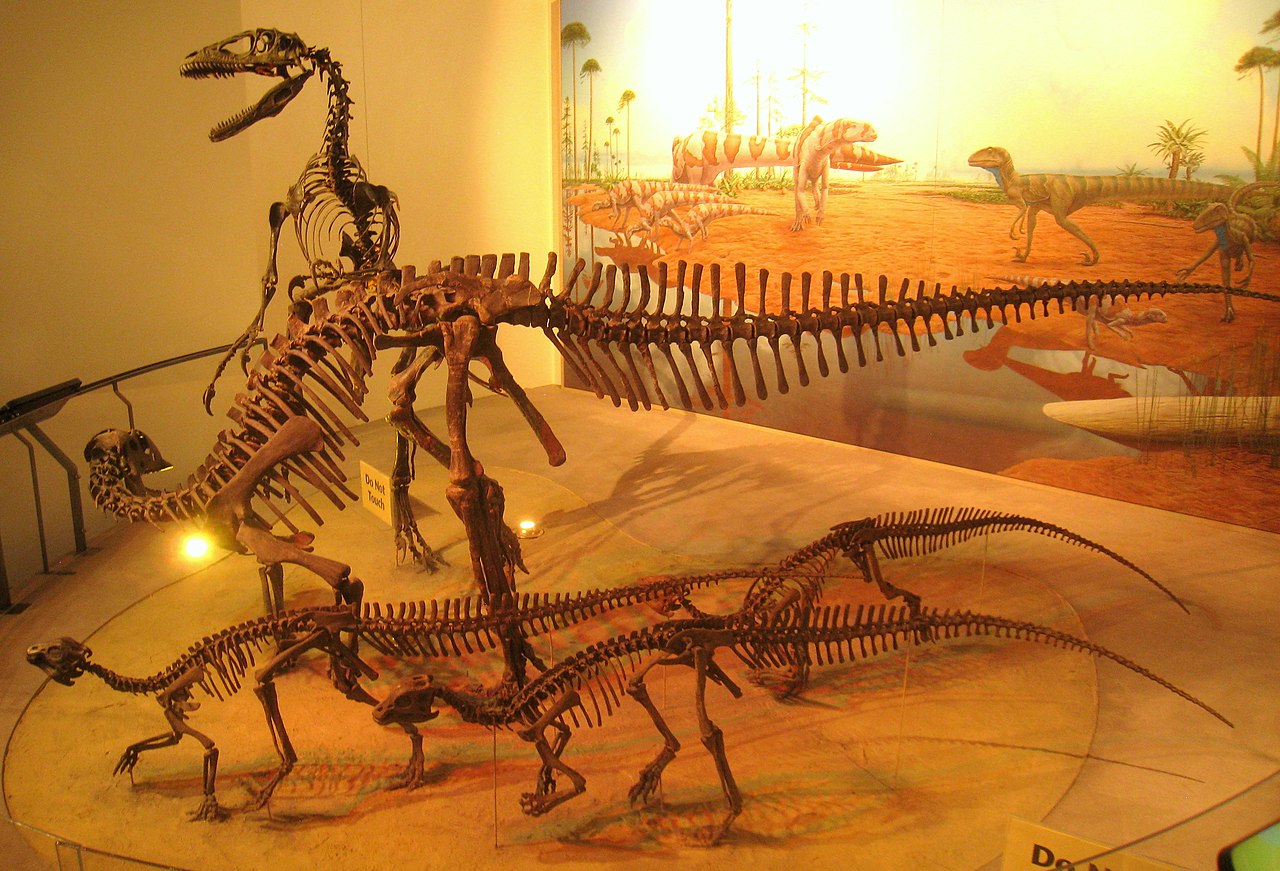


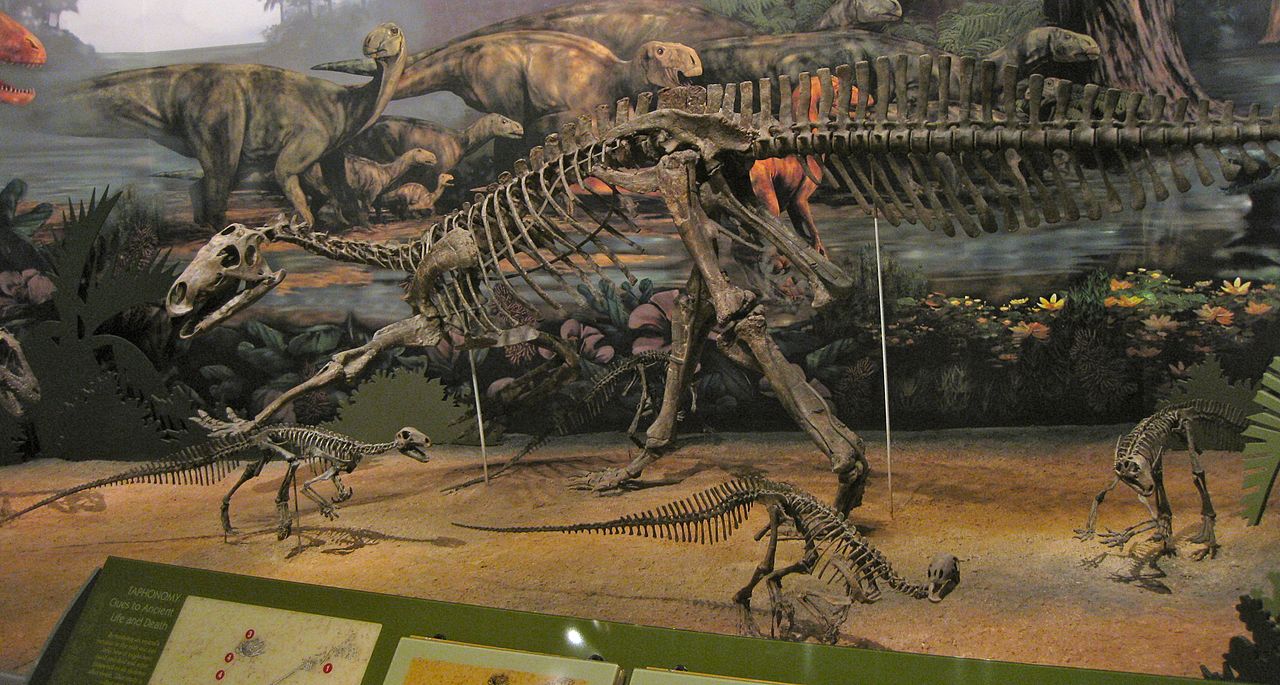


Anatomy and distinguishing features
Tenontosaurus combined a long, stiffened tail and a relatively deep, broad torso with limbs capable of both bipedal and quadrupedal posture. Its teeth were adapted for processing plant material, and ossified tendons helped keep the tail rigid—features common to many ornithopods. Notable characteristics include:
- Robust forelimbs suggesting occasional quadrupedal locomotion.
- Leaf-shaped teeth for cropping and grinding vegetation.
- Long tail reinforced by ossified tendons for balance and support.
Discovery and classification
Fossils of Tenontosaurus were first described in the 20th century from multiple localities in western North America. Because it retains both primitive and derived traits, its placement has shifted as paleontologists refined ornithopod relationships. It exemplifies the transitional anatomy between small, bipedal ornithopods and later, bulkier iguanodontians.
Paleobiology and ecology
As a herbivore, Tenontosaurus likely fed on low- to mid-height plants, using a combination of jaw motion and specialized teeth to process food. Numerous bonebeds and individual skeletons indicate it was a common component of its ecosystems. Teeth and injuries attributed to small theropod predators indicate it was subject to predation or scavenging, offering one of the clearer examples of predator–prey interactions in its faunal assemblage.
Significance and notable facts
Tenontosaurus is important for understanding ornithopod evolution because it bridges early bipedal forms and later, larger iguanodonts. Well-preserved growth series illuminate how proportions changed with age, and its frequent association with theropod remains provides context for Cretaceous food webs. For further details, see specialized paleontological summaries and museum resources.
Related articles
Author
AlegsaOnline.com Tenontosaurus (Early Cretaceous ornithopod) Leandro Alegsa
URL: https://en.alegsaonline.com/art/97004