
Tentaculata — the tentacled comb jellies
Tentaculata is a class of comb jellies (phylum Ctenophora) characterized by a pair of retractable tentacles bearing adhesive colloblasts; widely distributed gelatinous plankton with diverse forms and roles in marine food webs.
Tentaculata is one of the principal classes within the phylum Ctenophora, commonly called comb jellies. Members of this class are planktonic, gelatinous marine animals notable for carrying one or more long, often feathery tentacles used to capture prey. For a general introduction to comb jellies see comb jellies.
Image gallery
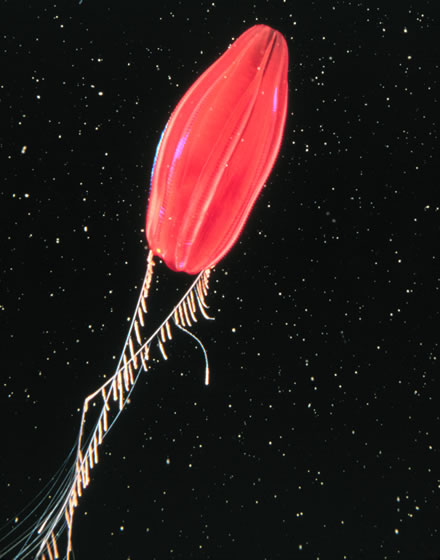
2 Images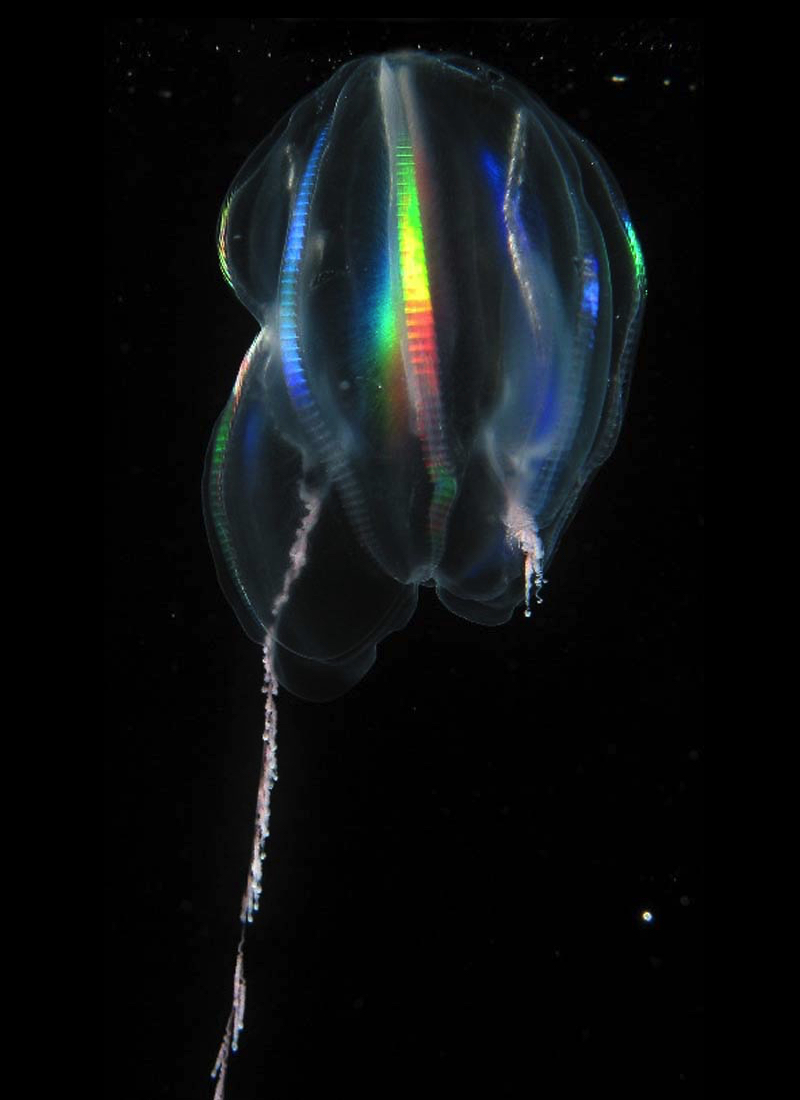
Distinctive features
The defining trait of Tentaculata is the presence of tentacles that can be extended to intercept small animals and then quickly withdrawn into protective, ciliated sheaths. These tentacles are usually covered in colloblasts (also called collocytes), specialized adhesive cells that stick to and immobilize tiny crustaceans, fish larvae and other zooplankton. Unlike cnidarians, ctenophores do not sting with nematocysts; their capture mechanism relies on the glue-like action of colloblasts.
Body plan and locomotion
Like other ctenophores, tentaculate species move by beating rows of fused cilia called comb rows or ctenes. The coordinated beating of these ciliary plates propels the animal and often produces a shimmering, rainbow-like diffraction of light. Many species are bioluminescent, producing light in response to disturbance or during night-time activity.
Diversity and examples
Tentaculata contains a variety of body shapes and life habits, from spherical, cydippid-like forms to flattened lobate types. Common genera that illustrate this diversity include Pleurobrachia and Bolinopsis. In some taxa the primary tentacles are reduced and replaced by smaller, secondary tentilla; in others the tentacles are conspicuous and highly branched.
Ecology and reproduction
Species in this class are important predators in planktonic food webs, consuming copepods and other microscopic animals and in turn serving as prey for larger animals. Reproductive strategies vary, but many ctenophores are hermaphroditic and release eggs and sperm into the water column for external fertilization. Tentaculata occur in seas worldwide, from surface waters to deeper pelagic zones.
Comparisons and notable facts
- Tentaculata vs Nuda: the other traditional ctenophore class, Nuda, lacks tentacles entirely, while Tentaculata retains them.
- Capture method: colloblasts are unique adhesive cells and should not be confused with the stinging cells of jellyfish.
- Research interest: their simple body plans, regenerative ability and distinctive cell types make ctenophores subjects of developmental and evolutionary study; for more detailed resources see further reading.
Related articles
Author
AlegsaOnline.com Tentaculata — the tentacled comb jellies Leandro Alegsa
URL: https://en.alegsaonline.com/art/97036