
Teinolophos: an early Cretaceous monotreme from Australia
Teinolophos trusleri, known from a partial jaw discovered in Victoria, dates to the Lower Cretaceous. It represents an early branch of monotremes and informs studies of mammal origins and Gondwanan biogeography.
Overview
Teinolophos trusleri is a fossil mammal recognized as an early relative of modern egg-laying mammals. It is generally interpreted as a primitive member of the monotreme lineage (monotremes) and is important because it comes from one of the oldest known Australian mammal-bearing rocks, dated to the Lower Cretaceous.
Image gallery
6 Images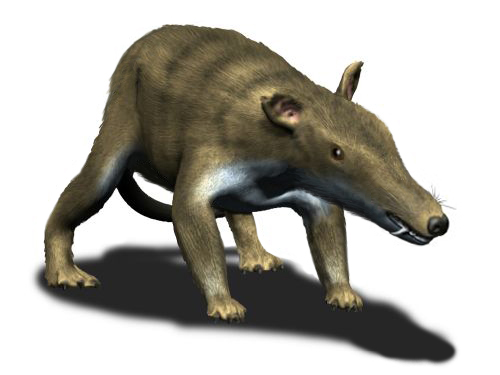


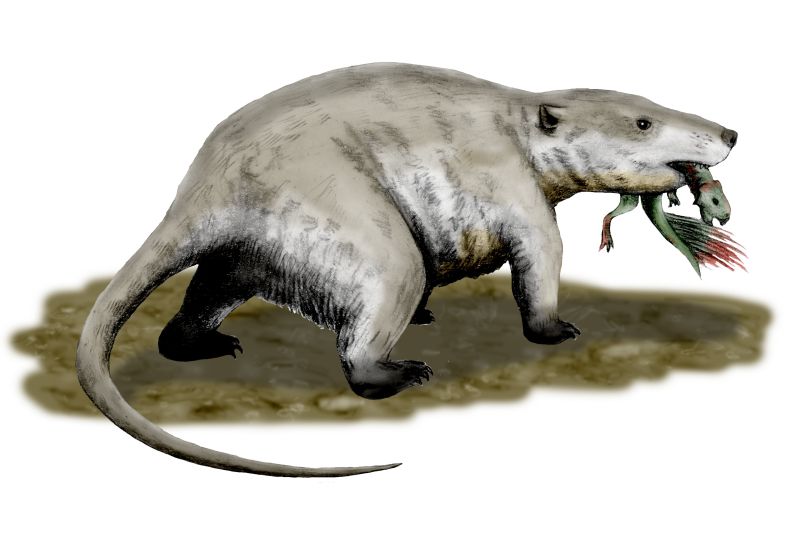

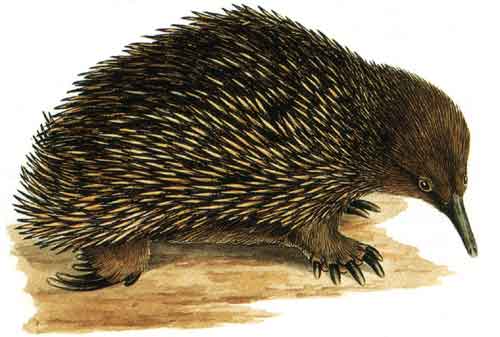
Discovery and age
The species is known primarily from a partial lower jaw recovered at a locality called Flat Rocks in the Otway Basin region (Flat Rocks), on the southeastern coast of Australia. The fossil horizon that produced the specimen has been dated to roughly the early part of the Cretaceous Period, making Teinolophos among the earliest monotreme-grade mammals yet described.
Anatomy and preserved material
The type material consists mainly of a fragmentary lower jaw that preserves several teeth. These dental and mandibular features show a mixture of primitive and derived characters: the jaw is comparatively simple for a mammal but the teeth display differentiated crowns that help identify dietary adaptations and evolutionary relationships. Because the record is limited, reconstructions of the whole animal remain tentative.
Importance for mammal evolution
Teinolophos provides direct evidence that stem-monotremes had teeth and distinct jaw structures unlike those of living monotremes such as the platypus, which loses many teeth as adults. Its age and morphology bear on questions about how early mammals diversified in Gondwana and how monotreme characteristics evolved over time.
Key points and distinctions
- Represents an early monotreme-grade mammal known from jaw and teeth remains.
- Found at Flat Rocks, Victoria, contributing to the sparse Cretaceous mammal record in Australia.
- Shows a combination of primitive mammalian jaw features and specialized tooth forms.
- Helps distinguish monotreme ancestry from the later radiations of marsupials and placentals.
Research context and open questions
Because Teinolophos is known from limited material, many aspects of its biology and precise evolutionary position remain debated. Ongoing comparative study of early mammal fossils, improved dating of Cretaceous sites, and any future discoveries of more complete skeletons will be needed to clarify its life appearance, ecology, and role in early monotreme evolution. For general background on monotremes and early mammals see additional sources and reviews (monotremes overview, Lower Cretaceous context).
Related articles
Author
AlegsaOnline.com Teinolophos: an early Cretaceous monotreme from Australia Leandro Alegsa
URL: https://en.alegsaonline.com/art/96770
Sources
- species.wikimedia.org : Teinolophos