
Taliesin West — Frank Lloyd Wright’s desert home, studio and school
Taliesin West is Frank Lloyd Wright’s Arizona winter home and studio (1937–1959), now the Frank Lloyd Wright School of Architecture campus and foundation headquarters, open for tours and study.
Overview
Taliesin West was conceived and built by Frank Lloyd Wright beginning in 1937 as his winter home, design laboratory and seasonal community in the desert. Wright used it through 1959 and it remains a working campus for the Frank Lloyd Wright School of Architecture and the Frank Lloyd Wright Foundation. The compound is located in Scottsdale, Arizona, and attracts visitors for guided tours, educational programs and preservation work.
Image gallery
10 Images


Design, materials and setting
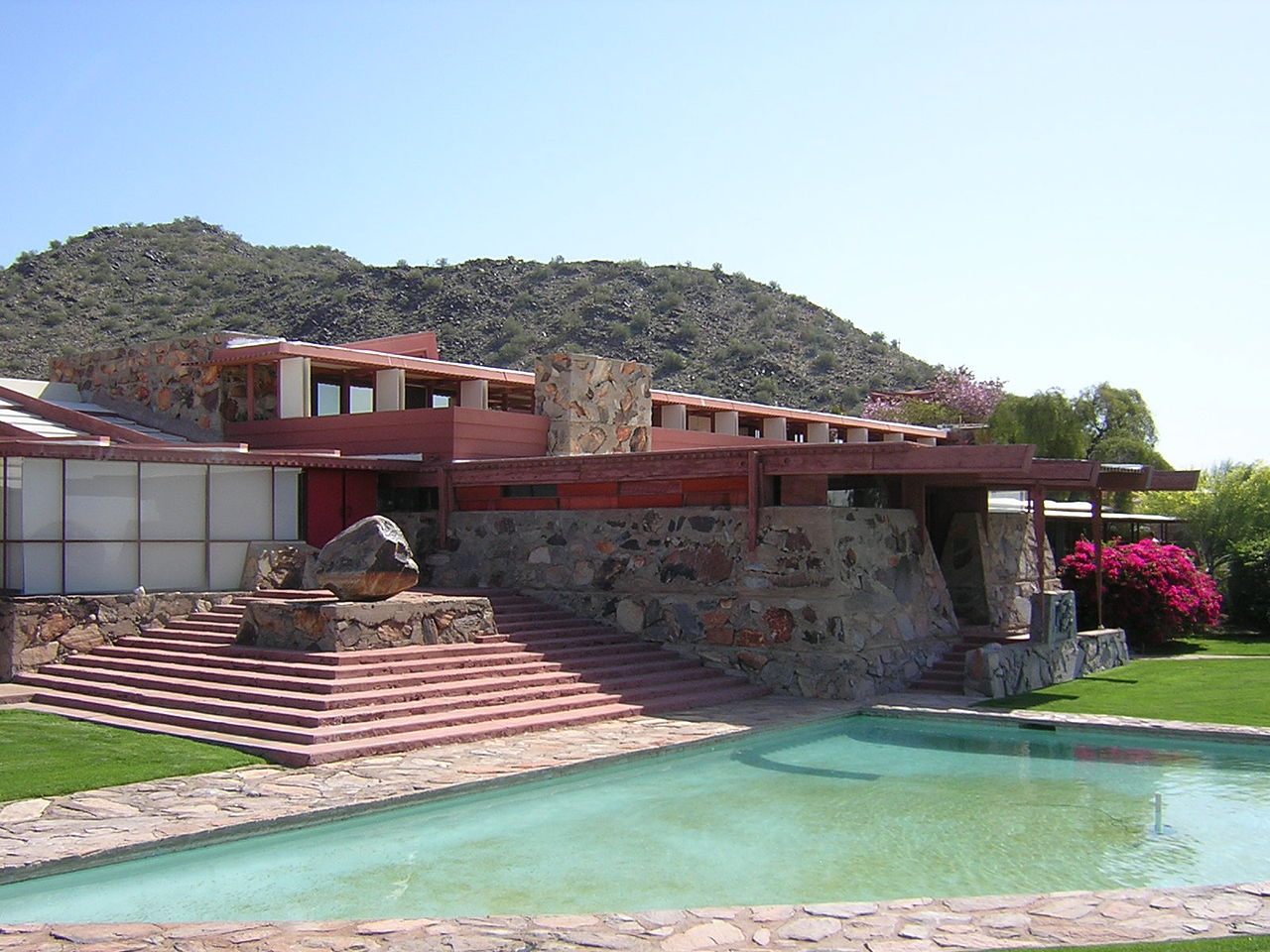
Wright designed Taliesin West to respond to its arid environment. Buildings are low, angular and oriented to capture light and shade; walls incorporate locally gathered stone and concrete to blend with the Sonoran landscape. Extensive use of glass, overhangs and outdoor rooms creates a close relationship between interior spaces and the surrounding desert. The site demonstrates Wright’s emphasis on organic architecture: structures that aim to harmonize with location, climate and materials rather than dominate them.
History and development
Built as a seasonal counterpart to Wright’s Midwest estate called Taliesin in Spring Green, Wisconsin, the Arizona compound grew over several decades as Wright and his apprentices added studios, living quarters, an assembly space and classrooms. After Wright’s death in 1959 the site evolved into an educational center and preservation project. In recent decades Taliesin West has been recognized for its architectural significance and is included among the cohort of Wright properties honored internationally.
Uses and public access
Today Taliesin West serves multiple roles: active architecture school campus, repository for archives and drawings, headquarters for the foundation and a museum open to the public. Guided tours present the history, design principles and conservation challenges; the campus hosts lectures, workshops and seasonal academic programs for emerging architects. Conservation is ongoing because of the desert climate and the experimental nature of some original construction methods.
Notable features and context
- Integration with landscape: materials and siting intended to blend with the desert.
- Educational legacy: long-standing role as an architecture school and training site.
- Public programs: tours, exhibitions and events explain Wright’s methods and philosophy.
- Heritage recognition: the site is part of broader efforts to preserve Wright’s work nationally and internationally.
Visitors and students encounter Taliesin West as both a historic place and a living laboratory: a compact complex that illustrates Wright’s late-career ideas about climate response, material honesty and the relationship between building and site. For directions, programs and ticketing consult official resources or the institution that manages the property.
Related articles
Author
AlegsaOnline.com Taliesin West — Frank Lloyd Wright’s desert home, studio and school Leandro Alegsa
URL: https://en.alegsaonline.com/art/96128