
Susanna (Book of Daniel)
A summary and analysis of the story of Susanna — an addition to the Book of Daniel found in some Christian traditions — its textual history, themes, and influence in art and law.
The story of Susanna is a short narrative traditionally associated with the Book of Daniel but transmitted as one of the so‑called "Additions to Daniel." It appears in many early Greek manuscripts and in the Latin Vulgate, though it is absent from the Hebrew Masoretic text. Different faith communities treat the episode differently: it is included in Catholic and Orthodox canons but is not part of the Jewish Tanakh or most Protestant Bibles. For general references see editions that include the additions and the main Book of Daniel, often catalogued among the Additions to Daniel.
Image gallery
6 Images



Textual history and canonical status
The tale of Susanna survives in Greek and Latin traditions and is found in the Septuagint tradition rather than in the standard Hebrew text. In some ancient Greek copies it appears as a prologue placed before the opening chapter of Daniel. The Latin Vulgate treats it as a distinct chapter (commonly numbered as chapter 13 in older Catholic Bibles). Modern Jewish editions and most Protestant translations omit it or relegate it to an apocryphal section, while Catholic and Eastern Orthodox churches retain it within their scriptural collections. For further comparison see sources that discuss its presence or absence in different canons, including references to the modern Jewish position and the Vulgate placement.
Narrative summary
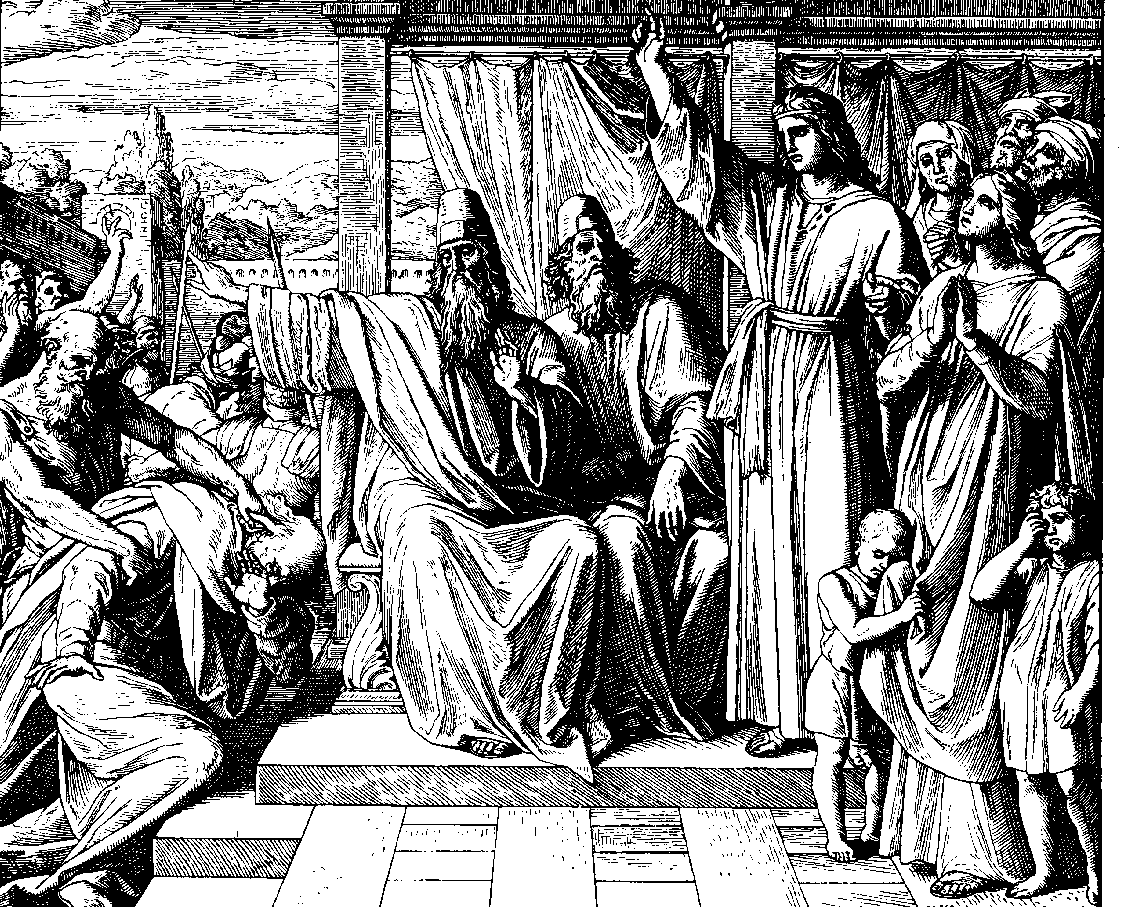
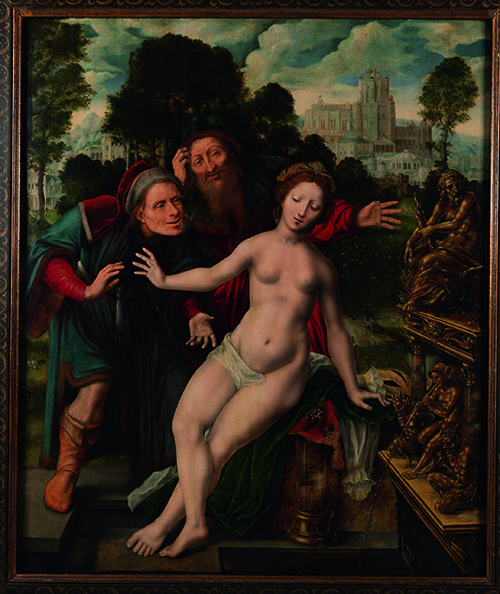
The story tells of Susanna, a married woman praised for her piety and virtue. While she is bathing in her enclosed garden, two senior members of the community secretly observe her and attempt to coerce her into sexual relations. When she refuses their demand, they retaliate by accusing her of adultery, a crime carrying severe penalties in that legal context. The community initially believes the elder judges, and Susanna faces condemnation. A young man named Daniel intervenes, separates the two accusers, and examines their testimony separately; under questioning each gives incompatible details about where the alleged act took place, exposing their perjury. The false accusers are convicted and punished, and Susanna is cleared of wrongdoing.
Themes, legal motifs, and literary features
Susanna engages several recurrent concerns: judicial corruption, the vulnerability and agency of women, the virtue of chastity, and divine vindication through wise judgment. The narrative uses a forensic framework — cross‑examination, verification of facts, and witness contradiction — to dramatize the discovery of truth. Its focus on a juridical reversal makes the story an exemplum about proper conduct for judges and the protection of the innocent. The episode explicitly treats sexual coercion (often described in older translations as attempts to force sexual intercourse) and the social charge of sexual intercourse outside marriage labeled as adultery in its cultural setting.
Reception and influence
Through the medieval and early modern periods the Susanna story circulated widely in liturgy, sermons, and devotional literature and became a popular subject in visual art and drama. Painters and printmakers have used the episode to contrast virtue and vice and to explore scenes of voyeurism, accusation and legal drama. The narrative also appears in discussions of evidence and judicial procedure because of Daniel's methodical questioning of witnesses. Scholars continue to study the story for what it reveals about textual transmission between Hebrew, Greek and Latin traditions and for its place in the history of biblical reception.
Further reading
- Comparative introductions to the Additions to Daniel and their placement in ancient manuscripts: editions with additions, Additions overview.
- Studies of canonical differences and the Vulgate tradition: Vulgate chaptering and modern canonical treatments.
- Discussions of social, legal and artistic responses to the Susanna narrative: see comparative works that cite the Book of Daniel context and modern commentary on reception history (Jewish treatments and Christian traditions).
Related articles
Author
AlegsaOnline.com Susanna (Book of Daniel) Leandro Alegsa
URL: https://en.alegsaonline.com/art/95270