
Vulgate (Latin Bible)
The Vulgate is the late antique Latin translation of the Christian Bible largely prepared by St. Jerome; it became the standard Latin text of the Western Church and shaped medieval Christianity.
Overview
The Vulgate is a Latin rendition of the Christian Bible that became the dominant scriptural text in Western Christianity. The name derives from the Latin versio vulgata, meaning the version "in common use." Most of the work is attributed to St. Jerome, who produced substantial revisions and translations into Latin in the late 4th and early 5th centuries (late antique period).
Image gallery
10 Images





Composition and characteristics
The Vulgate is not a single uniform translation but a compilation: Jerome revised existing Old Latin texts, translated much of the Old Testament from Hebrew, and adapted Septuagint readings where he judged them necessary. His prologues and marginal notes survive alongside his translations. Over centuries scribes and publishers produced variant readings, so what is called "the Vulgate" covers a range of related Latin texts rather than a single manuscript.
History and major editions
- Origin: Jerome undertook his work on papal commission in the late 4th century, producing translations and revisions that circulated widely.
- Medieval use: The Vulgate became the standard Bible for theology, liturgy, and scholarship across medieval Europe.
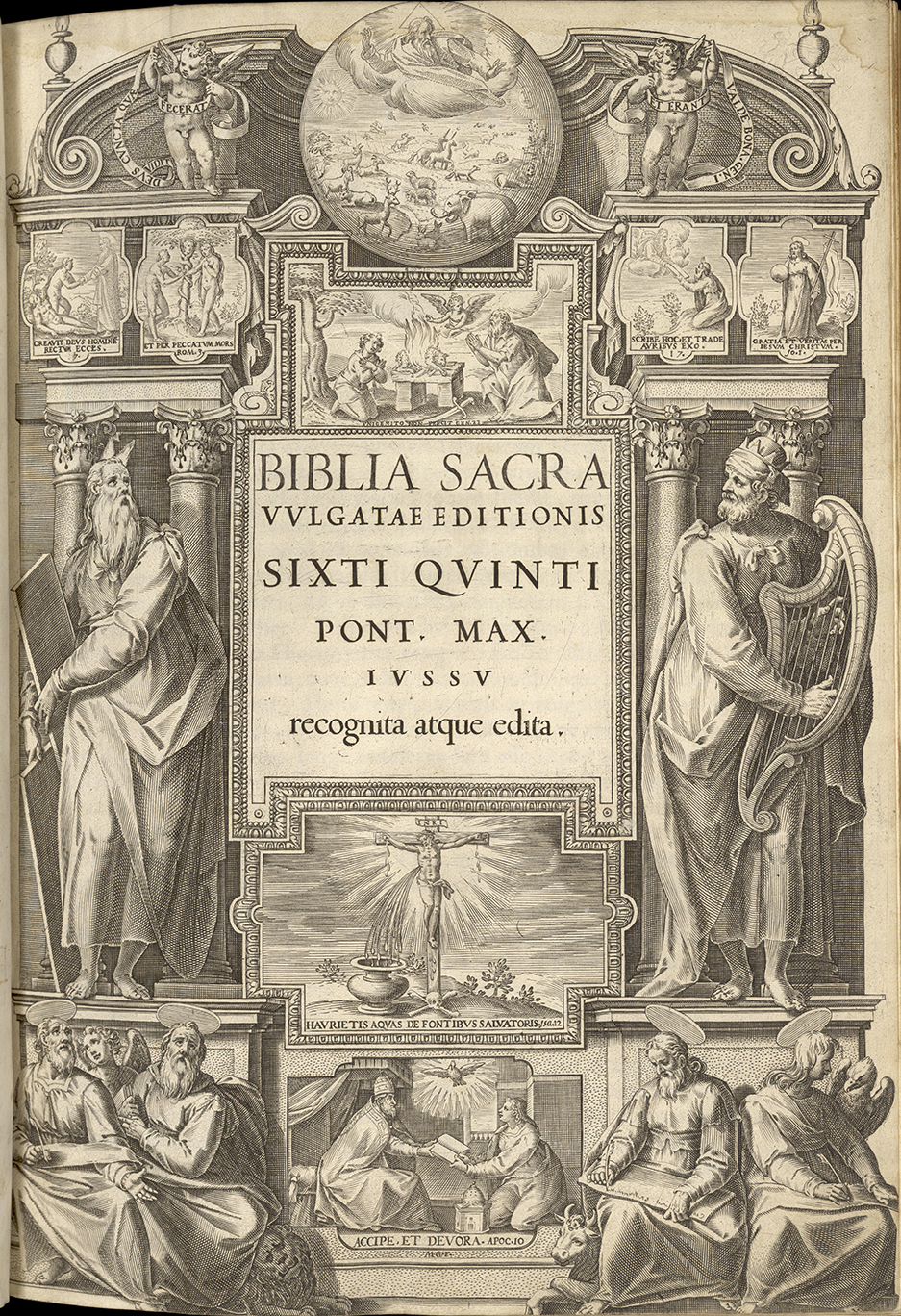
- Standardisation: In the 16th century the Council of Trent affirmed the Vulgate's authority; later printed editions such as the Clementine Vulgate sought to fix a uniform text.
- Modern revision: The 20th century saw further scholarly revisions, including the Nova Vulgata, prepared for contemporary liturgical use.
Importance and legacy
The Vulgate influenced theology, art, education, and vernacular Bible translations for more than a millennium. Its Latin phrasing shaped Christian doctrine and liturgy, and it served as the primary scriptural witness for Western biblical scholarship until modern critical editions of Hebrew and Greek texts became widespread.
Notable distinctions
Unlike a single-author translation, the Vulgate reflects editorial layers: Old Latin remnants, Jerome's direct translations from Hebrew, and later editorial adjustments. Manuscripts such as early medieval codices preserve variant readings, so scholars distinguish between Jerome's original work and the later standardized editions. For further reading and manuscript resources consult general reference collections on the Bible and studies of Jerome and Latin texts (Latin textual tradition), as well as timelines of late antique religious history (late antique studies).
Related articles
Author
AlegsaOnline.com Vulgate (Latin Bible) Leandro Alegsa
URL: https://en.alegsaonline.com/art/106018