
Superb lyrebird (Menura novaehollandiae)
A large, ground-dwelling Australian songbird famed for an ornate lyre-shaped tail and exceptional ability to mimic natural and human-made sounds.
Overview
The superb lyrebird (Menura novaehollandiae) is an Australian endemic passerine notable for both its size and its vocal talents. Roughly one metre in overall length, it is a ground-dwelling bird with subdued brown plumage and a striking display tail carried by adult males. It is often described as the longest and one of the heaviest members of the songbird group.
Image gallery
7 Images


Physical characteristics
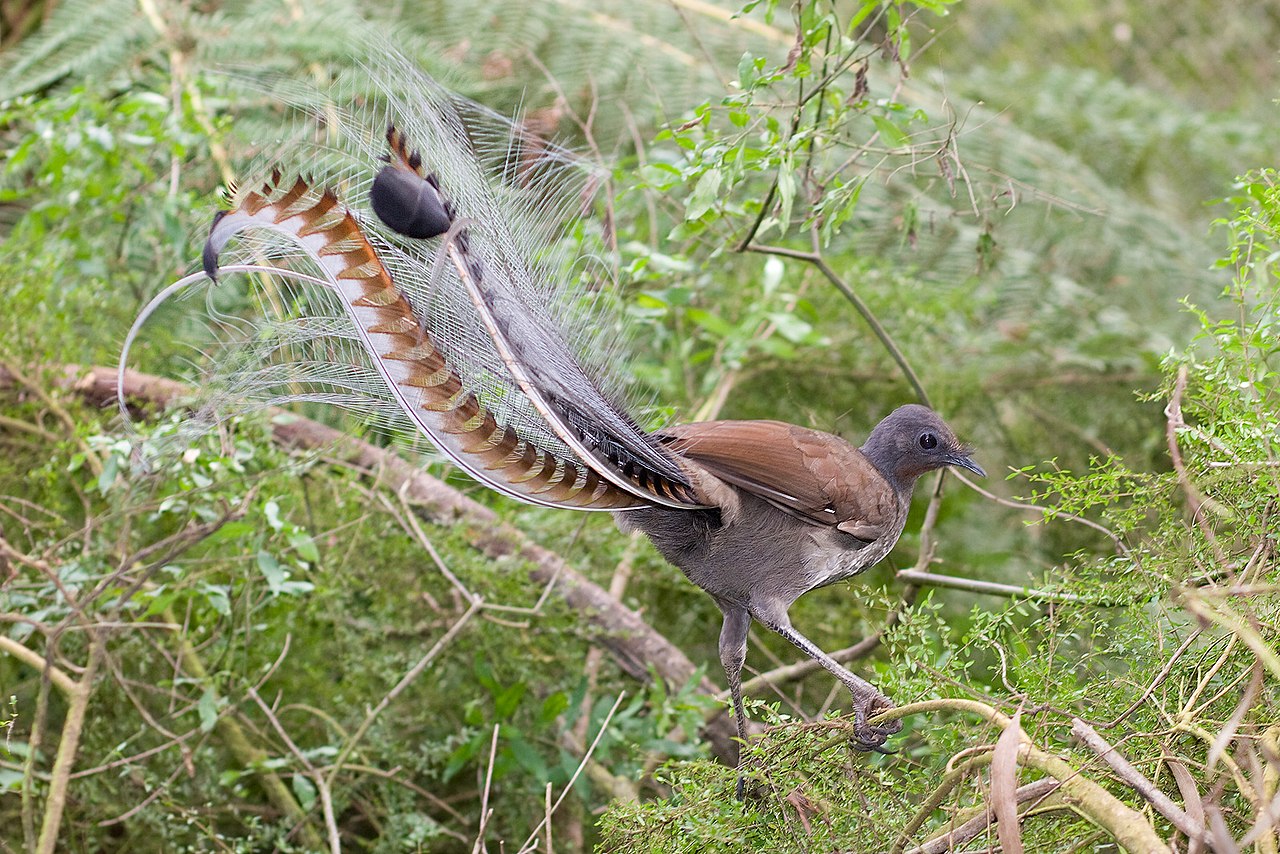
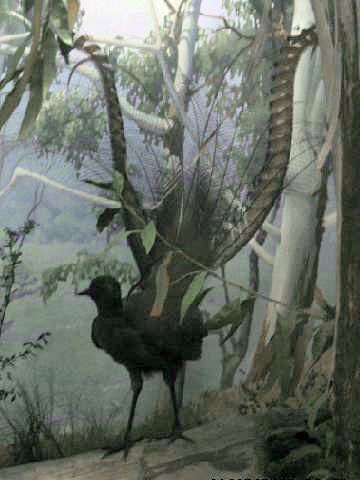
Superb lyrebirds have strong legs and rounded wings adapted for life on the forest floor. Adult males possess an elaborate tail made of long ornamental feathers that can be fanned into a lyre-like shape during courtship displays; females lack the long, showy tail and are more cryptically patterned. Overall coloration is mainly brown above and paler underneath, which helps them blend into leaf litter and understorey.
Behavior, diet and mimicry
Mostly terrestrial, superb lyrebirds forage by scratching and probing for invertebrates, seeds and small fruits. They are solitary or live in loose family groups outside the breeding season. Their most remarkable trait is vocal mimicry: males incorporate an enormous variety of sounds into their songs. These can include the calls of other bird species and, when living near humans, mechanical noises such as camera shutters, car alarms or the sound of chainsaws. This mimicry is used during complex display routines to attract mates and to establish territory.
Reproduction and life cycle
Breeding centers on the male's elaborate display. A male clears a small arena on the forest floor, performs a combination of song, mimicry and visual display with his tail, and attempts to attract visiting females. Females select mates and undertake nest-building and parental care alone. Nests are placed low in vegetation, and young are raised by the female without male involvement.
Habitat, distribution and conservation
Superb lyrebirds inhabit moist forests, rainforest edges and tall eucalypt woodlands in south-eastern Australia. They prefer dense understorey with abundant leaf litter for foraging. While the species remains relatively widespread and is not considered to be on the brink of extinction, local populations can be affected by habitat fragmentation, altered fire regimes and introduced predators. For authoritative taxonomic details see taxonomic notes, for sound archives and recordings see song samples, for conservation status information see conservation listings, and for behavioral studies consult research summaries.
Notable facts
- Display: The male's tail and vocal performance are central to courtship.
- Mimicry breadth: Their repertoire can include many bird species and some anthropogenic sounds.
- Cultural impact: The bird's impressive displays and mimicry have made it a popular subject in natural history programs and a symbol of Australian wildlife.
Related articles
Author
AlegsaOnline.com Superb lyrebird (Menura novaehollandiae) Leandro Alegsa
URL: https://en.alegsaonline.com/art/95029