
Lucius Cornelius Sulla — Roman general, dictator, and political reformer
Roman general and statesman (c.138–78 BC) who seized Rome with his legions, instituted proscriptions, served briefly as dictator, and enacted reforms intended to strengthen the Senate and restore order.
Overview
Lucius Cornelius Sulla (c. 138 BC – 78 BC), commonly called Sulla, was a leading Roman general and influential statesman of the late Republic. He rose through the conventional magistracies to hold the consulship twice and later seized extraordinary powers as Dictator. Sulla is best known for his two marches on Rome, the use of published proscriptions against political opponents, a series of constitutional and legal measures designed to strengthen senatorial authority, and for his campaigns in the eastern Mediterranean that included the capture of Athens.
Image gallery
9 Images




Background and rise
Sulla came from a patrician branch of the Cornelii but his family had fallen on hard times. He served in Rome’s armies in the 120s–100s BC and first attracted notice during the conflicts with Numidia and during the social disturbances that followed. He held the office of praetor and later the consulship, gaining military reputation and the loyalty of veteran soldiers—an essential factor in his later political uses of armed force. His campaigns abroad, especially against Mithridates of Pontus, expanded Rome’s interests in the east and brought him both wealth and men loyal to him personally.
Civil war, marches on Rome, and the siege of Athens
Sulla’s career became entangled in factional struggles with rivals led by Gaius Marius and his supporters. In an unprecedented step for the Republic, he marched his legions on Rome to secure his legal command and political position; later he repeated the action in a second civil conflict. During operations connected with the war against Mithridates he besieged and took Athens, which had allied with Rome’s eastern enemy. These events established a dangerous precedent by demonstrating that a victorious general could use a personal army to resolve domestic disputes.
Dictatorship, proscriptions and reforms
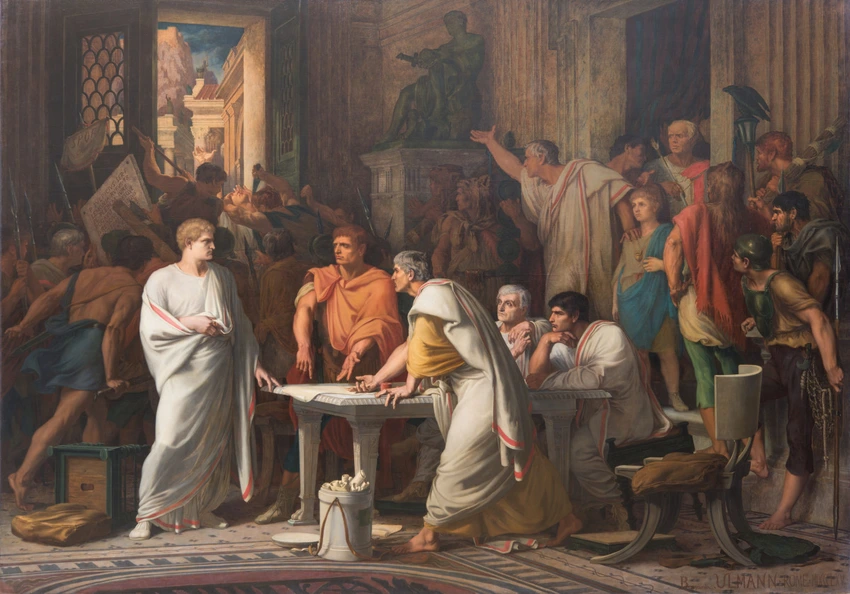
After defeating his opponents, Sulla assumed dictatorial powers with the ostensible aim of restoring the Roman constitution as he saw fit. He instituted proscriptions: lists of those he declared enemies of the state, publicly posted in the Roman Forum, whose named victims were stripped of property and often killed. Ancient biographers such as Plutarch describe the severity of these measures and their effect on Roman society. Alongside the purges, Sulla pursued an extensive program of legal and constitutional change. He sought to curb the influence of popular assemblies and the tribunate, to expand and reinforce the Senate’s authority, to regulate the cursus honorum (the sequence of public offices), and to strengthen the judiciary and provincial administration.
- Increased the number and authority of the Senate while limiting popular legislative initiative.
- Restricted the powers of the tribunes of the plebs, including limits on their ability to propose legislation and hold office after that magistracy.
- Reformed the courts and procedures to align judicial power more closely with senatorial interests.
- Promoted settlement and grants of confiscated land to veterans, both as reward and to secure political loyalty.
Retirement, death and consequences
In an unusual move for a Roman who had seized supreme power, Sulla resigned his dictatorship and returned to private life before his death in 78 BC. His retirement was brief: he died soon after and left a mixed legacy. In the short term his measures strengthened senatorial authority and reordered magistracies; in the longer term his example—of resolving political disputes through armed force and extraordinary executive power—helped to normalize the military intervention in politics that would contribute to the Republic’s collapse. Later leaders, most notably Caesar, knew of Sulla’s example when they considered their own courses of action.
Sources and historical assessment
Contemporary and near-contemporary sources are fragmentary, and much of the narrative of Sulla’s life comes from later historians and biographers whose accounts mix fact with moral commentary. Ancient writers differ in emphasis: some stress his administrative abilities and the stability his reforms brought, while others condemn the cruelty of the proscriptions and the precedents he set. Modern historians assess his career in the context of structural stresses within the late Republic—social conflict, the power of military commands, and the competition among elite families—and debate whether his reforms genuinely preserved republican order or merely delayed the Republic’s transformation into an imperial system.
Legacy and further reading
Sulla remains a pivotal figure for the study of Roman constitutional history and civil war. His life illustrates the tensions between legal reform and extra-legal violence, and his actions are often cited in discussions of constitutional crisis, military loyalty, and the dangers posed by personal armies to republican institutions. For primary accounts and modern analyses consult classical biographies, the narrative histories of Rome, and modern scholarly studies that treat his military campaigns, the proscriptions, and his constitutional legislation in detail.
See also: military career, political reform, consular office, praetorship, siege of Athens, marches on Rome, dictatorship, Roman Forum, Plutarch’s account, later parallels.
Related articles
Author
AlegsaOnline.com Lucius Cornelius Sulla — Roman general, dictator, and political reformer Leandro Alegsa
URL: https://en.alegsaonline.com/art/94722
Sources
- penelope.uchicago.edu : Plutarch • Life of Sulla". penelope.uchicago.edu