
Sun Tzu — ancient Chinese general and author of The Art of War
Sun Tzu (Sun Wu) was an ancient Chinese military strategist traditionally credited with writing The Art of War. His work shaped military thought, statecraft and modern strategy worldwide.
Sun Tzu, also called Sun Wu, is the name traditionally given to a Chinese military strategist and philosopher of the Spring and Autumn period. His personal name and precise biography are uncertain; later historians commonly place him in the 6th century BCE and often give the dates 544–496 BCE. Much of what is known about him comes through later records such as Sima Qian's Records of the Grand Historian, and scholarly debate continues over which passages of the surviving military corpus were composed by a single author and which were added later.
Image gallery
6 Images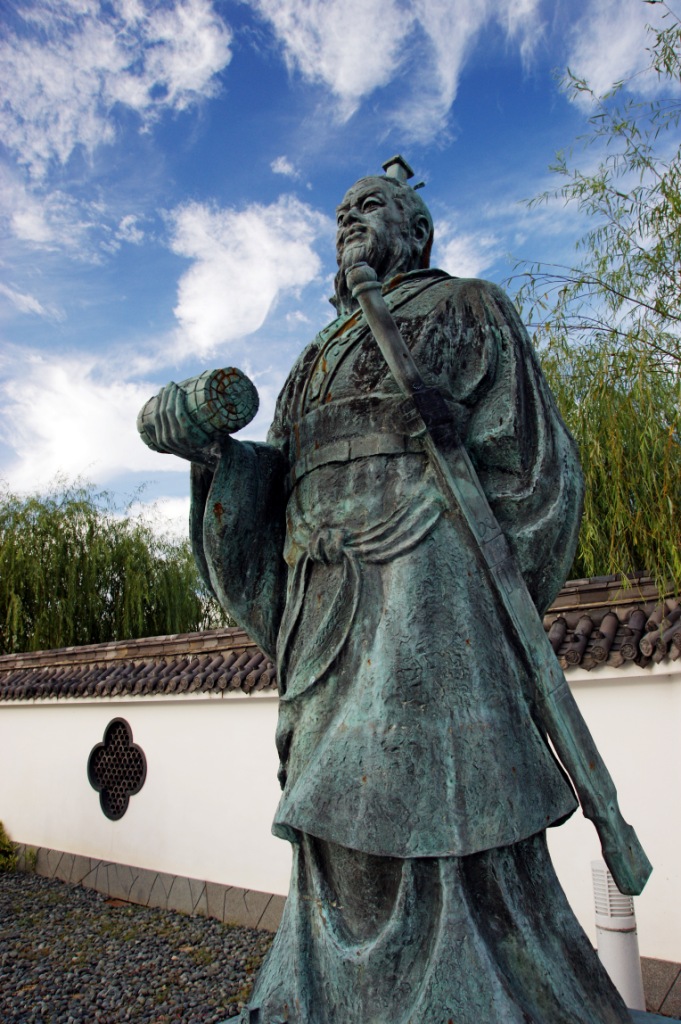

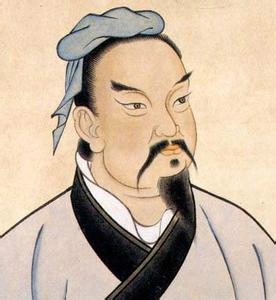


Life and historical context
Sun Tzu is associated with the eastern Chinese state of Wu during an era of frequent interstate conflict called the Spring and Autumn period (approx. 770–476 BCE). This was a time when ritual authority of the Zhou dynasty waned and regional rulers competed for territory and influence. Contemporary details about Sun Tzu's rank and campaigns are sparse; later tradition describes him as a general and adviser who applied practical, often indirect, methods of warfare and governance. For distinctions with others of the same name, see references to Sun Tzu (mathematician) and related entries.
The Art of War: content and themes
Sun Tzu is traditionally credited with authoring The Art of War, a short treatise composed of succinct aphorisms and tactical guidance. The work addresses planning, intelligence, deception, terrain, command, morale, and the economy of force. Key themes include the primacy of strategic planning over brute force, the value of information and surprise, and the idea that the best victory is one achieved without protracted fighting. Famous lines often quoted from translations include assertions that "all warfare is based on deception" and counsel to "know the enemy and know yourself"—phrases that encapsulate its emphasis on assessment and adaptation.
Characteristics of the text
- Concise chapters focused on practical decision-making rather than abstract theory.
- Use of maxims and examples intended for commanders and policy-makers.
- Integration of moral, psychological, and logistical considerations alongside battlefield tactics.
Influence and uses
The Art of War became a central military classic in East Asia and later a global reference for strategic thinking. It has been studied by military leaders, diplomats, and business strategists; its principles are applied beyond warfare to negotiation, organizational leadership, and competitive strategy. The text has been translated into many languages and appears in commentaries and adaptations; modern readers encounter it in works on management as frequently as in military studies. Institutions and trainers cite the work for lessons in planning, risk assessment, and leadership under uncertainty.
Authorship, transmission, and legacy
Scholars note that the existing text likely reached its present form through centuries of copying and editorial activity. Questions about single authorship, interpolation, and dating are subjects of academic study in fields such as philology and military history. Nevertheless, the name Sun Tzu functions as a symbol for practical strategic thought. For background on Chinese terminology and broader scholarship, see entries on ancient China, military biography such as generals, and the tradition of military treatises indicated by military literature. For discussions of authorship and source studies, see scholarly references to attributed authorship and commentaries as well as works grouped under the broader category of classical military theory and strategy. The Art of War itself is frequently listed among major strategic works in anthologies.
Sun Tzu's reputation rests less on precise biographical facts and more on the enduring applicability of the strategic ideas credited to him. Whether studied as a historical document or a living manual of strategy, the work associated with his name remains influential across military, political, and commercial fields.
Questions and answers
Q: Who was Sun Tzu?
A: Sun Tzu was an ancient Chinese general, military expert and philosopher.
Q: What was his most famous work?
A: His most famous work was The Art of War, which is widely regarded as the most important work of military strategy and theory.
Q: What does his name mean?
A: His name means 'Master Sun'. His family name is Sun, and Tzu is an honorific (title of respect) meaning 'master'.
Q: Where does most of what we know about Sun Tzu come from?
A: Most of what we know about Sun Tzu comes from Ssu-ma Ch'ien's Shih chi, also called the Records of the Grand Historian.
Q: When did Sun Tzu live?
A: Sun Tzu lived during the period called 'The Spring and Autumn Period of China', which dates from 770 BC to 476 BC.
Q: Did Sun Tzu have another name?
A: Yes, Sun Tzu was also called Sun Wu.
Q: Who was the mathematician with the same name?
A: The mathematician with the same name was not the military strategist Sun Tzu.
Related articles
Author
AlegsaOnline.com Sun Tzu — ancient Chinese general and author of The Art of War Leandro Alegsa
URL: https://en.alegsaonline.com/art/94855
Sources
- totallyhistory.com : "Sun Tzu"
- sonshi.com : "WHO WAS SUN TZU?"
- simplyknowledge.com : "Sun Tzu"
- ancientmilitary.com : "Sun Tzu and The Art of War"
- thefamouspeople.com : "Sun Tzu Biography"
- thetao.info : "Sun Tzu's Art of War"
- forbes.com : "Sun Tzu's 31 Best Pieces Of Leadership Advice"
- ancient.eu : "Sun-Tzu"
- history.com : "Sun Tzu"
- military-quotes.com : "Sun Tzu Quotes – The Art of War"
- commons.wikimedia.org : Sun Tzu