
Stuart Sutcliffe: Artist and Early Member of The Beatles
Stuart Sutcliffe (1940–1962) was a Scottish-born artist and the original bassist in the early lineup of The Beatles; he left to pursue painting in Hamburg and died there young from a brain haemorrhage.
Overview
Stuart Fergusson Victor Sutcliffe (23 June 1940 – 10 April 1962) was an artist and one of the early members of the English pop group that later became famous as The Beatles. Born in Edinburgh, Scotland, and brought up in Liverpool, he is remembered both for his brief role as the band's original bassist and for his ambitions and practice as a painter. He left the group before they achieved international fame to return to art school and to work in continental Europe.
Image gallery
5 Images


Early life and education
Sutcliffe trained at Liverpool art college, where he studied painting and developed interests in contemporary and modern art practices. During his art-school years he met fellow students and musicians with whom he formed friendships; these acquaintances led to informal collaborations between the local art scene and the emerging pop groups of the late 1950s and early 1960s. His work showed an early concern with composition and colour, and he regarded himself chiefly as a visual artist rather than a career musician.
Joining the band
While still a student, Sutcliffe became associated with a small Liverpool group that performed in local venues and, later, in clubs abroad. He accepted a role in the ensemble as its bassist, an instrument he took up to fill a practical need rather than from a lifelong technical background. At the time the group was one of several outfits in the city experimenting with rock and rhythm-and-blues forms that appealed to young audiences across Britain and in parts of continental Europe.
Hamburg period and artistic circles
Sutcliffe spent significant time with the group during their extended residencies in Hamburg, Germany. The city’s active club scene and its thriving community of photographers and painters offered Sutcliffe greater exposure to continental art movements and to peers who encouraged his painting. There he formed important friendships with local artists and photographers whose aesthetic sensibilities influenced both his art and, indirectly, the band’s early image.
Personal relationships and influences
In Hamburg Sutcliffe became close to members of the local artistic community. He had a notable relationship with a photographer who documented the band and its social milieu; through these connections Sutcliffe increasingly identified with painting and photography rather than public musical performance. Fellow artists and friends from both Liverpool and Hamburg took part in encouraging exhibitions and in circulating his work among small, local shows and informal salons.
Departure to pursue art
Deciding that his principal vocation was visual art, Sutcliffe left the ensemble to return to study and to pursue painting full time. His departure was a personal and professional turning point: it allowed him to concentrate on developing technique, exploring contemporary styles and showing his work to a European audience. He continued to keep company with musicians and artists, but his own ambitions lay in creating paintings and in participating in the art circles of the period.
Illness and death
Stuart Sutcliffe died in Hamburg on 10 April 1962, aged 21, from a brain haemorrhage. For a long time some accounts linked his collapse to an earlier physical altercation, but later medical commentary and biographical work have suggested that an undiagnosed vascular abnormality, such as a congenital aneurysm or arteriovenous malformation, may have been the underlying cause. The precise medical circumstances remain the subject of cautious interpretation rather than settled fact.
Legacy and cultural reception
Though his time as a performing member of the group was short, Sutcliffe is frequently recalled in histories of the band and in studies of the cultural exchange between British pop music and European art after the Second World War. He is sometimes described in popular accounts as one of the early creative figures around the group; the epithet "the fifth Beatle" has been applied to several people associated with the band, including Sutcliffe in some narratives, but such labels are informal and reflect his place in early group memory rather than any formal status.
Artistic record and posthumous attention
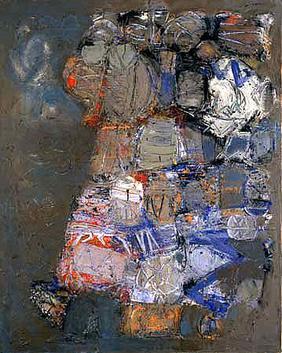
Examples of Sutcliffe's paintings have appeared in retrospectives and small exhibitions devoted to the Liverpool art scene and to artists connected with the early 1960s pop milieu. Scholars and curators interested in postwar British art and the intersections between music and visual culture continue to discuss his work as part of a wider story about youth culture, art education and the choices faced by young creative practitioners at that time.
Places associated with his life
- Born in Edinburgh, Scotland.
- Raised and educated in Liverpool, where he attended art college.
- Worked and lived for a time in Hamburg, Germany, where he pursued painting and associated with local artists.
Stuart Sutcliffe's life is often cited as an example of an artist who chose a private creative path over anticipated popular success. Readers seeking primary sources, images of his paintings, or detailed medical and biographical accounts should consult specialist archives and published biographies for fuller documentation and for reproductions of his surviving work. The story of Sutcliffe continues to interest those studying the early history of English popular music, the formative years of the band and the broader postwar art education environment that shaped a generation of young artists and musicians.
Related articles
Author
AlegsaOnline.com Stuart Sutcliffe: Artist and Early Member of The Beatles Leandro Alegsa
URL: https://en.alegsaonline.com/art/94373