
Stollen: Traditional German Christmas Fruit Bread
Stollen is a dense, yeasted German fruit bread with nuts, spices and candied fruit, dusted with powdered sugar and widely associated with the Christmas season and regional varieties such as Dresden Stollen.

Image gallery
10 Images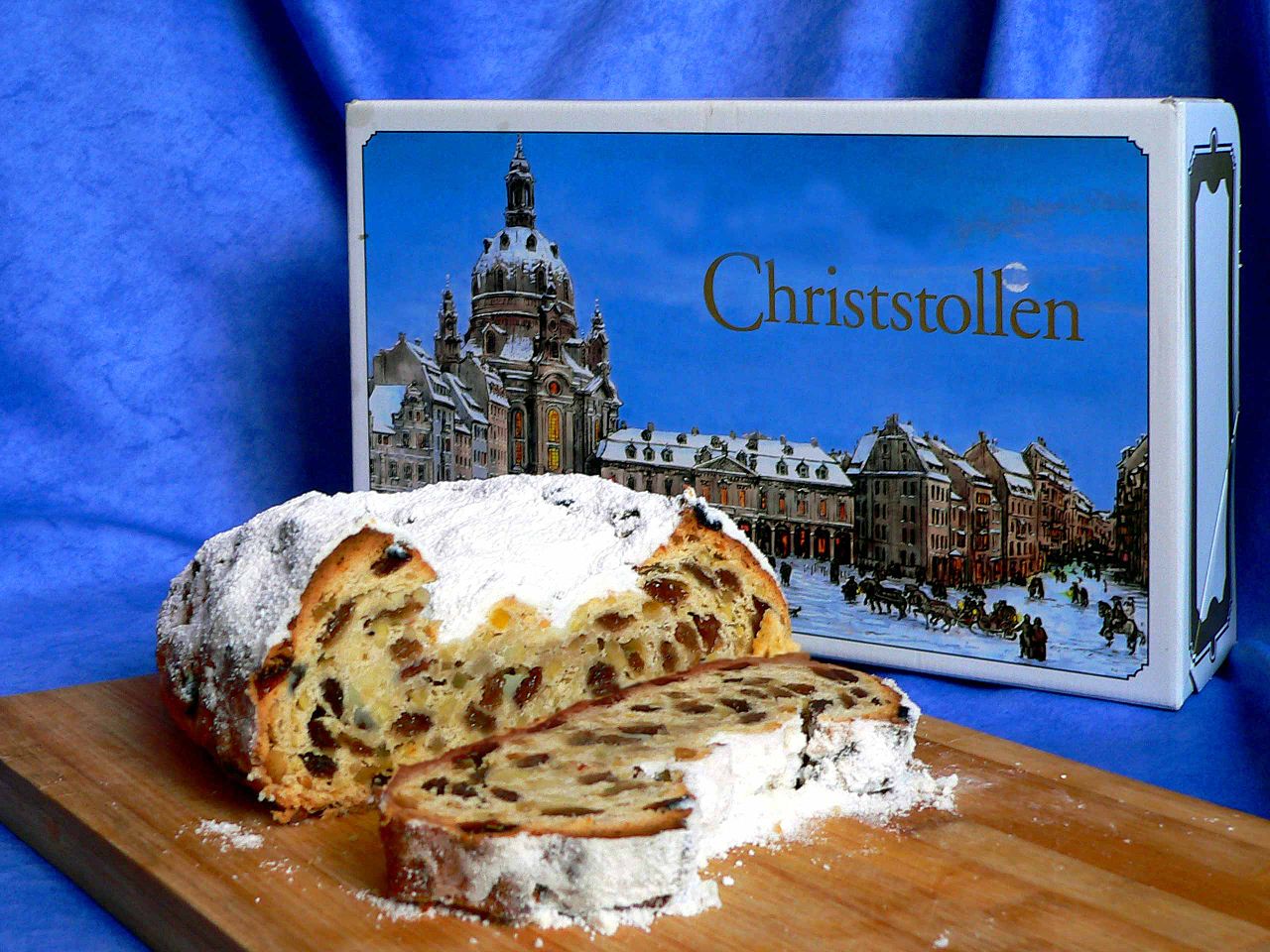


Typical ingredients and appearance
The basic stollen dough is made from flour, yeast, milk, sugar and butter. Common additions include:
- Raisins or sultanas and candied citrus peel
- Chopped almonds or other nuts
- Spices such as cinnamon, cardamom and nutmeg
- Optional fillings like marzipan or poppy seed paste
Loaves are usually oblong and somewhat flattened; after baking they are brushed with butter and rolled or sprinkled in powdered sugar. In many traditions the shape and white coating symbolically recall the swaddled Christ child.
History and regional significance
Stollen has medieval roots as a simple yeasted bread made in central Europe. Over centuries it evolved from a plain Lenten loaf into a richer festive food as ingredients such as butter, candied fruit and sugar became more widely available. The city of Dresden became especially famous for its stollen; that reputation led to firm traditions around production, public celebrations and protective recognition in Europe for the name and method used in the historic city.
Uses, traditions and serving
Stollen is most commonly associated with the Advent and Christmas period and is often given as a gift, sliced at holiday gatherings or served with coffee. Bakers sometimes age stollen for several days or weeks after baking—wrapped and stored cool—so flavors can mingle. Large public events such as parades and festivals celebrate the loaf in certain German regions, underscoring its cultural role.
Preparation notes and distinctions
Making stollen requires a long kneading and proofing process to develop the correct crumb and to integrate fruit without sogginess. After baking, liberal brushing with butter and multiple coatings of sugar help seal the loaf and prolong shelf life. When exploring stollen, expect a range from lightly fruity to intensely buttery styles and from rustic home loaves to regionally designated specialties.
For more on German holiday baking and regional food customs, see resources on Germany and the Christmas season.
Related articles
Author
AlegsaOnline.com Stollen: Traditional German Christmas Fruit Bread Leandro Alegsa
URL: https://en.alegsaonline.com/art/94028