
Sukiyaki: Japanese one‑pot beef dish and its regional styles
Sukiyaki is a Japanese hot pot dish of thinly sliced beef simmered with vegetables in a sweet‑savory sauce; served family‑style with regional variations and often dipped in raw egg.
Overview
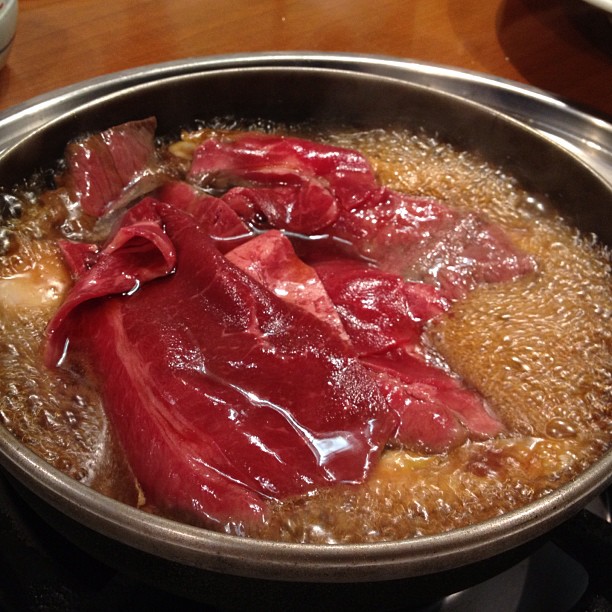
Sukiyaki is a popular Japanese one‑pot meal centered on very thinly sliced beef simmered with vegetables, noodles and tofu in a sweet‑savory broth. It is commonly prepared and eaten at the table from a shared skillet or shallow pot. For a concise introduction to its place in Japanese cuisine, see one‑pot meal.
Image gallery
5 Images


Ingredients and common components
The dish typically combines several complementary ingredients that cook quickly and absorb flavor. Core elements include:
- Beef: paper‑thin slices of beef are essential; the meat cooks in seconds and is prized for tenderness. See also thinly sliced beef.
- Broth or sauce (warishita): a mixture of soy sauce, sugar, mirin and sake or dashi, producing a sweet‑salty glaze.
- Vegetables and additions: negi (Japanese leek), napa cabbage, shiitake mushrooms, tofu, and konnyaku or shirataki noodles are common.
History and regional styles
Sukiyaki gained prominence after Japan reopened to Western influences in the late 19th century, when eating meat became more acceptable. Over time distinct regional preparations developed. Two well known approaches contrast the Kansai and Kanto styles: in Kansai the meat is often seared first and then combined with the other ingredients, while in Kanto the sauce is usually added to the pot and ingredients are simmered together. For more on these local differences, consult a discussion of regional styles.
Preparation, serving and etiquette
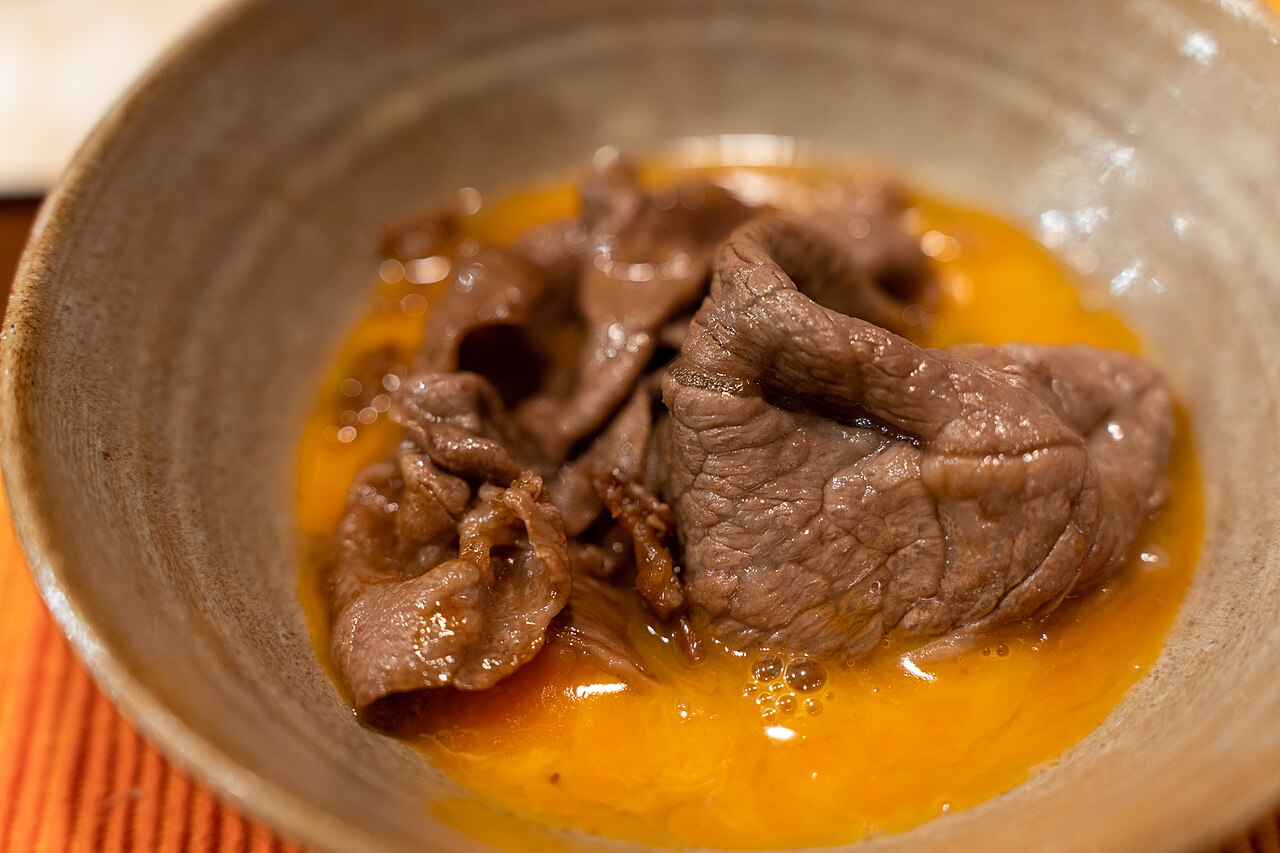
Sukiyaki is commonly cooked at the table on a portable burner so diners can add ingredients and control doneness. A traditional accompaniment is a small bowl of raw, lightly beaten egg used as a dipping sauce; pieces of hot food are dipped briefly to cool and to add a smooth texture. The communal nature of the meal makes it a social dish for family gatherings and celebratory occasions.
Variations and how it compares
There are many variations that reflect seasonality and taste: pork or vegetables‑only versions appear where beef is less preferred; some recipes emphasize a stronger soy flavor or a sweeter finish. Sukiyaki is often contrasted with other Japanese nabemono such as shabu‑shabu, in which slices of meat are swished briefly in boiling broth rather than simmered in a sweet sauce. The element "yaki" in the name signals the initial frying or searing step that distinguishes some preparations.
Notable facts
Beyond its flavors, sukiyaki is notable for its social cooking style and adaptability: it can be prepared in homes, restaurants, and for special occasions, and its composition changes with regional preferences and ingredient availability. The dish remains one of the most recognizable examples of Japanese hot‑pot cuisine.
Questions and answers
Q: What is sukiyaki?
A: Sukiyaki is a popular Japanese one-pot meal made with thinly sliced beef, simmered in a skillet or pan in sukiyaki sauce with vegetables and other ingredients.
Q: What is the main ingredient in sukiyaki?
A: The main ingredient in sukiyaki is thinly sliced beef.
Q: What does the word "yaki" mean in Japanese?
A: The word "yaki" in Japanese means "sautee" or "grill."
Q: Why is the word "yaki" used in relation to sukiyaki?
A: The word "yaki" is used because the beef in sukiyaki is sauteed in a hot skillet.
Q: What other ingredients are typically added to sukiyaki besides beef?
A: Besides the beef, sukiyaki includes many vegetables and other ingredients simmered in the sukiyaki sauce.
Q: How is sukiyaki cooked?
A: Sukiyaki is cooked in a skillet or pan, where the thinly sliced beef is sauteed and then simmered in the sukiyaki sauce with vegetables and other ingredients.
Q: Why is sukiyaki a popular dish in Japan?
A: Sukiyaki is a popular dish in Japan due to its delicious flavor and convenience as a one-pot meal that can be shared with friends and family.
Related articles
Author
AlegsaOnline.com Sukiyaki: Japanese one‑pot beef dish and its regional styles Leandro Alegsa
URL: https://en.alegsaonline.com/art/94694