
Stockholm City Hall
Prominent municipal building on Kungsholmen in Stockholm, Sweden; designed by Ragnar Östberg (1911–1923). Seat of the city council and site of the annual Nobel Prize banquet on 10 December.
Overview
Stockholm City Hall is the principal municipal building of Stockholm in Sweden. Known in Swedish as Stockholms stadshus, it stands on the island of Kungsholmen and combines administrative offices with ceremonial spaces. Built in the early 20th century, the City Hall is one of the city’s most recognizable landmarks and a frequent subject for visitors, historians and students of architecture.
Image gallery
10 Images


Design and architecture
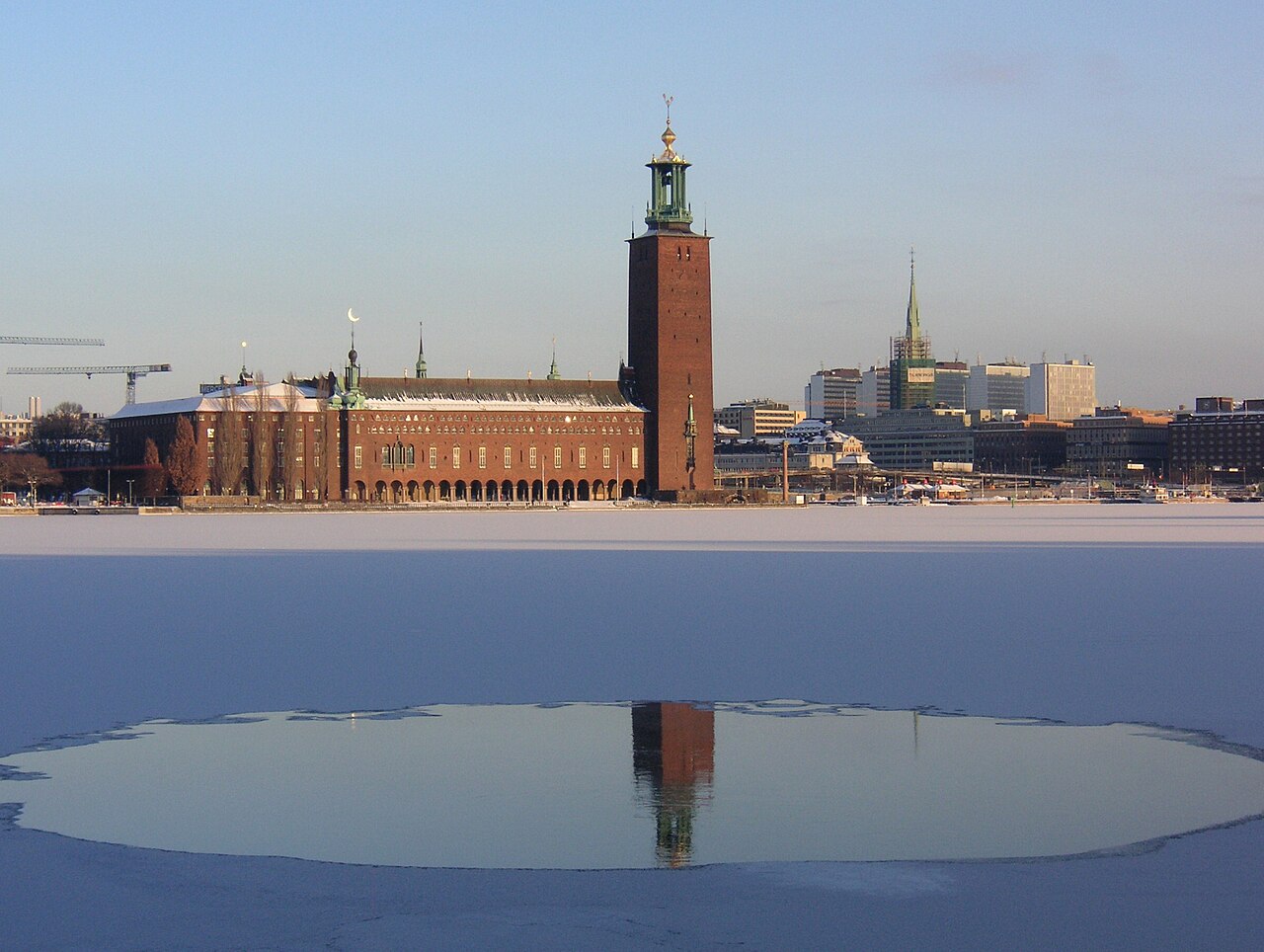
The complex was designed by architect Ragnar Östberg and was constructed between 1911 and 1923. The exterior is distinguished by red brickwork and a tall tower crowned with the three crowns, a national emblem. Östberg’s design blends National Romantic influences with northern European and classical civic motifs, producing a building that was intended to convey dignity and public purpose while accommodating modern municipal functions.
Main parts and interiors
- Blue Hall (Blå hallen) — a large vaulted hall used for ceremonial banquets; although its name suggests a blue interior, it is finished in warm brick tones and is the setting for the annual Nobel banquet.
- Golden Hall (Gyllene salen) — a richly decorated reception room lined with mosaics that depict themes from Swedish history and mythology; it is used for receptions and the Nobel Ball.
- Council Chamber — the formal meeting room where the Stockholm Municipality council holds sessions and where civic business is conducted.
- Tower, staircases and inner courtyard — the building contains an inner courtyard and observation points that offer views over central Stockholm.
History and development
Construction began in the second decade of the twentieth century and was completed in the early 1920s. Östberg’s scheme responded to contemporary ideas about national expression in public architecture, adapting traditional forms for new civic uses. The City Hall has since been the site of municipal governance, state receptions and cultural events, and it remains a living administrative centre rather than a museum piece.
Functions and cultural role
Beyond housing municipal offices and the meeting chamber, Stockholm City Hall hosts concerts, official receptions, guided tours and temporary exhibitions. Its most internationally publicized annual event is the Nobel Prize banquet associated with the Nobel Prize, traditionally held on 10 December in the Blue Hall, followed by the after-party in the Golden Hall. The building’s ceremonial rooms and public programmes contribute to its role in Swedish national and civic identity.
Visiting and conservation
The City Hall is open to visitors by guided tour, which typically include the main halls, the inner courtyard and parts of the tower; practical details are provided by municipal sources and visitor services. Conservation of decorative mosaics, furnishings and structural fabric is an ongoing task, carried out to balance public access with preservation of artistic and historic values.
For further reading consult material on Stockholms stadshus, municipal publications about Stockholm Municipality, and general sources on Ragnar Östberg and early 20th-century architecture in Stockholm and Sweden. The City Hall’s association with the Nobel Prize also links it to the international history of that award.
Related articles
Author
AlegsaOnline.com Stockholm City Hall Leandro Alegsa
URL: https://en.alegsaonline.com/art/93989
Sources
- emporis.com : Stockholm City Hall
- skyscraperpage.com : Stockholm City Hall