
Steak tartare: raw beef dish — preparation, history, variations, and safety
Steak tartare is a raw minced or finely chopped meat dish, commonly beef. This article explains ingredients, preparation methods, historical origins, regional names, serving styles, and health precautions.
Overview
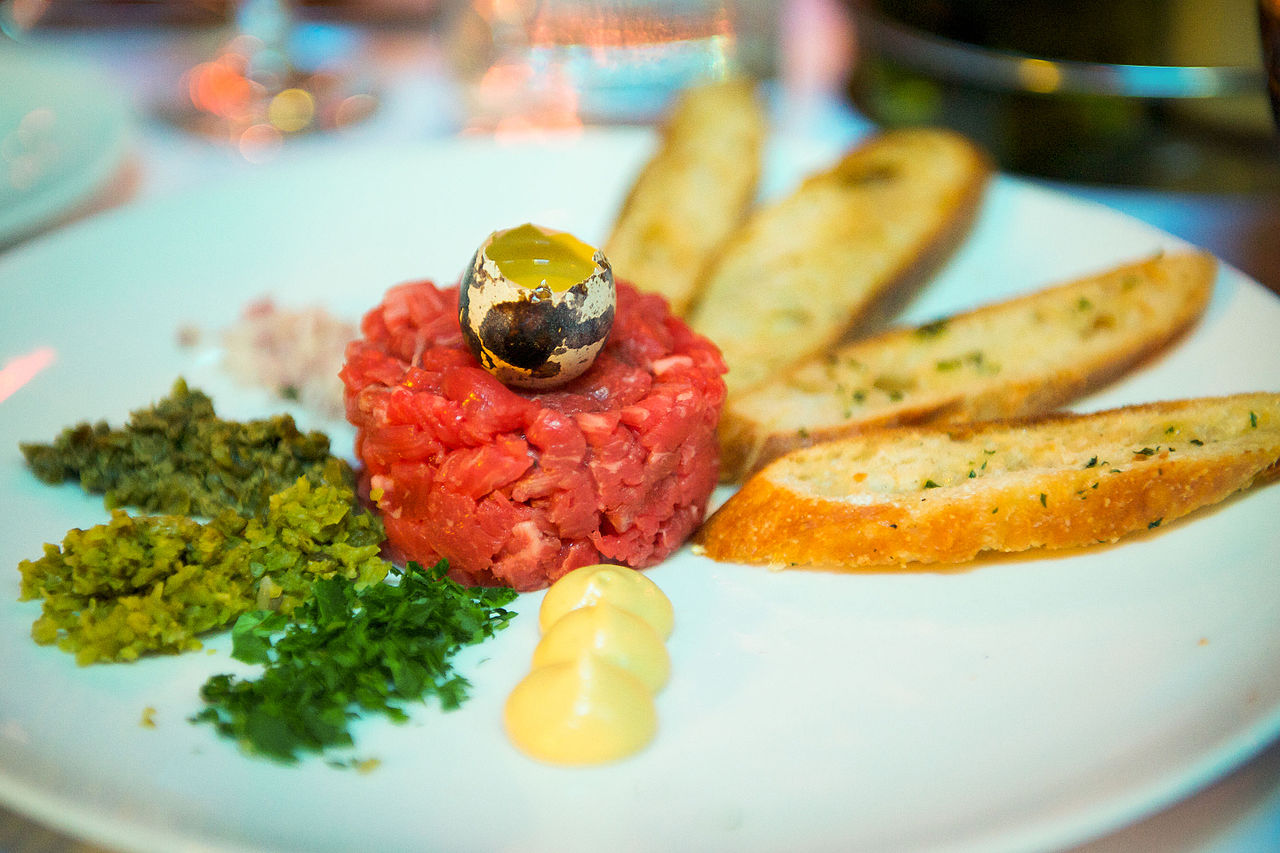
Steak tartare is a culinary preparation of raw meat that is finely chopped, minced, or lightly ground and served seasoned. Most commonly made from high-quality beef, some traditional or regional recipes use other meats. The texture and freshness of the meat are central to the experience: tartare is valued for its delicate tenderness and the balance of raw-meat flavor with acidic and aromatic condiments.
Image gallery
5 Images



Characteristics and common ingredients
The core component is fresh, lean meat cut or minced just before service. Many recipes include a raw egg yolk on top and seasonings such as salt, pepper, mustard, capers, chopped shallot or onion, and Worcestershire sauce. Variations may feature herbs, anchovy, or different acids to brighten the dish. While beef is most common, some traditions use horse meat or other meats; when serving meat raw, quality and handling are essential.
Preparation and serving
Preparation emphasizes cleanliness and minimal handling. Typical steps include trimming sinew and fat, finely chopping the meat by hand or briefly grinding it, then combining it with seasonings at the table or in the kitchen. It is usually formed into a mound and often presented with toast, fries, or salad greens; a raw egg yolk is sometimes placed on top as a rich binder. Recipes vary by country and establishment.
Names and regional variations
- In parts of Belgium and Luxembourg the dish is commonly called filet américain.
- Similar raw-meat preparations exist elsewhere under different names or with local twists; for example, Korean yukhoe or Italian carpaccio are related but distinct.
- Some recipes historically used horse meat; references to this practice appear in several cuisines and menus (horse meat).
History and origin
The name is often linked in popular stories to Eurasian nomadic peoples, notably the Tatars; a common tale describes meat placed under saddles to tenderize during long rides. This anecdote is widely repeated but not definitively proven. Culinary documentation shows that raw-seasoned meat preparations have arisen independently in many regions, adapting to local tastes and available ingredients. For general historical context see Tatars and regional culinary histories.
Health considerations and safe practices
Because steak tartare is eaten raw, it carries food-safety considerations. Raw meat can harbor bacteria such as pathogenic species and parasites, and raw eggs may add risk in some populations. To reduce hazards chefs and home cooks follow strict hygiene: using recently butchered, high-quality cuts, keeping meat chilled, avoiding cross-contamination, and serving immediately. Consumers with weakened immune systems, pregnant people, the elderly, and young children are often advised to avoid raw-meat dishes or seek safer alternatives (basic hygiene guidance). For ingredient sourcing and culinary technique, consult reputable culinary sources (meat handling, beef selection, regional names).
Steak tartare remains a celebrated preparatory style in many restaurants, prized for its simplicity and the way careful seasoning complements the natural flavor of fresh meat. When prepared thoughtfully and consumed with awareness of safety, it is a classic example of raw-cuisine technique enjoyed worldwide.
Related articles
Author
AlegsaOnline.com Steak tartare: raw beef dish — preparation, history, variations, and safety Leandro Alegsa
URL: https://en.alegsaonline.com/art/93600