
Stew: Slow-simmered meat and vegetable dishes
A stew is a one-pot dish of meats and/or vegetables cooked slowly in liquid to develop tender texture and concentrated flavors; found in many cuisines worldwide.
Overview
A stew is a broadly defined category of dishes in which ingredients—typically cuts of meat, poultry, fish or vegetables—are cooked slowly in a relatively small amount of liquid until flavors concentrate and tougher components become tender. The finished dish is usually eaten in the cooking liquid, commonly referred to as the gravy, which may be thin or reduced to a sauce-like consistency.
Image gallery
10 Images


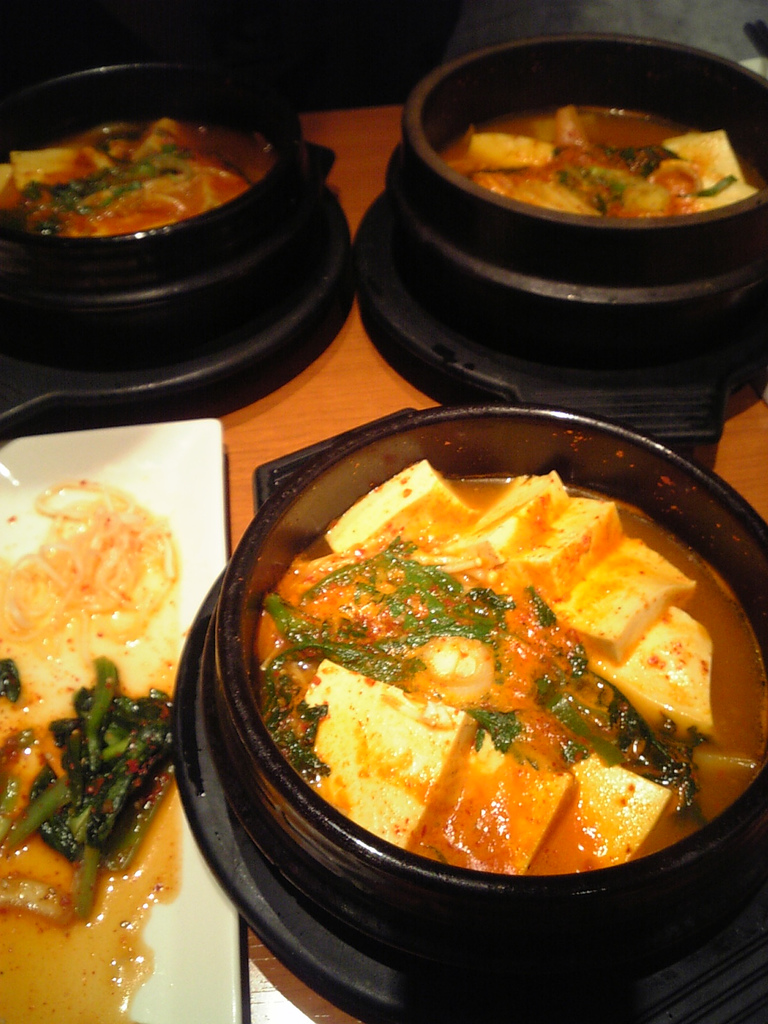
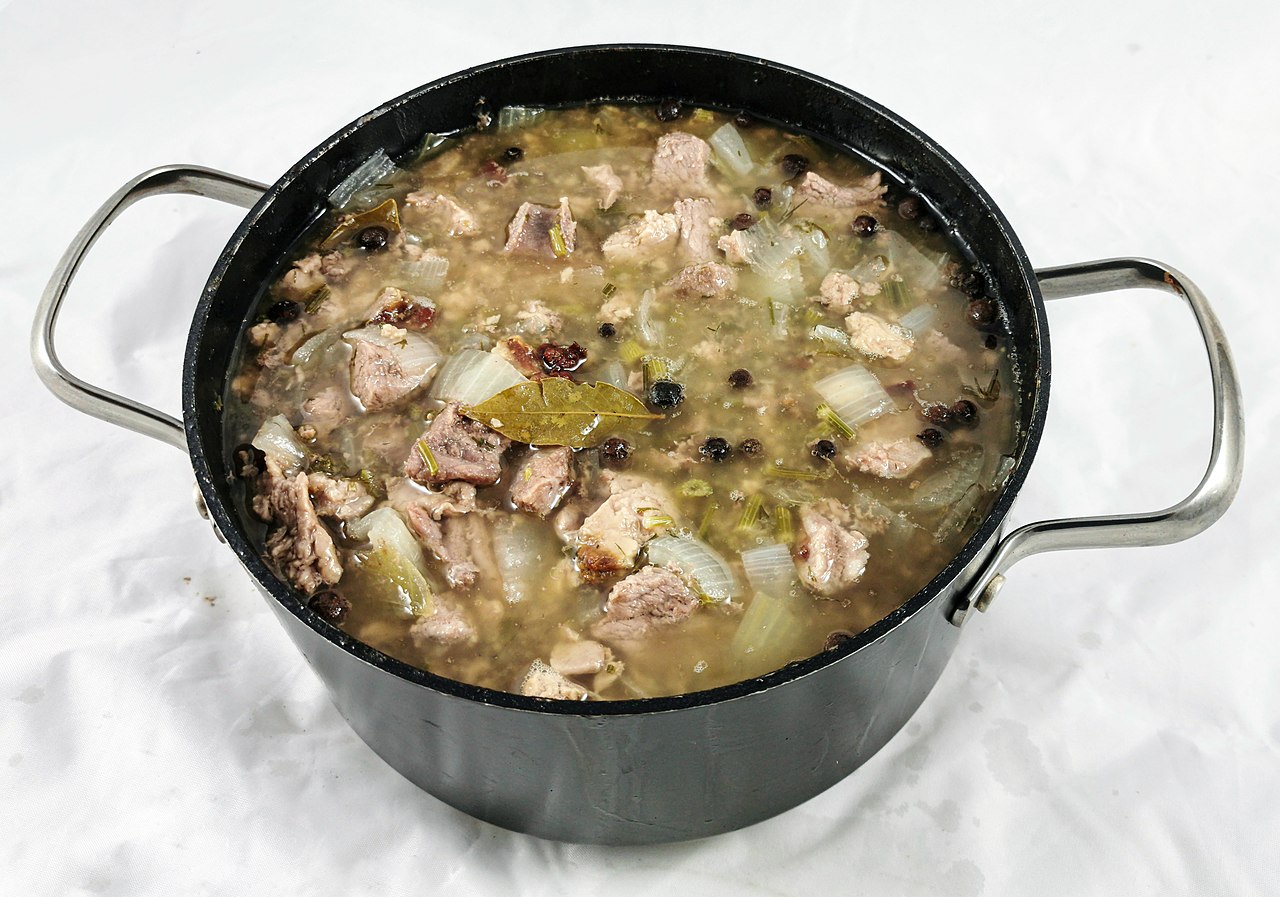


Ingredients and characteristic cuts
Stews make use of a wide range of primary components. Traditional recipes often choose tougher, less expensive pieces: shoulder, shank and chuck from cattle or older sheep and goats are popular because prolonged moist heat breaks down collagen, producing gelatin and a rich mouthfeel. Typical categories of components include meat and vegetables, legumes, root vegetables, aromatics and herbs. Classic examples include dishes built with mutton or beef, though many stews rely entirely on vegetables or pulses.
Technique and thickening
Stewing is a moist-heat cooking method: food is simmered gently, usually on a stovetop or over low heat, allowing connective tissue to transform into gelatin and flavors to meld. Preparatory steps often include searing meat to build flavor, deglazing the pan, then adding stock, wine or water and simmering for extended periods. Vegetables with shorter cook times—like peas or bell pepper—are commonly added later to avoid disintegration. To adjust body and texture, cooks use several thickening methods:
- Reduction of the cooking liquid by simmering
- Adding a roux or a flour slurry
- Incorporating mashed legumes, potatoes or pureed vegetables
Variations, examples and uses
Stews appear in nearly every culinary tradition, with regional names and ingredient profiles reflecting local agriculture and taste. Examples include beef bourguignon, Irish stew, Hungarian goulash, tagines, and many bean- or lentil-based dishes. Stews are practical for home cooking and large-scale feeding: they are economical, often improve with refrigeration as flavors deepen, and can be scaled easily. Vegetarian and seafood stews adapt the same slow-simmering principles to suit dietary preferences.
Distinctions and related preparations
Stews are often compared to braises and casseroles. Braising typically refers to larger pieces of meat partially submerged in liquid and cooked at low heat, while casseroles are assembled and baked in an oven, sometimes with a crust or topping. A stew generally has smaller, uniformly sized pieces and is served in its cooking liquid without a separate topping. The vocabulary and overlap vary by culture and cookbook, so the terms are sometimes used interchangeably.
Practical tips and notable facts
Small technique choices influence final results: a moderate simmer prevents protein from toughening, acidity (vinegar, wine, tomatoes) brightens rich stews, and finishing with fresh herbs or a splash of acid can revive flavors after long cooking. Modern home cooks also use pressure cookers or slow cookers to replicate traditional long-simmering methods more quickly or conveniently. For further reading on methods, ingredients and recipe inspiration, consult culinary guides and reputable recipe collections linked here: gravy resources, ingredient guides, mutton recipes, beef stew ideas, thickening techniques, cooking methods, and oven dishes.
Questions and answers
Q: What is a stew?
A: A stew is a dish cooked for a long time and served in the gravy produced by the cooking. It can be made with any meat and/or vegetables.
Q: What kind of meat is ideal for a stew?
A: Tough meat like mutton and beef cuts which have marbling (fat) and connective tissue are ideal for a stew.
Q: What kind of vegetables should be used in a stew?
A: Tougher vegetables should be used in a stew.
Q: What is the traditional way to start off a stew?
A: It is traditional to start off with a simple sauce, such as a roux, or even simpler, flour and an Oxo stock cube can be stirred in some milk and water.
Q: How are casseroles and stews similar?
A: Casseroles and stews are similar in that they are both dishes cooked for a long time with meat and/or vegetables.
Q: What is the difference between stewing and casserole cooking?
A: Stewing is a cooking process where heat is applied to the bottom of the cooking vessel, while casserole cooking is generally baked in an oven where heat circulates all around the cooking vessel.
Q: Do casseroles have a topping?
A: Yes, casseroles often have a topping, while stews do not.
Related articles
Author
AlegsaOnline.com Stew: Slow-simmered meat and vegetable dishes Leandro Alegsa
URL: https://en.alegsaonline.com/art/93894