
St. Basil's Cathedral (Cathedral of the Intercession)
16th-century Russian Orthodox cathedral on Moscow's Red Square, famed for its colorful onion domes, nine-chapel plan, association with Saint Basil, turbulent history, and status as a UNESCO cultural landmark.
Overview
St. Basil's Cathedral, officially the Cathedral of the Intercession of the Most Holy Theotokos on the Moat, is one of the most recognisable landmarks of Moscow and of Russia. Erected between 1555 and 1561 on the order of Ivan IV, it commemorates military victories in the mid-16th century and became popularly associated with the ascetic saint Basil the Blessed. The complex occupies a prominent position at the southern end of Red Square and functions today as both a museum and, on occasion, a place of worship.
Image gallery
10 Images




Architecture and design
The cathedral's plan is unusual for its period: nine distinct chapels are clustered around a central church, producing an irregular, star-like composition topped by a group of towers and domes. A taller central tented-roof tower rises above the surrounding chapels to form a focal point. The building is famed for its onion-shaped domes, their spirals and bright painted patterns that depart from earlier Byzantine norms and helped shape a distinct Russian architectural vocabulary. The domes and vaulting are often described collectively as onion domes; the taller central element is frequently referenced as the central spire or main tower. The structure is primarily brick, richly decorated with painted ornament, patterned tiles and carved details; interiors contain iconostases, fresco fragments and varied masonry finishes.
Construction and historical development
Construction was carried out in the mid-16th century and is traditionally attributed to architects often named in Russian sources, though documentary evidence is limited. Over the centuries the cathedral has been altered, repaired and repainted many times. It survived multiple fires that affected Moscow, and it faced deliberate threats: in 1812 retreating French forces prepared to demolish it but the destruction was averted, and in the 20th century Soviet authorities debated its removal to clear views and for parade planning. Plans associated with the Stalin era put the building at risk; campaigns by conservators and public figures helped preserve it, and many proposed demolitions were not carried out. Today the cathedral is part of the ensemble inscribed as a UNESCO World Heritage site with the Kremlin and Red Square.
Interior, art and chapels
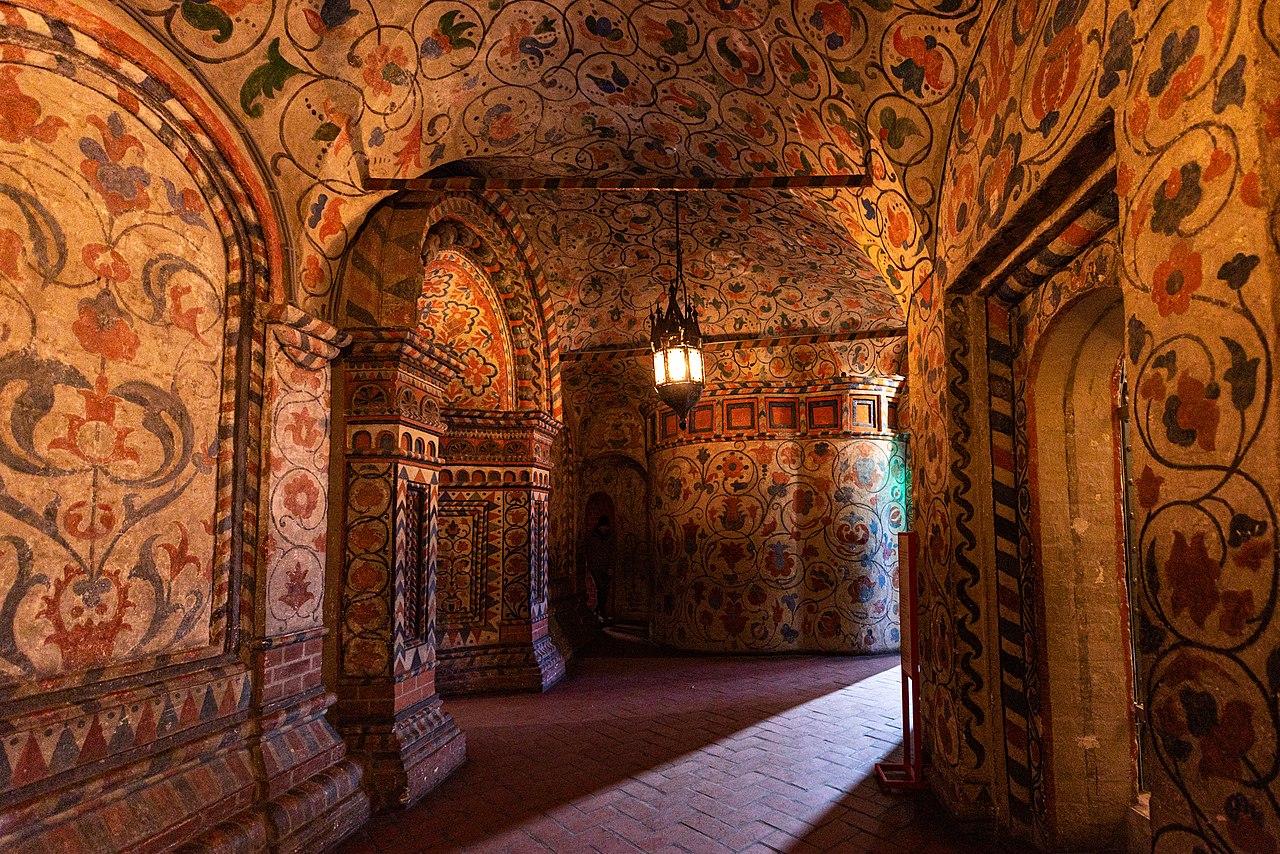
Inside, the cathedral is a compact, labyrinthine series of small chapels, each once serving its own altar and feast day. The interior decoration reflects centuries of work: painted iconography, gilded icon screens and layers of conserved frescoes and decorative painting. The tomb of Basil the Blessed, the figure most closely associated with the popular name of the cathedral, lies near the building and contributed to its devotional status. Because the spaces are small and vertically articulated, the experience of the interior differs markedly from large single-nave churches, inviting close study of icons, carved details and painted surfaces.
Restoration, preservation and public role
Restoration efforts in the 19th and 20th centuries aimed to stabilise the masonry, conserve interior painting and reconstruct historical colour schemes while responding to modern conservation standards. The building faces ongoing preservation challenges from weathering, pollution and the stresses of heavy visitor traffic. It operates primarily as a museum but retains religious significance; occasional liturgical services are held in some chapels and the site continues to attract pilgrims, scholars and millions of tourists each year.
Facts and significance
- Composed of nine chapels arranged around a central church, producing a unique star-like plan and skyline.
- Famous for its polychrome, bulbous domes often referred to as onion domes and for its richly patterned exterior.
- Closely associated with the popular saint Basil the Blessed and with the historical memory of 16th-century Moscow.
- Survived threats including foreign invasion and Soviet urban planning controversies linked to figures such as Joseph Stalin, and has been the subject of major conservation campaigns.
- Part of the Kremlin and Red Square UNESCO World Heritage ensemble and a symbol of Russian cultural history.
For further reading and visitor information consult general reference sources and official museum materials; several reputable guides and studies explore the cathedral's architecture, iconography and conservation history in detail. Scholars continue to investigate its origins, attributions and the sequence of alterations that produced the present appearance, ensuring that St. Basil's remains a subject of active research and popular interest.
Additional context about the site, its conservation and exhibitions can be found in specialist publications and institutional pages devoted to Moscow's historic centre and to the cathedral itself. When evaluating accounts of the cathedral, primary documentary evidence is limited for the 16th-century construction period, so cautious interpretation by historians is common.
Visitors planning a visit can check opening times, access arrangements and guided programmes from official or curated sources prior to travel, and should respect the dual museum and sacred nature of some spaces.
Moscow, Russia, and the wider historical context continue to shape understanding of this enduring architectural emblem.
Related articles
Author
AlegsaOnline.com St. Basil's Cathedral (Cathedral of the Intercession) Leandro Alegsa
URL: https://en.alegsaonline.com/art/93121