
St. John's Church (Jhelum)
A 19th-century Anglican church in Jhelum cantonment, built in 1860 during the British Raj; now part of the Church of Pakistan and noted as a local colonial-era landmark.
St. John's Church is an Anglican-origin church located in Jhelum, situated within the military cantonment area of Jhelum cantonment in the province of Punjab. Constructed in 1860 during the British Raj, the building lies close to the banks of the Jhelum River. Today it functions under the umbrella of the Church of Pakistan and remains a recognizable landmark of the city.
Image gallery
3 Images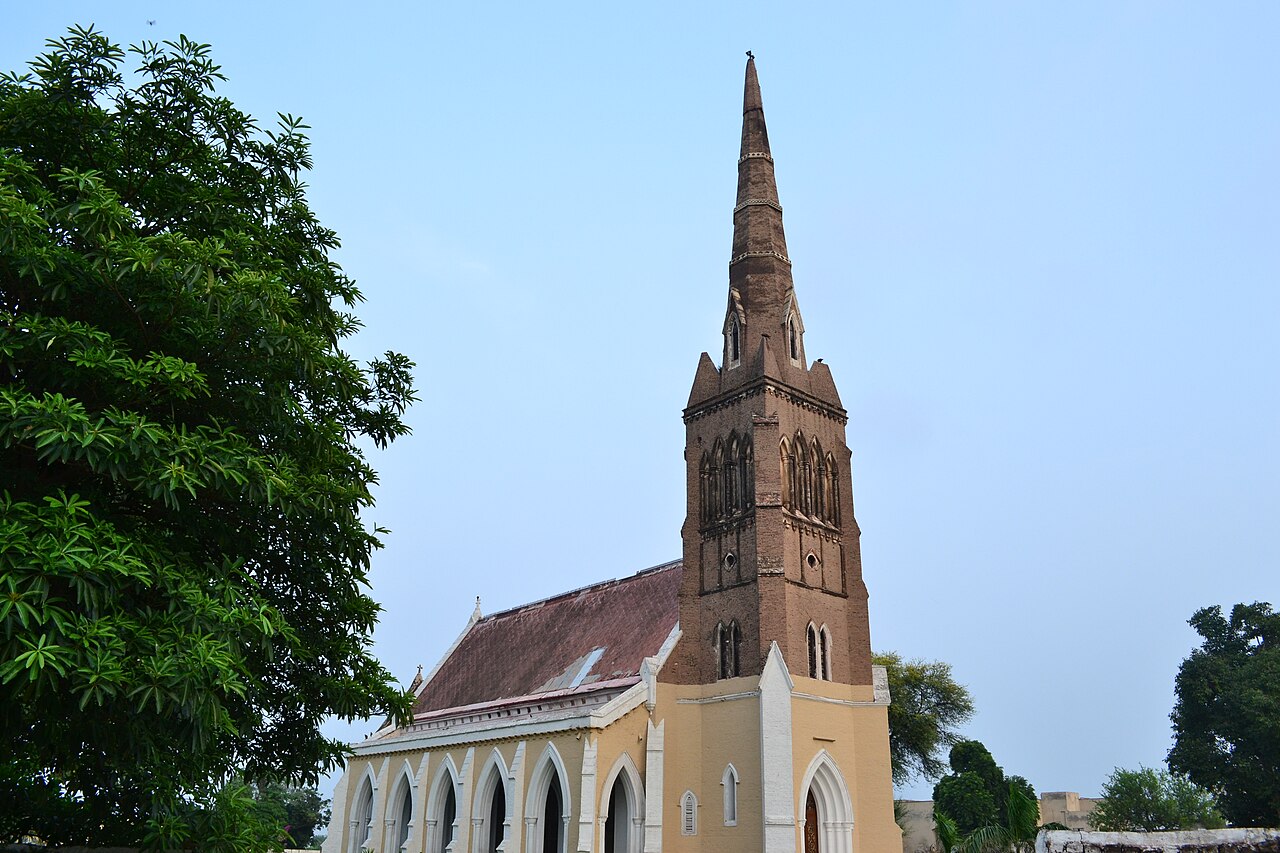

Overview and role
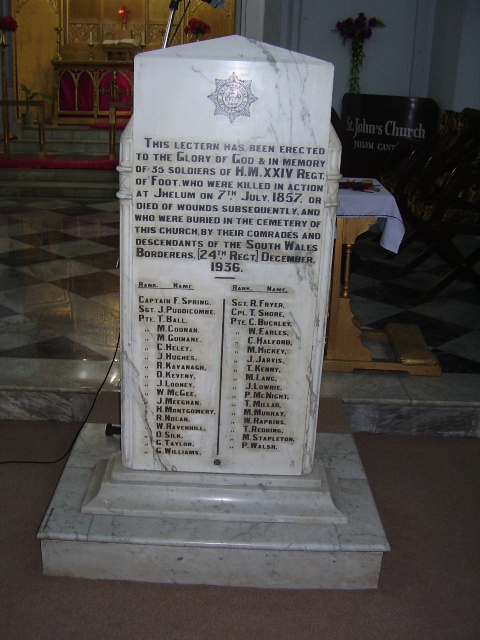
The church originally served the British military and civilian communities stationed in the region and later continued as a place of worship for local Christians. While its denominational administration has changed with national ecclesiastical reorganizations, St. John's continues to be used for services, commemorations and community gatherings. Its riverside position and colonial-era setting contribute to its visibility in Jhelum's urban fabric.
Characteristics
St. John's reflects the modest scale and functional design typical of mid-19th century military and parish churches built by the British in South Asia. Such buildings commonly emphasized a clear nave, simple masonry, pitched roofs and an emphasis on durability. Although specific decorative details vary, these churches were intended to be easily maintained within garrison towns and to provide a familiar liturgical space for Anglican worship.
- Location: within the cantonment close to the riverfront, making it a local landmark.
- Origins: established in 1860; associated with British colonial presence.
- Administration: now part of the national Protestant body, the Church of Pakistan.
Historically, structures like St. John's served both spiritual and social functions for expatriate and local Christian populations. After independence and changes in demographics, many such churches remained active or were preserved for heritage reasons. St. John's stands as an example of that continuity—bridging colonial history and present-day religious life.
Preservation and interpretation of colonial-era churches raise questions about architectural conservation, communal memory and adaptive reuse. Whether through continued liturgical use or careful maintenance as heritage buildings, sites like St. John's are often highlighted in regional studies of nineteenth-century architecture and the social history of cantonment towns.
Visitors seeking more information about the church, its history and current activities may consult local parish contacts, municipal heritage resources or regional guides to Jhelum's colonial-era sites found through civic and ecclesiastical channels.
Related articles
Author
AlegsaOnline.com St. John's Church (Jhelum) Leandro Alegsa
URL: https://en.alegsaonline.com/art/93089