
SPAD S.XIII — French World War I Fighter Aircraft
The SPAD S.XIII was a fast, robust French single-seat biplane fighter introduced in 1917. Widely used by Allied air services, it became one of WWI's most-produced and successful pursuit aircraft.
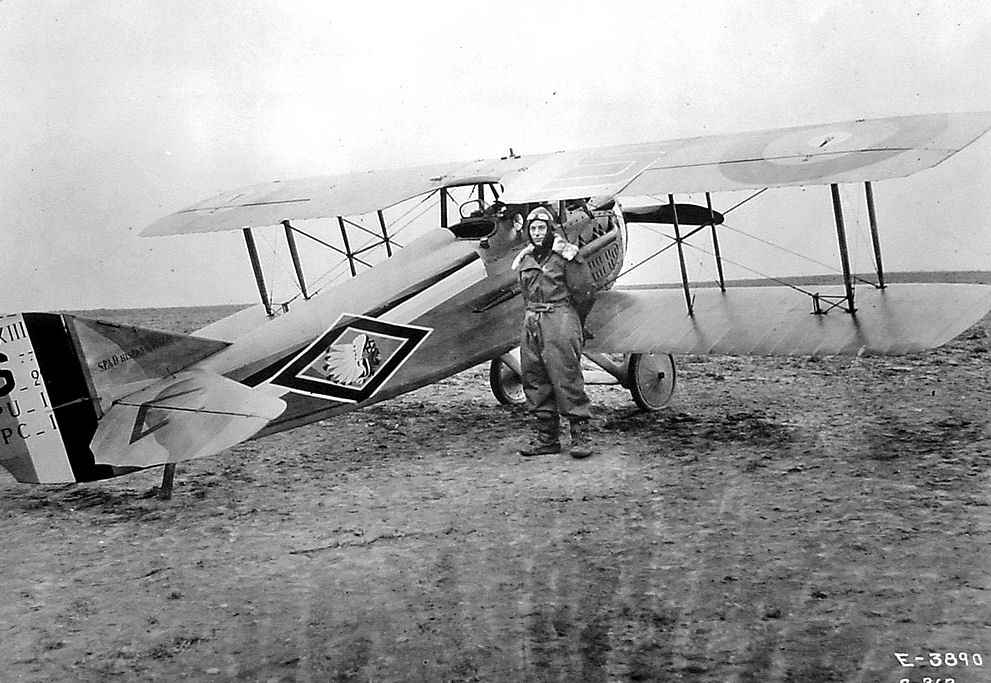
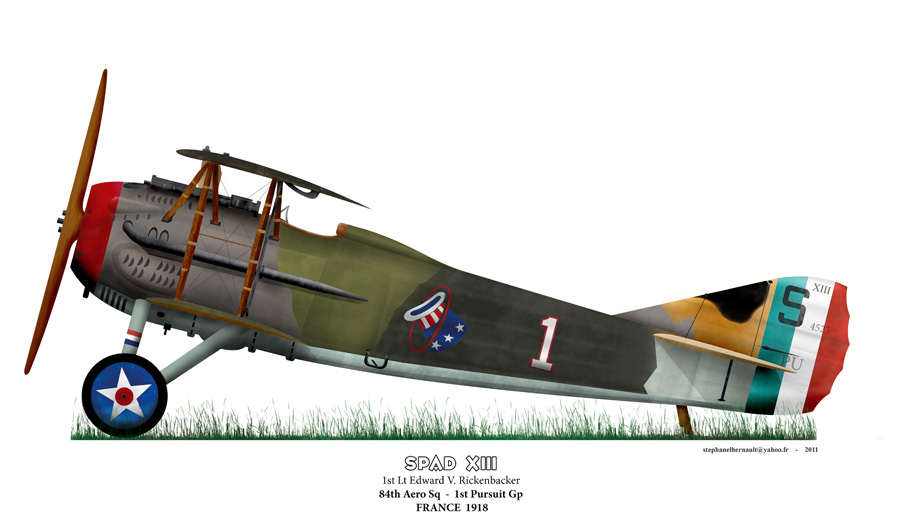
The SPAD S.XIII was a single-seat biplane fighter developed in France and introduced into frontline service in 1917. An evolution of the earlier SPAD S.VII, the S.XIII combined a stronger airframe and a more powerful Hispano-Suiza V8 engine with twin synchronized machine guns. Its blend of speed, structural strength and diving ability made it one of the most effective Allied pursuit aircraft of the later stages of World War I.
Image gallery
10 Images



Design and characteristics
Conceived by Louis Béchereau and built by Société Pour L'Aviation et ses Dérivés (SPAD) and licensees, the S.XIII used a conventional wood-and-fabric biplane layout with a sturdy center section and robust landing gear. Compared with its predecessor the S.VII it carried two forward-firing, synchronized machine guns and a higher-output V8 engine, improving climb and top speed. Pilots praised its ability to sustain high-speed dives and its resistance to combat damage, though it was heavier and less tightly turning than some contemporary fighters.
Operational history
The S.XIII entered service with French escadrilles in 1917 and was quickly adopted by other Allied forces. It served with the French Air Service and was supplied to the British Royal Flying Corps/RAF, the American Expeditionary Forces, Belgian and Italian squadrons, among others. Frontline squadrons used it for offensive patrols, escort and interception missions; its performance at altitude and in dives made it well suited to engaging enemy reconnaissance aircraft and fighters.
Operators and aces
- Primary operator: French Air Service — most numerous user and developer of tactics for the type. manufacturer
- British Royal Flying Corps/RAF and squadrons of the British Empire. World War I
- United States Army Air Service and several other Allied air arms, including Belgium and Italy. operators
Several leading aces flew SPAD fighters; their successes helped establish the type's reputation in 1917–1918. The aircraft favored hit-and-run tactics that took advantage of speed and structural strength rather than turning dogfights. Hispano-Suiza engine development and tactics evolution were closely linked in this period. tactics
Production, variants and legacy
SPAD S.XIII production was large-scale: more than 8,000 airframes were manufactured by SPAD and several subcontractors to meet wartime demand. Modest subvariants and production changes addressed engine versions, cooling arrangements and fittings for different operators. After the armistice the S.XIII remained in service for a time with several air arms and became a staple of the interwar aviation collections. Survivors and reproductions are preserved and studied today, providing insight into early high-performance fighter design. preservation
Related articles
Author
AlegsaOnline.com SPAD S.XIII — French World War I Fighter Aircraft Leandro Alegsa
URL: https://en.alegsaonline.com/art/92442