
Operation Grapeshot — Spring 1945 Allied Offensive in Italy
Operation Grapeshot was the final Allied spring offensive in Italy (6 April–2 May 1945) that broke the Gothic Line, drove into the Lombardy Plain and led to the surrender of German forces in Italy.
Overview
Operation Grapeshot was the Allied name for the final large-scale offensive in the Italian campaign of World War II. Launched on 6 April 1945, the operation brought British and Commonwealth formations of the Eighth Army together with the U.S. Fifth Army and other Allied contingents in a coordinated push across the northern Italian plain toward the industrial heartland of Lombardy. The offensive concluded with the capitulation of German forces in Italy in early May 1945.
Image gallery
7 Images




Forces, objectives and planning
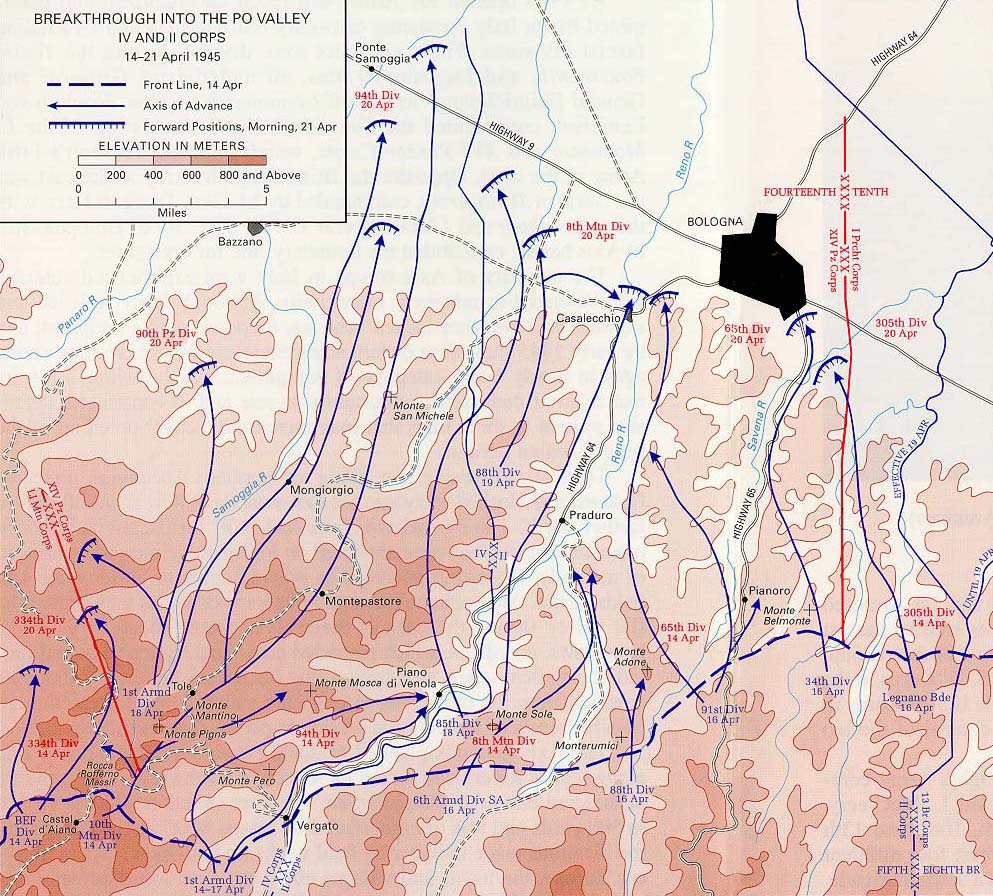
The assault was planned and executed by the Allied 15th Army Group under Field Marshal Sir Harold Alexander and used two principal army commands: the British Eighth Army to the east and the U.S. Fifth Army to the west. Commanders sought to break the German Gothic Line defenses, exploit through the lowlands, and encircle or force the withdrawal of Army Group C. Air power, artillery and mobile armored formations were coordinated to open gaps in the enemy lines and advance rapidly across the plain toward key cities.
Course of the fighting
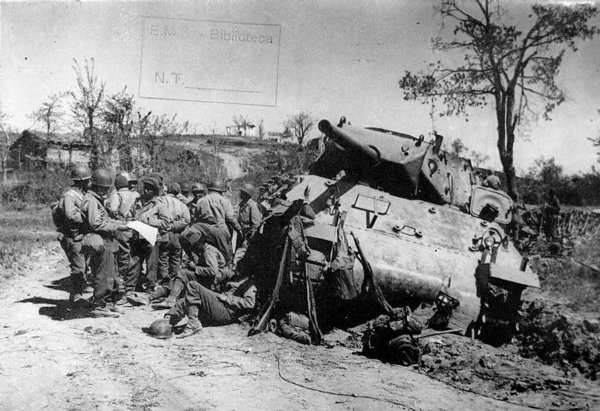
The attack began with frontal and enveloping moves that overwhelmed forward German positions and forced a retreat from the prepared defensive belts. Allied troops pushed through river lines and marshy ground, fought several localized, hard-fought actions to secure bridgeheads, and then exploited the terrain of the Po Valley and the Lombardy Plain to advance toward major towns. Urban centers and transport hubs were taken in April, and deeper penetrations into northern Italy quickly undermined German cohesion.
Outcomes and significance
By early May the organized German resistance in Italy had collapsed and surrender followed. The offensive liberated large areas of northern Italy, disrupted German lines of communication, and removed the Axis presence from a significant portion of the Italian mainland. Grapeshot was one element in the wider final Allied offensives across Europe that together precipitated the end of the war in Europe.
Notable aspects and legacy
The campaign demonstrated the effectiveness of coordinated multinational operations in difficult terrain and the value of combined arms — infantry, armor, artillery and air support — in breaking static defenses. It also took place amid growing Italian partisan activity and a collapsing German logistical situation. The liberation that followed created conditions for postwar reconstruction and political change throughout northern Italy.
Key dates and considerations
- 6 April 1945 — Allied spring offensive commenced.
- April 1945 — Rapid Allied advances through the Po Valley and capture of important urban centers.
- 2 May 1945 — Final surrender of German forces in Italy, ending major combat operations.
The Spring 1945 offensive in Italy remains an important episode in the closing weeks of the European war, illustrating how sustained pressure and operational mobility could dislodge well-entrenched defenses and bring about a relatively swift conclusion when strategic collapse occurred on multiple fronts.
Related articles
Author
AlegsaOnline.com Operation Grapeshot — Spring 1945 Allied Offensive in Italy Leandro Alegsa
URL: https://en.alegsaonline.com/art/92845
Sources
- amazon.com : B01FGLSGDA
- history.army.mil : Po Valley 1945