
Space debris: causes, risks, detection, and mitigation
Objects left in orbit—defunct satellites, spent rockets and fragments—that pose collision risks to spacecraft. Overview of sources, tracking, hazards, removal methods and policy challenges.
Overview
Space debris (also called orbital debris) refers to human-made objects in orbit around Earth that no longer serve a useful function. These range from intact but defunct satellites and discarded rocket stages to fragments, paint flecks and small fast-moving particles. Debris remains in orbit for years or decades, and even tiny pieces can damage active spacecraft because of their high relative velocities.
Image gallery
2 Images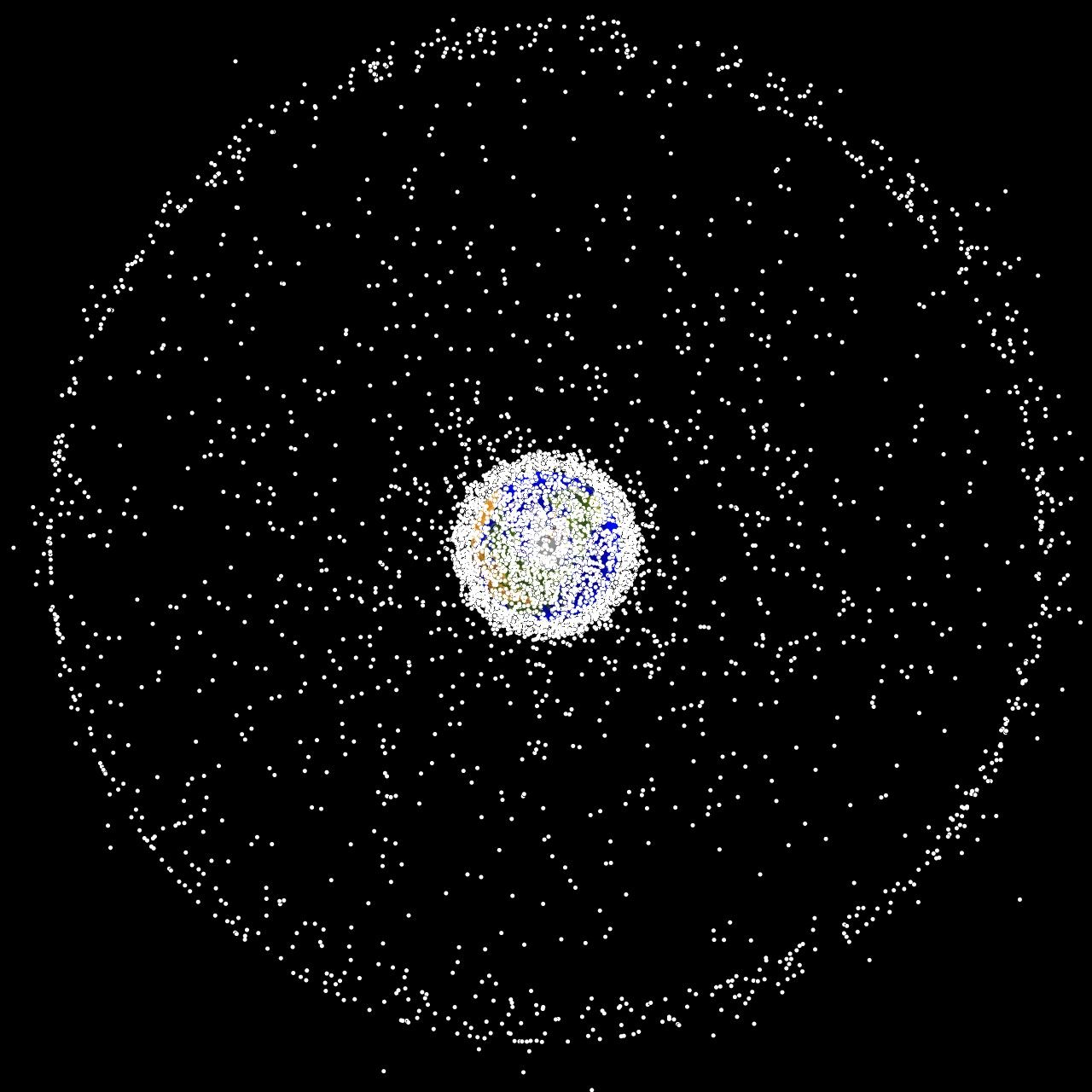

Sources and characteristics
Common sources of space debris include routine mission leftovers, accidental breakups and deliberate tests or explosions. Typical items are:
- Spent upper stages and booster hardware.
- Nonfunctional satellites and instrument packages.
- Fragments created by collisions, explosions or surface degradation.
- Microscopic paint flakes and other erosion products.
History and monitoring
The problem began in the early space age; the launch of Sputnik 1 marked the start of recorded human activity in orbit. Agencies and military organizations maintain catalogs of tracked objects. For example, NORAD and related entities compile lists used for collision avoidance and mission planning. Tracking is performed with ground radars, telescopes and space-based sensors that predict conjunctions and support maneuvers.
Risks and notable phenomena
Collisions between debris and operational satellites can produce more fragments in a cascading process sometimes called the Kessler syndrome. Such events increase costs, interrupt services (communications, navigation, Earth observation) and raise safety concerns for crewed missions. Even small debris can puncture pressure vessels or damage sensitive optics.
Mitigation and removal
Mitigation focuses on reducing new debris and removing existing objects. Common approaches include:
- Designing satellites to deorbit themselves at end of life or move to graveyard orbits.
- Passivation to prevent on-orbit explosions (draining residual propellants and energy sources).
- Active debris removal concepts: nets, harpoons, tethers, robotic arms and dedicated disposal missions.
Importance and policy
Space debris is both a technical and policy problem. Operators must coordinate maneuvers to avoid collisions, and regulators increasingly require mitigation measures. Awareness of the issue has grown since the early cataloging of launches, which began with records of launches and tracked objects that followed the first missions in the twentieth century. Continued monitoring, improved designs and international cooperation are central to preserving the orbital environment for future generations.
Related articles
Author
AlegsaOnline.com Space debris: causes, risks, detection, and mitigation Leandro Alegsa
URL: https://en.alegsaonline.com/art/92396