
Space Observatory: Instruments and Science Beyond Earth’s Atmosphere
A space observatory is an astronomical instrument located beyond Earth’s atmosphere used to observe celestial objects and wavelengths that are inaccessible or degraded from the ground.
Overview
A space observatory is any scientific instrument placed above the Earth's atmosphere for the primary purpose of observing celestial objects and phenomena. Unlike ground-based facilities, these observatories operate in outer space to avoid atmospheric absorption, scattering and turbulence. Typical targets include planets, stars, nebulae, galaxies and transient events such as supernovae. The term focuses on observation of the Universe; satellites that monitor Earth for reconnaissance or weather are generally classified separately and are not considered space observatories.
Image gallery
8 Images



Why operate in space?
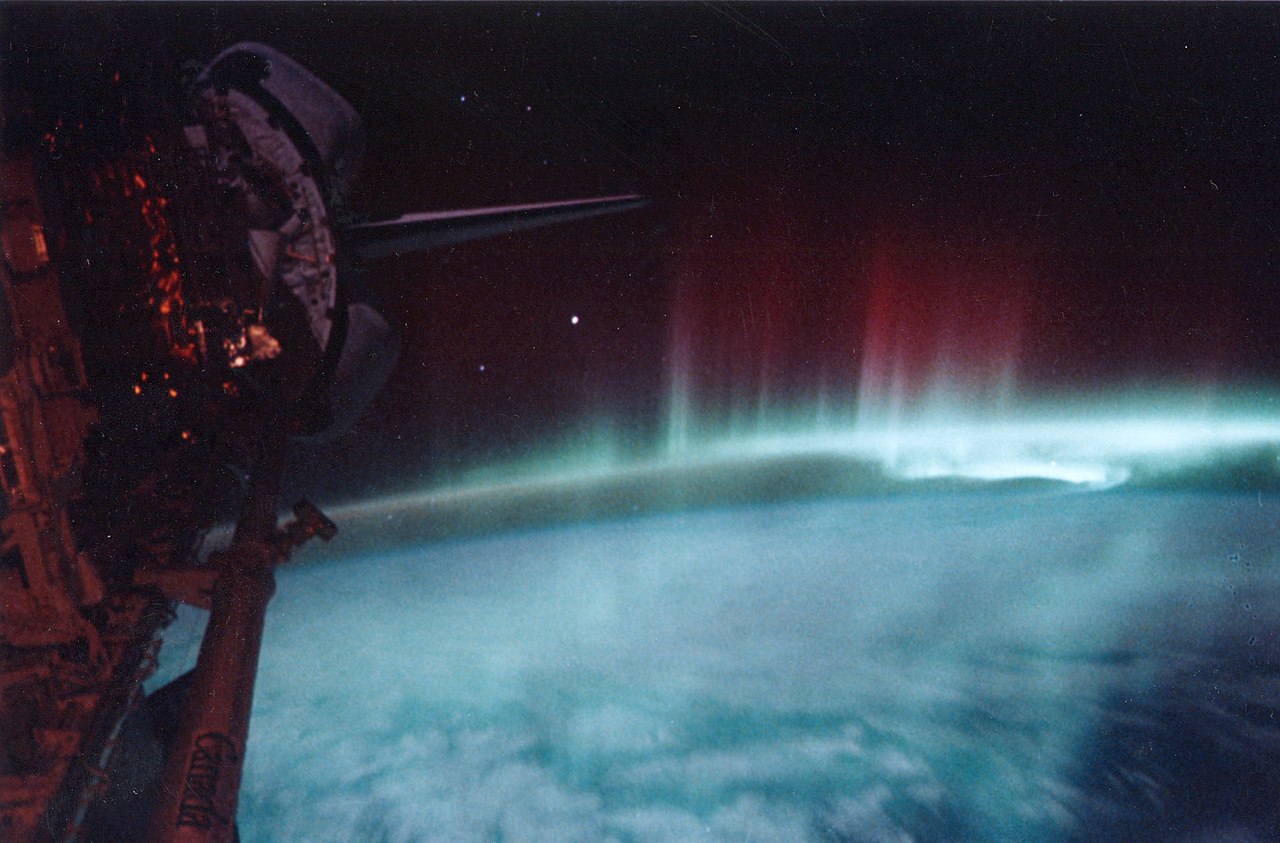
The Earth's atmosphere both absorbs and distorts incoming radiation from space. Atmospheric turbulence causes the familiar twinkling of stars and blurs images—a problem known as seeing—so even very large ground telescopes can be limited in sharpness. In addition, many parts of the electromagnetic spectrum are blocked or heavily attenuated by atmospheric gases: for example, X-rays, much of the ultraviolet and large portions of the infrared cannot penetrate to the surface. Placing an instrument above the atmosphere allows direct, unfiltered access to these wavelengths, dramatically improving sensitivity and angular resolution.
Common characteristics and types
Space observatories vary in design according to the wavelengths they study. Common classes include:
- Optical space telescopes — for visible-light imaging and spectroscopy, providing high-resolution views free from seeing effects.
- Infrared observatories — optimized to detect heat from cool objects and dust-obscured regions.
- Ultraviolet and X-ray instruments — designed for energetic processes around stars, black holes and hot gas.
- Radio and microwave platforms — when flown above the ionosphere they can study long wavelengths with reduced interference.
Typical components include precision mirrors or antennae, detectors calibrated for specific bands, thermal control systems, and attitude-control hardware to point and stabilize the observatory. Many missions operate in orbits such as low Earth orbit or at more distant locations to optimize sky coverage and thermal conditions.
Brief history and development
The concept of observing from space grew as rocket and satellite technology matured in the mid-20th century. Early experiments sent simple detectors above the atmosphere to measure ultraviolet and X-ray backgrounds. Over subsequent decades, larger, more capable observatories were launched, allowing transformative discoveries in cosmology, stellar evolution and planetary science. Well-known examples demonstrated how space platforms could outperform ground-based equivalents in clarity and wavelength coverage.
Uses, discoveries and importance
Space observatories have opened windows on phenomena that are difficult or impossible to study from the surface. X-ray missions revealed hot gas in galaxy clusters and the environments of compact objects; infrared observatories trace star formation obscured by dust; ultraviolet instruments probe hot, young stars and interstellar gas; and optical space telescopes achieve sharp imaging of distant galaxies and exoplanets. These facilities also support time-domain astronomy—monitoring transient events—and provide calibration and context for ground-based surveys.
Distinctions and notable facts
Not all satellites are classified as space observatories. Platforms dedicated to reconnaissance or meteorology focus on Earth observation rather than astronomical study. Observatories optimize access to key frequency ranges that include, but are not limited to, the radio, optical, ultraviolet (UV), infrared and X-ray bands. The choice of orbit and instrument suite determines what science is possible; many missions operate in low Earth orbit, while others are placed in higher orbits or at stable points in space to minimize interference and thermal variation. For further technical background and mission lists, see introductory resources such as telescope guides and general material about outer space.
Space observatories remain central to modern astronomy because they enable observations across the full electromagnetic spectrum and deliver data of exceptional quality, advancing our understanding of the Universe from planetary systems to the largest cosmic structures.
Questions and answers
Q: What is a space observatory?
A: A space observatory is any instrument in outer space which is used for observation of distant objects, such as planets, stars, galaxies and other outer space objects.
Q: How does the Earth's atmosphere affect observations from Earth?
A: The atmosphere filters and distorts what is seen and recorded when observing from Earth. This effect causes stars to appear to "twinkle" in the sky. As a result, pictures taken by satellite telescopes are much clearer than those taken by ground-based telescopes.
Q: What frequency ranges can be observed with satellite-based telescopes?
A: Satellite-based telescopes can observe frequencies outside the optical and radio windows, such as X-ray astronomy which is nearly impossible when done from the Earth. Infrared and ultraviolet are also largely blocked by the atmosphere.
Q: Where are most space observatories located?
A: Most space observatories are located in low Earth orbit.
Q: Why do ground-based telescopes produce blurred images?
A: Ground-based telescopes produce blurred images due to turbulence in the Earth's atmosphere, an effect known as seeing.
Q: How has satellite telescope technology impacted astronomy?
A: Satellite telescope technology has opened up the universe to human eyes and allowed for much clearer pictures than those taken by ground-based telescopes even though they may be very large. It has also made it possible to observe frequency ranges outside of optical and radio windows that were previously inaccessible or difficult to observe from earth.
Q: What makes stars twinkle in the sky?
A: Stars twinkle in the sky due to turbulence in the Earth's atmosphere blurring images taken by ground based telescopes, an effect known as seeing
Related articles
Author
AlegsaOnline.com Space Observatory: Instruments and Science Beyond Earth’s Atmosphere Leandro Alegsa
URL: https://en.alegsaonline.com/art/92405
Sources
- nssdc.gsfc.nasa.gov : nssdc.gsfc.nasa.gov/astro/astrolist.html
- hubblesite.org : "Hubble Essentials: About Lyman Spitzer, Jr"
- hubblesite.org : "Hubble Essentials: Quick Facts"
- aerospaceguide.net : "The Hubble Space Telescope"