
Southern Lebanon: geography, people, history, and significance
Overview of Southern Lebanon covering its geography, major cities, demographics, historical developments, economy and cultural landmarks, with notes on contemporary political and security context.
Southern Lebanon is the southernmost portion of the modern Lebanese state, broadly consisting of the South Governorate and the Nabatieh Governorate. These governorates were administratively separated in the early 1990s, creating the contemporary provincial layout often identified as the South and Nabatieh regions (administrative divisions). Some descriptions of the area also include the southernmost districts of the Beqaa valley when speaking in a wider geographic sense.
Image gallery
4 Images
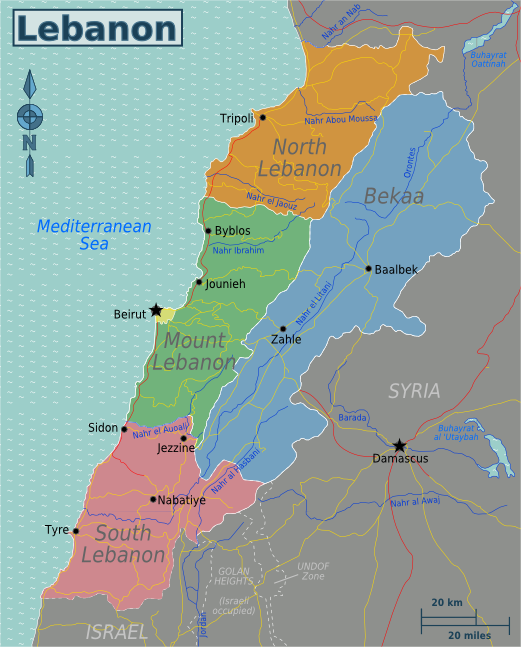


Geography and main settlements
The region runs along the Mediterranean coast and rises inland into hills and karstic plateaus. Coastal plains support agriculture and fishing, while interior valleys and highlands are dotted with towns and villages. Principal urban centers are well known historically and culturally: Sidon (Saida) on the coast, the ancient port city of Tyre, as well as Jezzine, Nabatieh, Bint Jbeil and Marjayoun. Small communities such as Ain Ebel and others maintain distinctive local identities. Many archaeological sites, Roman mosaics and Crusader-era ruins occur throughout the area.
Demographics and social character
Southern Lebanon is religiously and communally diverse. Large sections, especially the cazas (districts) of Bint Jbeil, Tyre and Nabatieh, are predominantly Shia Muslim; the city of Sidon has a Sunni-majority urban core while its surrounding district includes Shia and sizeable Christian communities. Christian communities in the region are mainly Eastern Catholic and Maronite in certain villages; some localities such as Ain Ebel, Debel, Qaouzah and Rmaich are noted for their Maronite populations. The caza of Hasbaya in the far east contains a substantial Druze population. These patterns are the product of centuries of local settlement and of modern political and migratory changes.
History and contemporary context
The area has a long recorded history as part of Phoenician, Roman, Ottoman and then French-mandate territories before Lebanon’s independence. In the late 20th and early 21st centuries Southern Lebanon became prominent in regional geopolitics: it experienced extended periods of Israeli military occupation, armed conflict during the Lebanese civil war, and cross-border hostilities. Since the early 2000s, a powerful political and armed movement has been a major presence in the region; the area has also been the focus of reconstruction and humanitarian work after armed confrontations.
Economy, culture and landmarks
Agriculture (citrus, olives, vegetables), fishing, small-scale industry and trade form the backbone of the local economy, supplemented by remittances from abroad. Tyre and Sidon are important cultural hubs, with ancient ruins, mosques, churches and traditional crafts attracting local tourism. Villages preserve folk traditions and religious festivals that reflect Lebanon’s plural society. Local cuisine draws on coastal and mountain produce.
Importance and distinctions
- Strategic location along the coast and near the Israel-Lebanon frontier gave the region outsized significance in security and diplomacy.
- The coexistence of Shia, Sunni, Christian and Druze communities illustrates Lebanon’s religious diversity and localized settlement patterns (Christian communities, Druze communities).
- Archaeological sites and coastal landscapes make parts of the region significant for heritage and tourism.
Understanding Southern Lebanon requires attention to its varied terrain, long history, mixed population and evolving political realities. Contemporary descriptions often emphasize both its cultural richness and the ongoing challenges of reconstruction, governance and cross-border security that shape daily life.

Questions and answers
Q: What is Southern Lebanon?
A: Southern Lebanon is an area of Lebanon that consists of the South Governorate and the Nabatiye Governorate.
Q: When were the South Governorate and the Nabatiye Governorate separated?
A: The South Governorate and the Nabatiye Governorate were separated from the same province in the early 1990s.
Q: Which districts are sometimes included in Southern Lebanon?
A: The Rashaya and Western Beqaa Districts, the southernmost districts of the Beqaa Governorate, are sometimes included in Southern Lebanon.
Q: What are the main cities in Southern Lebanon?
A: The main cities in Southern Lebanon are Sidon, Tyre, Jezzine, and Nabatiyeh.
Q: What is the religious makeup of Southern Lebanon?
A: Most of the people in the cazas of Bint Jbeil, Tyre, and Nabatieh in Southern Lebanon are Shi'a Muslims. Some Christians live there also. The people in Sidon are mostly Sunnis. In the rest of the caza of Sidon, the people are mostly Shi'a Muslim. There are also many Christians. The Christians are mainly Greek Catholics. The people in the cazas of Jezzine and Marjeyoun are mainly Christians. There are also some Shia Muslims. In the villages of Ain Ebel, Debel, Qaouzah, and Rmaich there are only Christian Maronites. In the caza of Hasbaya most of the people are Druzes.
Q: Which religious group is prominent in Bint Jbeil, Tyre, and Nabatieh?
A: Most of the people in the cazas of Bint Jbeil, Tyre, and Nabatieh in Southern Lebanon are Shi'a Muslims.
Q: What is the religious makeup of Sidon?
A: In Sidon, the people are mostly Sunnis. In the rest of the caza of Sidon, the people are mostly Shi'a Muslim. There are also many Christians. The Christians are mainly Greek Catholics.
Q: Which religious group is prominent in Hasbaya?
A: In the caza of Hasbaya most of the people are Druzes.
Related articles
Author
AlegsaOnline.com Southern Lebanon: geography, people, history, and significance Leandro Alegsa
URL: https://en.alegsaonline.com/art/92299
Sources
- southlb.com : South Lebanon WebSite