
Soufrière Hills volcano (Montserrat)
Active stratovolcano on Montserrat that reawakened in 1995; its eruptions destroyed the capital, created long-term exclusion zones and deadly pyroclastic flows, and reshaped the island's society and landscape.
Overview
The Soufrière Hills is an active stratovolcano located on the Caribbean island of Montserrat. Long dormant until the 1990s, the volcano resumed activity in 1995 and has produced repeated eruptive episodes since then. Its renewed activity transformed much of the southern part of the island into an exclusion zone and forced a large-scale population relocation.
Image gallery
10 Images




Geology and characteristics
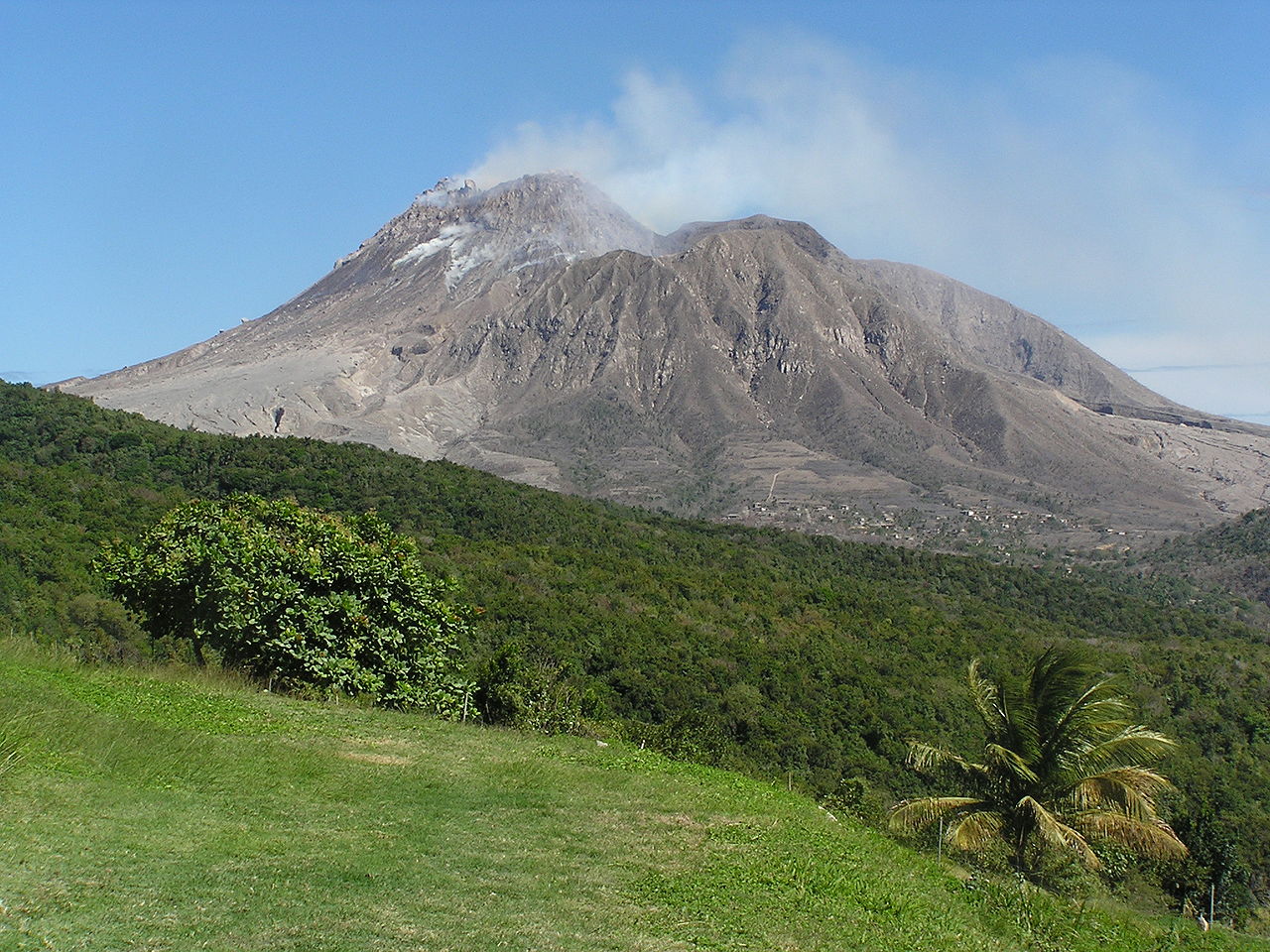
Soufrière Hills is typical of lava-dome-building volcanoes. Episodes of viscous lava extrusion form unstable domes that grow and then collapse, generating hot, fast-moving pyroclastic flows. Eruptive products include ash, pumice, blocky lava and pyroclastic density currents. The sequence of dome growth, collapse and intermittent explosive activity makes the volcano highly hazardous despite its relatively modest height.
Eruptive history and impacts
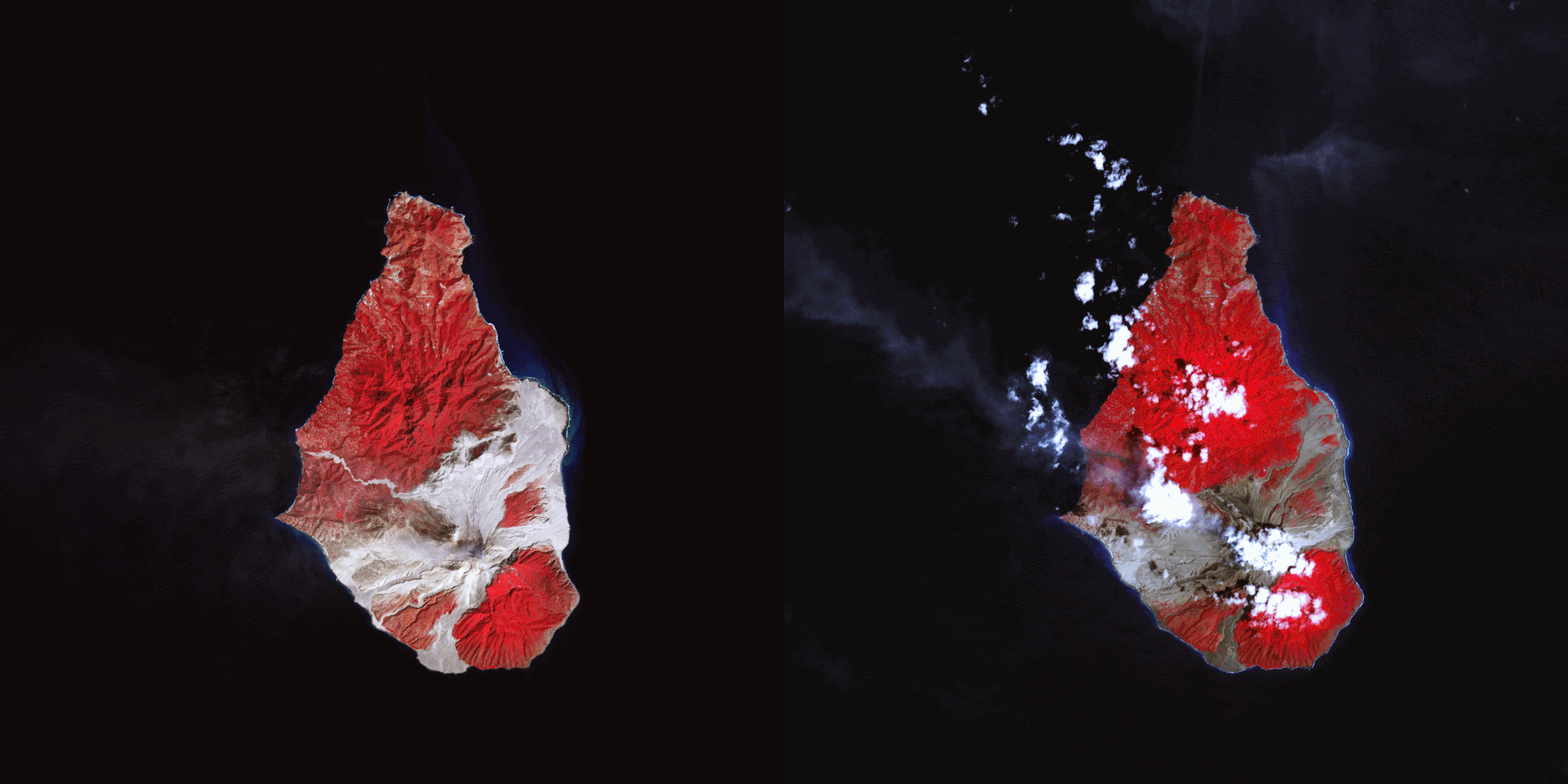
After decades of quiescence (dormant status), renewed unrest culminated in sustained eruptions beginning in 1995. Repeated flows and ash falls destroyed infrastructure; the island's principal town, Plymouth, was buried and abandoned. The eruptions caused fatalities — in one tragic event most of the people remaining near the volcano were killed by a high-temperature flow — and prompted the evacuation of roughly two thirds of the island's residents, many of whom relocated overseas (migration and resettlement).
Hazards, monitoring and response
Key hazards from Soufrière Hills include pyroclastic flows, ashfall, lahars during heavy rain, and volcanic gas. The local and international response combined evacuation planning, scientific monitoring and land-use restrictions. A dedicated observatory now tracks seismicity, gas emissions and deformation to give early warning of dangerous changes in activity. Scientific reports and public advisories have been central to risk reduction and community safety (eruption reports).
Social and environmental effects
The eruptions reshaped Montserrat's economy, landscape and demographics. Much of the southern half of the island remains uninhabitable and ecological succession is visible on freshly deposited volcanic material. Reconstruction and development have focused on the northern safe zone and on adapting infrastructure and livelihoods to a new volcanic reality. International assistance and long-term monitoring have supported recovery and planning efforts (island context).
Notable facts and lessons
- Persistent activity: The volcano has shown multi-year phases of dome growth and collapse rather than a single short-lived eruption.
- Risk management: The Montserrat experience illustrates the need for continuous monitoring, clear exclusion zones and flexible evacuation plans (dormancy and reawakening).
- Research value: Ongoing study of Soufrière Hills has improved understanding of dome-building eruptions and pyroclastic flow generation (volcanic type, regional setting, flow hazards).
For further background and technical updates, consult monitoring reports and scientific summaries published by the observatory and partner agencies (population impact, urban loss, eruptive data).
Related articles
Author
AlegsaOnline.com Soufrière Hills volcano (Montserrat) Leandro Alegsa
URL: https://en.alegsaonline.com/art/92015