
Solar telescope: instruments for observing the Sun
A solar telescope is built to observe the Sun safely and in selected wavelengths. This article covers design, filters, ground and space examples, scientific uses, history, and safe observing practices.
Overview
A solar telescope is a specialized optical instrument optimized to study the Sun (the Sun) rather than faint night-sky objects. Unlike general-purpose astronomical telescopes, solar telescopes emphasize high contrast, fine spatial resolution and spectral selection to reveal features such as sunspots, granulation, prominences and the extended corona. Professional instruments combine optics, filters and detectors to record sunlight at particular wavelengths and polarization states. Amateur observers use smaller, engineered systems to view safe, reduced-brightness images of solar surface structure.
Image gallery
9 Images



Design and key components
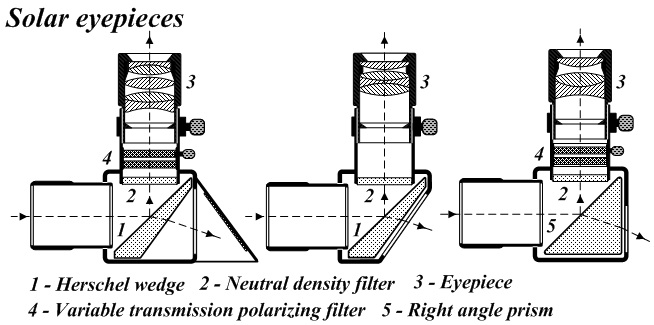
Solar telescopes include many elements tailored to bright-source work: an objective or mirror sized for resolution, heat-rejecting optics, narrowband filters (for example hydrogen-alpha or calcium-K), and imaging cameras. Coronagraphs block the solar disk to reveal the faint corona, while spectrographs and polarimeters analyze the Sun's spectrum and magnetic fields. Lyot filters, Fabry–Pérot etalons and neutral-density filters are typical. Observing the Sun requires strict attention to heat management and eye safety; only certified solar filters and instrument designs should be used.
Ground-based and space-based instruments
There are two main classes: ground-based telescopes and space-based observatories. Ground facilities can reach very high spatial resolution using adaptive optics and large apertures; examples include modern solar facilities like the Daniel K. Inouye Solar Telescope. Space missions avoid atmospheric distortion and observe ultraviolet and extreme-ultraviolet light that is blocked by Earth's atmosphere. Dedicated solar missions such as SOHO, SDO and Hinode provide continuous monitoring. By contrast, general observatories such as Hubble or X-ray telescopes like Chandra are not designed for routine direct solar imaging and are used differently in high-energy solar research.
Scientific goals and uses
Solar telescopes enable research into magnetic activity, sunspot evolution, flares, coronal mass ejections and the solar cycle. They support space weather forecasting, which affects satellites, communications and power grids on Earth. Instruments operate across wavelengths to map temperature, density and magnetic fields from the photosphere up through the corona. Amateur observations contribute to long-term records of sunspot counts and transient events such as sunspots and can supplement professional monitoring during solar eclipses and campaigns.
History and development
Systematic solar observation developed alongside advances in optics and spectroscopy in the 19th and 20th centuries. Early solar telescopes and spectroheliographs revealed elemental lines and allowed first maps of magnetic regions. Over time, improvements in detectors, adaptive optics and spaceflight expanded access to ultraviolet and X-ray regimes and increased temporal coverage of solar phenomena. Modern instruments focus on resolving fine-scale magnetic features and coupling observations with modeling.
Practical considerations and safety
- Never view the Sun with an unfiltered telescope or binoculars—use certified solar filters only.
- Amateurs should learn filter types and safe attachment methods; professional observatories incorporate redundant safety systems.
- Long-term monitoring from networks and space missions improves forecasting and basic science; collaborative data sharing is common among observatories and researchers (astronomers).
For introductory guides, technical specifications and observing campaigns consult specialized resources and mission pages maintained by solar observatories and scientific organizations (solar telescope references).
Related articles
Author
AlegsaOnline.com Solar telescope: instruments for observing the Sun Leandro Alegsa
URL: https://en.alegsaonline.com/art/91646