
Telescope: principles, history, types, and uses
Comprehensive overview of telescopes: how they collect light, major designs, history from the 17th century, types across the electromagnetic spectrum, mounts, amateur use and notable technical points.
Overview
A telescope is an optical instrument that gathers electromagnetic radiation and forms an enlarged image of distant objects so they can be examined by the human eye, a detector, or scientific instruments. Telescopes are a central technology for astronomy and observation, but similar optical systems are also used in everyday devices such as binoculars and camera lenses. In general use the term 'telescope' refers to instruments that operate at visible wavelengths, but the basic idea—collecting and focusing radiation—applies across the electromagnetic spectrum (wavelengths outside human sight as well).
Image gallery
10 Images




Basic principles and parts
All telescopes share two primary functions: they collect more radiation than the unaided eye can capture and they form an image suitable for observation or recording. The most important parameter is aperture, the diameter of the primary light-collecting element: a larger aperture gathers more light and can resolve finer detail in principle. Light is brought to focus by either refracting optics (curved lenses) or reflecting optics (curved mirrors), or combinations of both. Classic components include a primary objective (lens or mirror), a secondary mirror or corrector in some designs, and an eyepiece or detector to magnify or record the image.
Common optical designs
- Refractors: use a large curved lens as the objective; historically important and still valued for sharp contrast in certain applications.
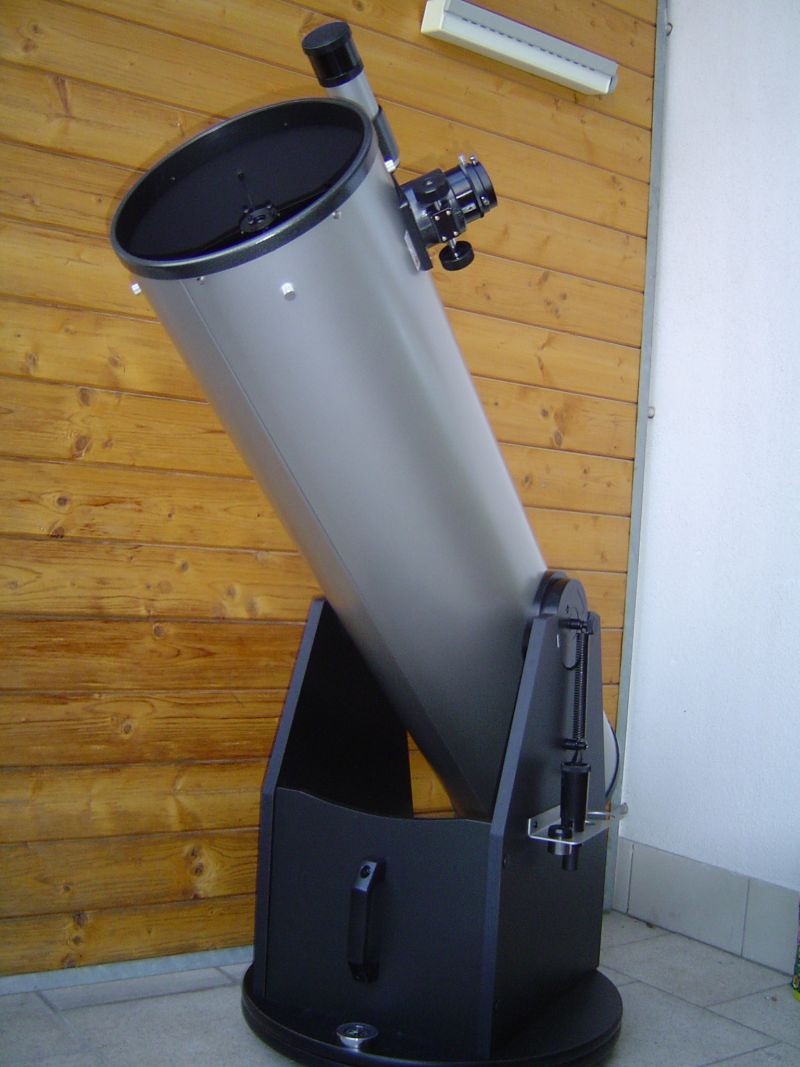
- Reflectors: use a curved mirror as the primary collector; the Newtonian design is a well-known example derived from the work of Isaac Newton and commonly used for both amateur and professional instruments (Newtonian telescope).
- Compound systems: combine mirrors and lenses (for example Cassegrain and Schmidt-Cassegrain) to shorten tube length and correct aberrations.
Eyepieces typically consist of two or more small lenses that deliver a final magnified view to the observer. When recording images with electronic detectors such as CCDs, an eyepiece is not necessary and the telescope can feed the detector directly for astrophotography or research imaging.
Telescopes across the electromagnetic spectrum
Telescopes are not limited to visible light. Instruments designed for infrared, radio, ultraviolet, X-ray and gamma-ray bands reveal phenomena that ordinary optics cannot. Infrared telescopes must often be cooled to reduce thermal emission because warm objects emit infrared radiation that would otherwise mask faint signals. Radio telescopes resemble large antenna dishes and are optimized to detect long-wavelength radio signals from space. High-energy photons such as X-ray and gamma ray radiation require specialized optics: mirrors are used at very shallow, grazing angles so energetic photons reflect rather than pass through, a technique that led to the development of many modern space telescopes.
History and development
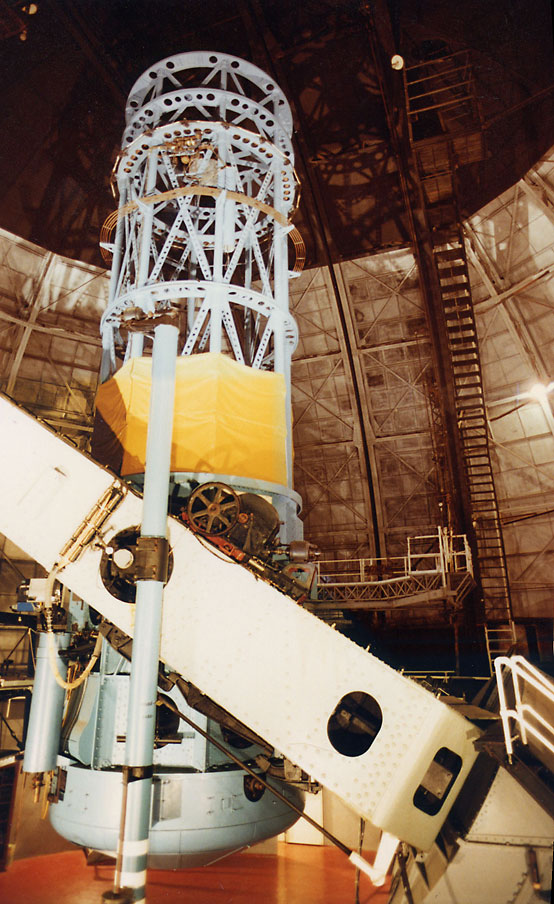
The earliest practical telescopes appeared in the Netherlands in the early 17th century; credit is usually given to Dutch instrument makers around 1608. Within a year of that invention, Galileo Galilei famously adapted a telescope to study the sky in detail and reported discoveries such as the moons of Jupiter and the phases of Venus (Galileo). Over subsequent centuries optical theory improved, mirror-making advanced, and detectors evolved from the human eye to photographic plates and then electronic sensors. Space-based observatories were later placed in orbit to avoid atmospheric absorption and distortion.
Mounts, pointing, and imaging techniques
Telescopes must be mounted so they can be aimed steadily at targets. Two common mount types are altazimuth (alt-az) and equatorial. An equatorial mount is aligned with the Earth's axis and simplifies tracking of stars as the Earth rotates; this often requires a process called polar alignment. Computerized "go-to" telescopes combine motors and software to locate and follow objects automatically, which is useful for locating faint deep-sky targets or for educational outreach. Modern observatories employ adaptive optics to compensate for atmospheric turbulence, improving image sharpness for ground-based telescopes.
Amateur use, survey work and notable examples
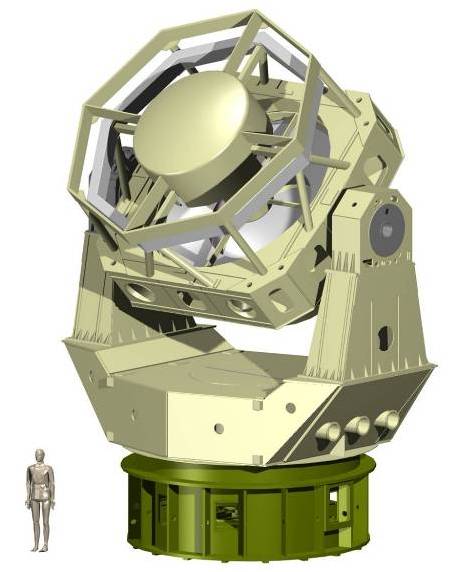
Smaller, affordable instruments make astronomy accessible to hobbyists. Dobsonian telescopes—a practical form of the Newtonian reflector mounted on a simple alt-az rocker—are popular among amateurs for their large apertures and low cost. Professional facilities, by contrast, include multi-meter reflecting telescopes and arrays of radio dishes used for both targeted studies and wide-field surveys that search for asteroids, comets, and transient events (asteroid searches). Space observatories operating above the atmosphere continue to provide critical imagery across many bands, complementing ground-based instruments.
Distinctions and practical notes
Not every long-focus optical instrument is called a telescope in common speech, but many related devices—spyglasses, binoculars, camera optics—use the same principles. The choice of telescope involves trade-offs between aperture, portability, wavelength coverage, resolution, and cost. For example, radio dishes can have apertures measured in tens to hundreds of meters but operate at much longer wavelengths than optical telescopes, while X-ray and gamma-ray instruments require space deployment and grazing-incidence optics to be effective. Together, these varied instruments form a toolkit that astronomers use to study the Universe from planets and stars to galaxies and high-energy phenomena.
For further technical discussions and historical resources, consult introductory texts and observatory guides, or follow links to specific topics on instrument design and observational techniques via the anchors above.
Tool for astronomy • Astronomy • Curved mirrors • Curved lenses • Galileo • Netherlands • Binoculars • Camera lenses • Asteroid • Newtonian telescope • Wavelengths • Infrared telescopes • Infrared • Radio telescopes • Radio • X-ray • Gamma ray • Space telescopes • Orbit
Questions and answers
Q: What is a telescope?
A: A telescope is an instrument used to make distant objects appear closer and brighter to the naked eye. It does this by gathering light and directing it to a single point, usually using curved mirrors or lenses, or both.
Q: Who invented the first telescope?
A: The first telescope was invented in the Netherlands in 1608.
Q: How do telescopes work with just your eye?
A: When telescopes are used with just your eye, an eyepiece has to be used which uses two or more smaller lenses to magnify an image so that it can be focused.
Q: What type of telescope is needed for tracking deep sky objects?
A: A Go-to telescope is needed for tracking Deep Sky objects and must be placed on an Alt-Azimuth Mount for the axis to point towards Polaris, this is called polar alignment.
Q: What are amateur telescopes?
A: Amateur telescopes are smaller than professional ones and don't cost too much money for a normal person to buy. Some popular types of amateur telescopes include Dobsonians, which are a type of Newtonian telescope.
Q: Are there types of telescopes that detect wavelengths we cannot see?
A: Yes, there are types of telescopes that detect infrared light, radio waves, X-rays and Gamma rays which all have different ways of being reflected since they go through most metals and glasses. These kinds of telescopes usually need to be kept cold or put into space so that Earth's atmosphere does not interfere with them.
Q: What are Telescopes mainly used for?
A: Telescopes are mainly used for looking at celestial objects such as stars, planets etc., but can also be used by normal people too
Related articles
Author
AlegsaOnline.com Telescope: principles, history, types, and uses Leandro Alegsa
URL: https://en.alegsaonline.com/art/96833