
South Pole–Aitken basin
A vast impact basin on the Moon's far side, the South Pole–Aitken basin is one of the largest and oldest craters in the Solar System and a key target for lunar geology and exploration.
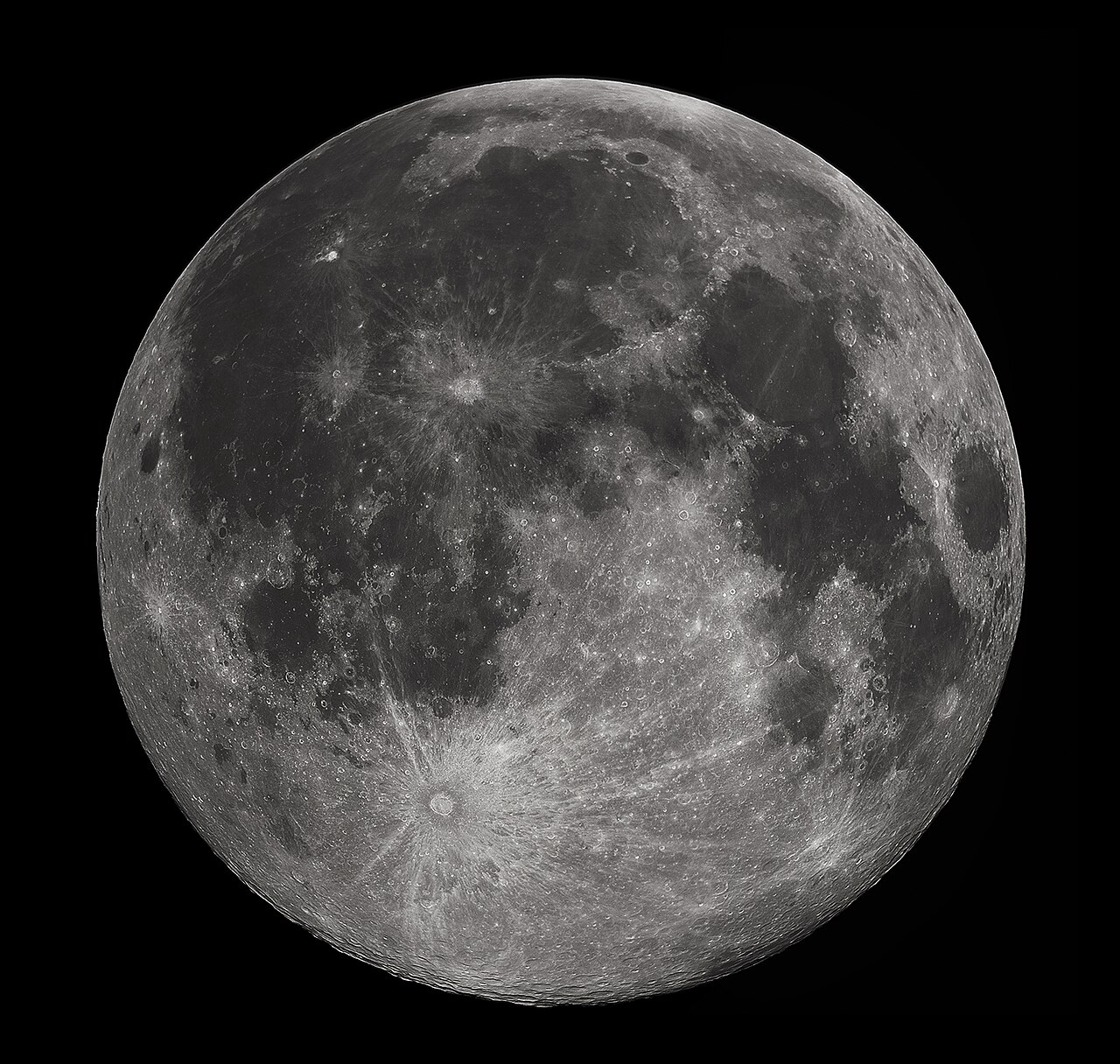
The South Pole–Aitken basin is an immense impact structure on the far side of the Moon. With a diameter of roughly 2,500 kilometres and an estimated maximum depth near 13 kilometres, it ranks among the largest and deepest known impact basins in the Solar System. It crosses the lunar south pole and extends toward the opposite hemisphere, giving it its compound name.
Image gallery
6 Images




Physical characteristics
SPA is a multi-ring basin: a complex, roughly elliptical depression surrounded by concentric topographic rings and uplifted rim segments. Its floor shows variations in elevation, composition, and crater density caused by subsequent impacts and volcanic infilling. Remote sensing has identified regions with unusual mineralogy and lower reflectance than typical highland crust, which has led scientists to propose that some areas could expose lower crustal or even mantle material.
Age and origin
The basin formed very early in lunar history, during the era of heavy bombardment more than about 3.8 billion years ago. A single large impactor (or a brief sequence of very large impacts) excavated vast amounts of crustal material and produced the characteristic rings and deep basin floor. The event that created SPA profoundly affected the Moon’s crustal structure and thermal evolution.
Scientific importance
- Geology: SPA offers one of the best natural windows to study deep lunar crust and possible mantle remnants, making it crucial for understanding lunar differentiation.
- Chronology: Samples from the basin could refine the timeline of early Solar System bombardment and basin formation.
- Exploration target: Because the basin lies on the far side, it has been studied remotely by orbiters and is a high-priority site for future sample-return and robotic missions.
Multiple orbital missions have mapped SPA’s topography, gravity, and surface composition. For accessible maps and imagery see high-resolution maps and instruments that measured gravity anomalies at gravity data. For compositional studies consult datasets at spectral surveys.
Exploration and notable facts
Because SPA lies on the Moon’s far side, direct communications require a relay to Earth; this has influenced mission planning. Robotic missions have targeted craters within SPA for study, and the region has been highlighted as a prime site for future sample-return because of its potential to yield material from deep within the Moon. For mission planning and technical resources see related mission pages at mission references and scientific summaries at research overviews.
Named for the lunar south pole and the Aitken crater near its northern rim, the basin remains one of the Moon’s most striking and informative features. Continued study of SPA promises to improve our understanding of planetary impacts, lunar interior structure, and the early history of the Earth–Moon system.
Related articles
Author
AlegsaOnline.com South Pole–Aitken basin Leandro Alegsa
URL: https://en.alegsaonline.com/art/92207