
Space colonization: human settlement beyond Earth
An overview of space colonization: concepts, locations, technical needs, history, challenges, uses and ethical issues involved in establishing permanent human communities beyond Earth.
Overview
Space colonization is the long-term project of establishing permanent human communities off Earth. It covers scientific research, engineering, economic planning and social organization needed to allow people to live, work and reproduce beyond our planet. While crewed missions and orbital stations have demonstrated short-term habitation, no self-sustaining colony exists today. Interest in permanent settlement is shared by national space agencies, private companies and research groups aiming to advance technology, diversify human presence and enable new industries.
Image gallery
10 Images

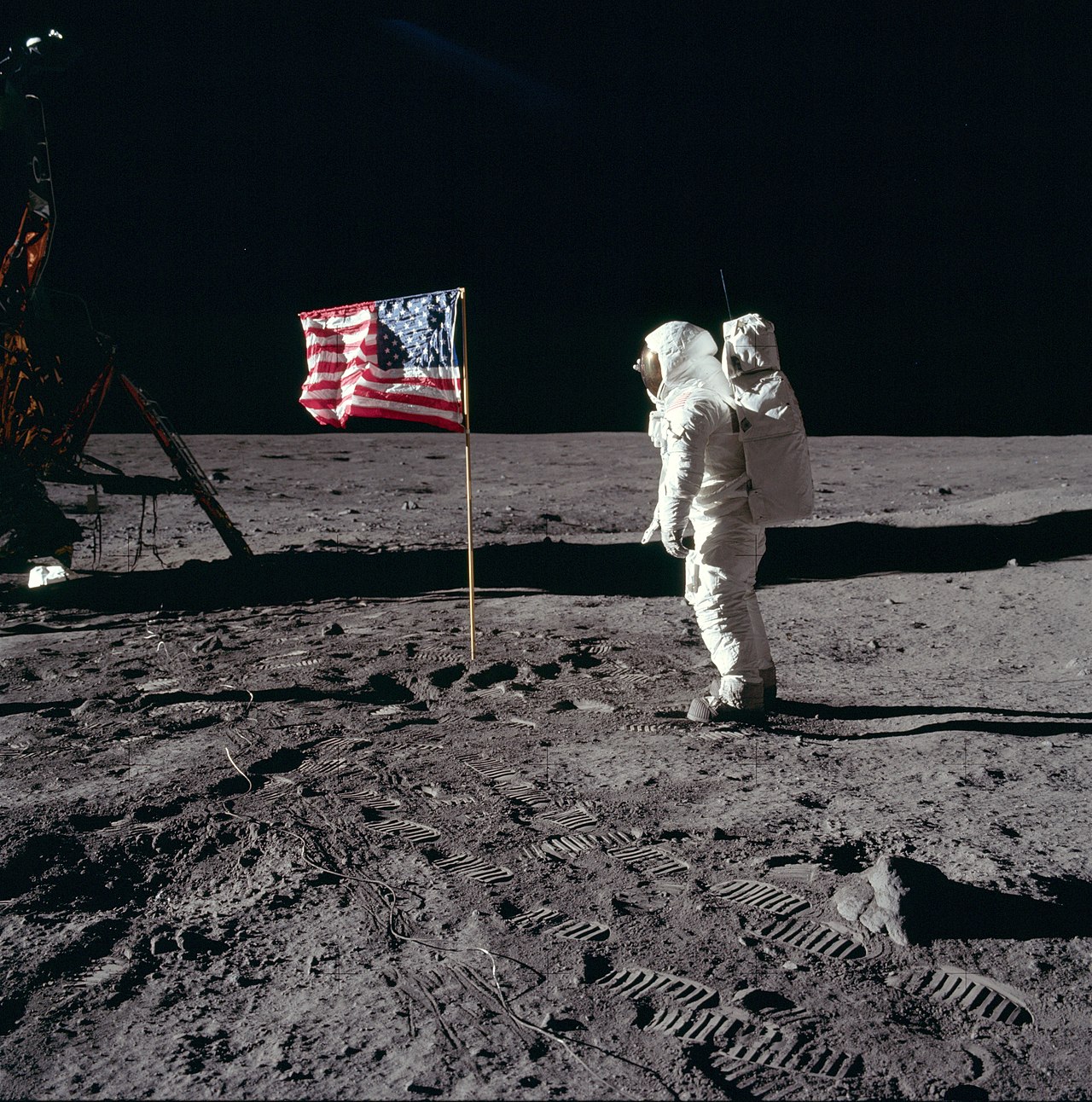





Core requirements and systems
Creating a durable settlement requires integrated systems for basic survival and growth. Key elements include:
- Reliable sources of water and closed-loop life support for breathable air and waste recycling.
- Food production systems capable of continuous cultivation and storage.
- Construction materials and habitats offering radiation protection, thermal control and structural safety.
- Energy generation and storage such as solar arrays, nuclear reactors or other power systems.
- Transportation infrastructure to move people and cargo between Earth and the settlement.
- Reliable communications networks connecting colonies with Earth and other installations.
- Medical facilities, psychological support and demographic planning to maintain a healthy community.
Possible sites and resource strategies
Prospective sites for colonies differ in environment and resource availability. The Moon and near-Earth asteroids are attractive for early stages because of their proximity and potential for in-situ resource utilization. Mars is often discussed as a target for longer-term colonization because it is the most Earth-like planet in day length and accessible polar volatiles; however, it presents substantial challenges in atmosphere and radiation. Large free-floating orbital habitats, such as O'Neill-style cylinders, would rely on materials and solar power harvested from asteroids or the lunar surface.
Examples of candidate locations include the Moon, Mars, near-Earth asteroids, stable Lagrange points and artificial orbital stations. Resource strategies emphasize extracting water, metals and volatiles locally rather than lifting everything from Earth.
History of ideas and proposals
The idea of living off Earth has a long intellectual history, from early rocketry pioneers to mid-20th-century scientists who proposed rotating space habitats and lunar bases. Influential concepts include large rotating stations for artificial gravity and gradual expansion using local resources. More recently, government programs and commercial firms have produced roadmaps for lunar bases and crewed Mars missions, blending scientific goals with economic and strategic considerations.
Technical and environmental challenges
Major barriers include the cost of launching mass from Earth, exposure to cosmic rays and solar particle events, and the physiological effects of low gravity on human health. Designing closed ecological life-support systems, reliable habitat shielding and sustainable agriculture in harsh conditions are central engineering tasks. Some proposals discuss terraforming as a far-future option for planets like Mars, but this concept raises enormous technical and ethical questions and would require timescales and resources far beyond current plans.
Uses, motivations and legal questions
Motivations for colonization range from scientific discovery and access to extraterrestrial resources to ensuring the long-term survival of human culture. Potential economic uses include mining for rare metals, manufacturing in microgravity and large-scale solar power. Legal and governance issues—such as property rights, environmental protection and the application of treaties—will shape how settlements develop and interact with Earth-based institutions.
Ethical, social and practical considerations
Space colonization raises ethical questions about planetary protection, impacts on potential native ecosystems and the distribution of benefits and risks. Social planning must address who participates, how communities govern themselves and how to maintain cultural and psychological well-being. Practical roadmaps emphasize incremental approaches: research stations and lunar outposts that mature into larger habitats, with decisions informed by engineering tests and international cooperation.
Notable facts and next steps
Although no permanent colonies exist yet, active programs are developing cargo delivery, habitat prototypes and resource extraction demonstrations. Ongoing research includes radiation shielding, closed-loop agriculture, deep-space propulsion and autonomous construction. Future milestones likely include sustained habitation on the lunar surface, demonstration of large orbital habitats and the first long-duration human missions to Mars. For further reading on related technologies, governance and site-specific studies see resources on in-situ resources, radiation mitigation, space habitats, astrobiology and protection, robotic prospecting, space logistics, life-support systems and international law.
Questions and answers
Q: What is space colonization?
A: Space colonization is the idea of humans living outside of Earth permanently.
Q: Are there any space colonies at present?
A: At present, there are no space colonies.
Q: What resources would be needed to build a space colony?
A: Building colonies in space would require access to water, food, space, people, building materials, energy, transportation, communications, life support, simulated gravity, radiation protection and money.
Q: Where could possible sites for a space colony be located?
A: Possible sites for a space colony include the Moon, Mars asteroids and big free-floating space stations.
Q: What resources can be found on or near celestial bodies that could help with colonizing them?
A: Resources such as solar energy and water can be found on or near celestial bodies that could help with colonizing them.
Q: How might some celestial bodies be made suitable for human habitation?
A: Some celestial bodies might be terraformed which means changing a body's atmosphere temperature surface topography or ecology to make it similar to the biosphere of Earth so that humans can live there.
Q: Which planet may have the first successful colonization attempt?
A: Mars is the most Earth-like planet known so the colonization of Mars may be attempted first.
Related articles
Author
AlegsaOnline.com Space colonization: human settlement beyond Earth Leandro Alegsa
URL: https://en.alegsaonline.com/art/92394
Sources
- settlement.arc.nasa.gov : "Chapter 1: The Colonization of Space"
- washingtonpost.com : "NASA's Griffin: 'Humans Will Colonize the Solar System'"
- nexialquest.com : "The Terraformation of Worlds"
- oxforddictionaries.com : "terraform"