
Snakefly (Raphidioptera): appearance, life cycle, and natural history
Snakeflies are a small order of predatory endopterygote insects with an elongated 'neck' (prothorax). About 210 species occur mainly in temperate parts of the Northern Hemisphere.
Overview
Snakeflies belong to the order Raphidioptera, a small group of endopterygote (complete metamorphosis) insects closely related to the Megaloptera and Neuroptera. They are neither abundant nor widespread compared with many other insect orders, but they are distinctive and ecologically important predators in many forested ecosystems.
Image gallery
10 Images


Key characteristics
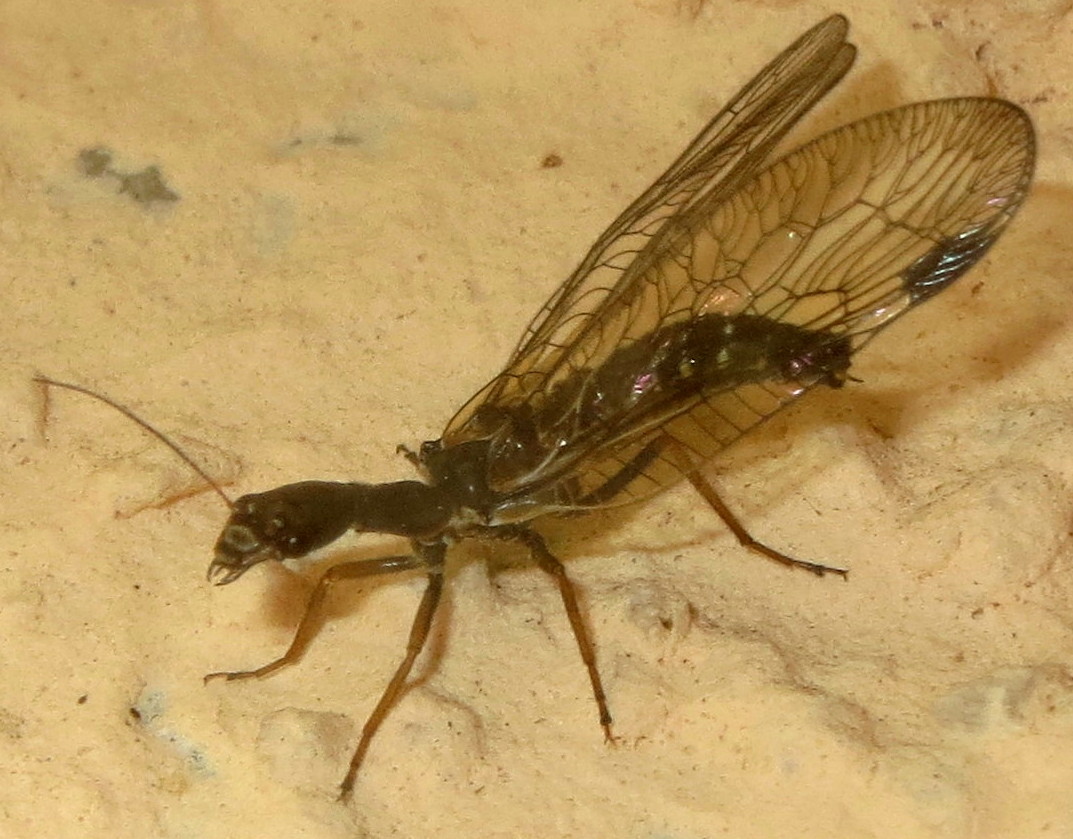
Adults are typically slender, around 15 mm in body length, with two pairs of similarly shaped, net-veined wings and an unmistakable elongated prothorax that gives the impression of a "neck." Their mouthparts are adapted for chewing and they bear conspicuously long antennae. Females deposit eggs with a noticeable long ovipositor.
- Elongated prothorax (the "neck") that allows agile head movement.
- Two pairs of reticulated wings with similar venation.
- Chewing mouthparts; both larvae and adults are predatory.
Life cycle and behavior
Snakeflies undergo complete metamorphosis: egg, larva, pupa and adult. Larvae are active, mobile predators that typically live beneath bark or in leaf litter and hunt other small arthropods. Development can take one or more years, depending on species and climate. Adults are often found on tree trunks or vegetation searching for prey.
Diversity and distribution
There are about 210 living species, placed in two extant families, and they are largely restricted to temperate regions of the Northern Hemisphere. Because of their climatic preferences and habitat associations they are most familiar in wooded and montane areas.
Evolutionary context and importance
Snakeflies are an ancient lineage with a fossil record that shows their long-term presence in terrestrial ecosystems. As predators of soft-bodied insects and other small invertebrates they play a modest but useful role in regulating populations of forest pests and contribute to the biodiversity of bark- and litter-dwelling communities.
Distinguishing facts
Snakeflies are sometimes mistaken for related, net-winged insects such as lacewings, but their extended prothorax and the typical posture of the head and thorax readily separate them from many other orders. They are harmless to people and are valued primarily for their ecological role as predators rather than for direct human use.
For further taxonomic background see resources on Raphidioptera and comparative treatments with Neuroptera and Megaloptera.
Questions and answers
Q: What are Snakeflies?
A: Snakeflies are a small order of insects that belong to the group Endopterygotes.
Q: How are Snakeflies related to other insects?
A: Snakeflies are closely related to Megaloptera and Neuroptera.
Q: How many living species of Snakeflies are there?
A: There are about 210 living species of Snakeflies.
Q: How can Snakeflies be recognized?
A: Snakeflies can be recognized by their small head and long 'neck' which is actually the elongated prothorax, two pairs of similar, net-veined wings, long antennae, and chewing mouthparts.
Q: How long is a typical Snakefly?
A: A typical Snakefly is about 15mm or 0.6 inch long.
Q: What does the ovipositor of the female Snakefly look like?
A: The ovipositor of the female Snakefly is long.
Q: How does the female Snakefly lay eggs?
A: The female Snakefly lays eggs using its long ovipositor.
Related articles
Author
AlegsaOnline.com Snakefly (Raphidioptera): appearance, life cycle, and natural history Leandro Alegsa
URL: https://en.alegsaonline.com/art/91297