
Small interfering RNA (siRNA)
Short double-stranded RNA molecules that direct sequence-specific gene silencing through RNA interference; important in biology, research, and therapeutic development.
Overview
Small interfering RNA, commonly abbreviated siRNA, is a class of short double-stranded RNA molecules that guide the selective reduction of specific messenger RNAs. In cells, siRNAs typically measure about 20–25 nucleotides in length and act within the broader RNA interference (RNAi) system to reduce expression of genes that carry complementary sequences. Researchers and clinicians study siRNA both to understand natural gene regulation and to develop tools for targeted gene knockdown and potential therapies. For a basic reference to the molecule type see double-stranded siRNA.
Image gallery
4 Images

Structure and biogenesis
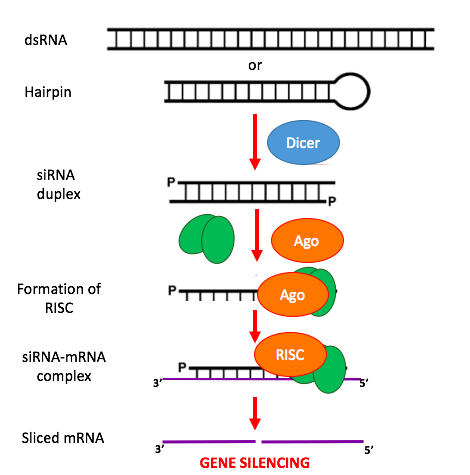
Structurally, an siRNA duplex contains two short strands with 2-nucleotide 3' overhangs and base-paired regions. The defining length of around 20–25 bases is often emphasized; see an introduction at 20–25 base pair siRNA. In many organisms siRNAs arise from longer double-stranded RNA precursors processed by an RNase III enzyme called Dicer as part of the RNAi pathway. For background on the pathway itself, consult RNA interference. The duplex is incorporated into effector complexes after processing.
Mechanism of action
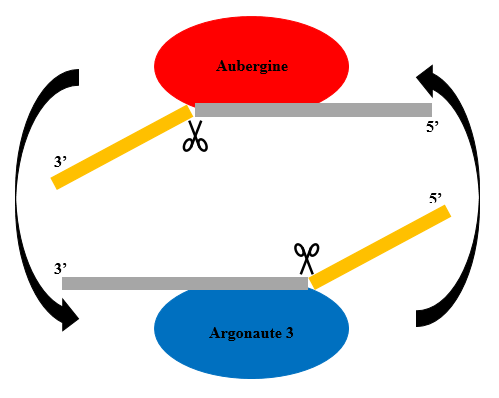
siRNA silencing operates through sequence-specific recognition of target transcripts. One strand of the duplex (the guide strand) is loaded into an Argonaute-containing effector complex, commonly known as RISC. The guide strand base-pairs with complementary sequences in a messenger RNA, and this pairing directs cleavage or destabilization of the target transcript, reducing gene expression. Because this process depends on exact or near-exact complementarity, only genes with matching nucleotide sequences are affected. The biochemical steps bridge processes that follow transcription and prevent subsequent translation into protein.
Biological roles and applications
siRNA-mediated silencing plays several roles in nature and in laboratories. In many eukaryotes, it contributes to antiviral defense, transposon control, and the establishment or maintenance of heterochromatin, thereby influencing chromatin structure and the broader genome landscape. In research and medicine, synthetic siRNAs are widely used to transiently reduce expression of chosen genes and to validate gene function. Typical applications include:
- Functional genomics: testing the effects of candidate genes on cellular processes.
- Drug target validation: reducing a protein to assess phenotypic consequences.
- Therapeutic development: experimental treatments that silence disease-related genes.
- Antiviral strategies: experimental approaches that target viral RNAs.
Distinctions, history and practical considerations
siRNA is often compared with microRNA (miRNA); both are short RNAs that act through Argonaute proteins, but miRNAs generally regulate gene expression by imperfect pairing and translational repression, while siRNAs usually depend on near-perfect complementarity and direct target cleavage. The phenomenon of RNA interference was described in animals in the late 1990s and rapidly led to the identification of siRNA as a central effector. In practical applications, the specificity of siRNA is an advantage but off-target effects, immune stimulation, and delivery into tissues remain challenges for therapeutic use. Strategies to improve stability, specificity and cellular uptake are important areas of active development.
Notable facts and resources
siRNA-based methods transformed how genes are studied because they allow rapid, sequence-directed reduction of gene products without altering genomic DNA. Researchers can find protocol guides, design principles, and safety considerations from many educational and regulatory sources; follow introductory or methodological pages such as overview links or more focused resources like design guides and pathway summaries. For further reading on biological roles and experimental use consult authoritative reviews and community protocols available through specialized databases and institutional repositories (gene expression, sequence complementarity, transcriptional context, translational consequences, protein-level outcomes, chromatin links, genome interactions).
Questions and answers
Q: What is siRNA?
A: Small interfering RNA is a type of double-stranded RNA molecule, which is around 20-25 base pairs long.
Q: What is the most significant role of siRNA?
A: The most notable role of siRNA is in RNA interference (RNAi) pathways, where it disrupts the expression of certain genes.
Q: How do genes get affected by siRNA?
A: Only those genes with nucleotide sequences that complement those of the siRNA get affected.
Q: What is the function of siRNA in breaking down mRNA?
A: Its function is to break down mRNA after transcription, thereby preventing translation of the gene into protein.
Q: In addition to RNAi pathways, where else does siRNA act?
A: siRNA acts in RNAi-related pathways, such as an antiviral mechanism, or in shaping the chromatin structure of a genome.
Q: What is the complexity surrounding the pathways in which siRNA is involved.
A: The complexity of these pathways is only now being worked out.
Q: What are the implications of the complexity of the pathways in which siRNA is involved?
A: It indicates that there may be more to siRNA's roles and functions than is currently known, and more research is needed to understand it better.
Related articles
Author
AlegsaOnline.com Small interfering RNA (siRNA) Leandro Alegsa
URL: https://en.alegsaonline.com/art/91181