
Sino-Tibetan (Trans‑Himalayan) languages
Major language family of East, Southeast and parts of South Asia including the Chinese (Sinitic) branch and Tibeto‑Burman languages; diverse in structure, history, and writing traditions.
Overview
The Sino‑Tibetan, often called Trans‑Himalayan, is a large language family found across East, Southeast and parts of South Asia. It comprises two broad groups in most classifications: the Sinitic (Chinese) branch and the many Tibeto‑Burman languages. Scholars use the term language family to describe this grouping. The best known member is the set of Chinese varieties; together with the diverse Tibeto‑Burman languages they make up hundreds of related tongues spoken by hundreds of millions of people across a wide region referenced by some surveys as the languages of East Asia.
Image gallery
6 Images


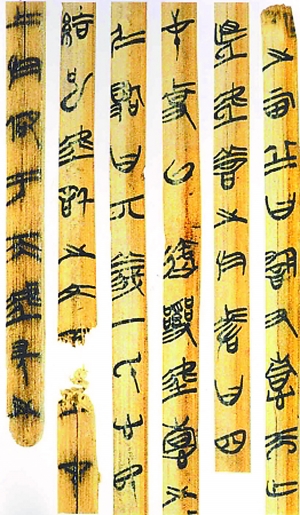


Branches and distribution
At the highest level most linguists distinguish Sinitic (the Chinese cluster) from Tibeto‑Burman. The Sinitic group includes Mandarin, Cantonese and other Chinese lects often called "dialects" though many are mutually unintelligible; these Chinese languages account for over a billion native speakers. Tibeto‑Burman covers groups such as Tibetan, Burmese, Karen, Lolo‑Burmese (Yi), and many Himalayan and Southeast Asian languages.
Characteristics
Sino‑Tibetan languages show varied structure. Tonal systems are widespread (notably in Chinese and many Tibeto‑Burman languages), but not universal. Morphology ranges from the largely isolating patterns of Sinitic to more affixing or agglutinative structures in some Tibeto‑Burman languages. Word order also varies: many Sinitic varieties are SVO, while several Tibeto‑Burman languages are SOV.
History and classification
Linguists reconstruct a common ancestor often called Proto‑Sino‑Tibetan (proto‑language), but its precise sounds, grammar and original homeland remain subjects of active research. Different proposals link Sino‑Tibetan to neighboring families (for example Kra‑Dai or Hmong–Mien in some hypotheses), but these broader relationships are debated. The continuity of Chinese writing and recorded history has helped anchor part of the family in written sources.
Writing, cultural roles and examples
Writing systems in the family are diverse. Chinese characters (〈hanzi〉) form one of the world's longest‑lived written traditions, with early secure evidence from oracle‑bone inscriptions; earlier marks such as the Jiahu symbols are sometimes cited as proto‑writing but remain contested. Other languages use scripts derived from Indic alphabets, the Tibetan script, Burmese script, or Latin orthographies. Members of the family serve as national and regional languages, liturgical tongues (e.g., Classical Tibetan in Buddhism), and local vernaculars.
Notable facts and classification issues
- The family contains both some of the most widely spoken languages in the world and many small, often endangered, languages.
- Internal classification is complex: some groups form dialect continua while others are clearly distinct languages.
- Contact among Sino‑Tibetan languages and with Austroasiatic, Austronesian and other families has produced borrowing and convergence.
Further reading and overviews are available through general references and linguistic surveys; for broad treatments see resources labeled as language family studies and regionally focused summaries on the languages of East Asia.
Examples: Mandarin and Cantonese (Sinitic), Tibetan and Burmese (Tibeto‑Burman), and many Himalayan and Southeast Asian languages illustrate the family's geographic spread and structural diversity.
For introductory surveys and classification proposals consult general works and specialist articles that discuss the relationship between Sinitic and Tibeto‑Burman branches as well as comparative reconstructions and field research reports (Chinese, Tibeto‑Burman, Chinese languages, proto‑language, hanzi).
Related articles
Author
AlegsaOnline.com Sino-Tibetan (Trans‑Himalayan) languages Leandro Alegsa
URL: https://en.alegsaonline.com/art/90678
Sources
- doi.org : doi:10.1038/s41586-019-1153-z
- pnas.org : Dated language phylogenies shed light on the history of Sino-Tibetan
- dx.doi.org : 10.1073/pnas.1817972116
- gb.oversea.cnki.net : "汉藏语使动和完成体前缀的残存与同源的动词词根"
- citeseerx.ist.psu.edu : "On the origins of Sinitic"
- china.org.cn : "Han-Tibetan, Altaic Languages "Close Relatives""