
Sino‑Vietnamese characters (Hán Nôm): history, structure, and modern encoding
Overview of Sino‑Vietnamese characters (Hán Nôm): their form, role in Vietnamese writing, historical development, the Nôm script, and modern efforts to standardize and encode the repertoire in Unicode.
Overview
Sino‑Vietnamese characters, commonly referred to in Vietnamese as Hán Nôm, are the set of logographic symbols used historically to write Chinese and Vietnamese. The same graphic forms can carry either a Chinese reading or a Vietnamese reading. When used to represent literary or administrative Chinese they are often called Hán (Classical Chinese); when adapted to write native Vietnamese words and grammar they form the Nôm system, usually rendered in English as "Nôm" (Nôm).
Image gallery
10 Images
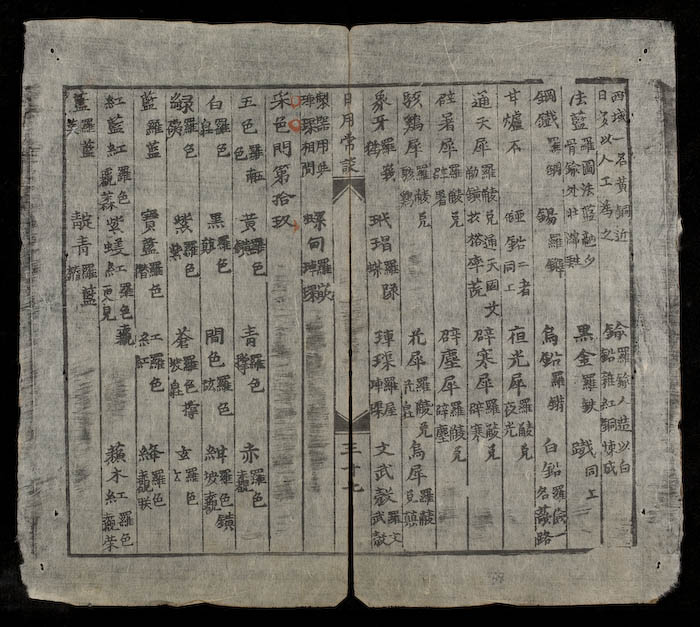


Characteristics and structure
Many characters in Hán Nôm are identical or very similar to traditional Chinese characters (Chinese‑style characters), but the Nôm corpus also contains locally created graphs to record Vietnamese morphemes for which no Chinese character existed. The writing relied on two main strategies: borrowing characters with similar meanings or sounds, and inventing compound characters that combine semantic and phonetic components, mirroring methods used across East Asia.
- Readings: Each character may have a Sino‑Vietnamese (Han‑Việt) pronunciation used for Sino‑Vietnamese vocabulary, and other readings for native Vietnamese words.
- Functions: Hán was used for official documents, scholarship, and literature; Nôm served to write vernacular poetry, prose, and popular texts.
- Relationship to romanization: The Sino‑Vietnamese reading system (Han‑Việt) provides a way to pronounce Chinese loanwords in Vietnamese and is sometimes compared to how pinyin supplies pronunciations for Mandarin characters, though Han‑Việt preserves historical pronunciations adapted to Vietnamese phonology rather than representing modern Mandarin sound values.
Historical development
Chinese characters arrived in northern Vietnam after imperial contact beginning with the Han dynasty invasion in 111 BC and became entrenched in administration, scholarship, and religion. Even after political independence in AD 939, Classical Chinese (Hán văn) remained the lingua franca of official records and elite learning for centuries. Over time, Vietnamese scholars adapted characters to represent native words and expressions, producing an extensive vernacular literature in Nôm.
Uses, decline, and modern revival
Under the Nguyễn dynasty and through the centuries, Hán and Nôm covered inscriptions, legal codes, historical chronicles, and a rich poetic tradition. During the early 20th century, a gradual shift occurred toward the Latin alphabet (quốc ngữ), promoted in part during French colonial rule; by the 1920s the Romanized script had become dominant for most public and educational uses. Interest in Hán Nôm never entirely disappeared: scholars and cultural institutions preserved manuscripts and inscriptions.
Standardization and Unicode
In the modern era, scholarly projects have sought to document and encode the corpus for digital study. The Han‑Nom Institute (established in Hanoi in 1970) has been a central repository and research center for these materials. That institute compiled and proposed a repertoire of characters to enable electronic processing, submitting a set of 19,981 Sino‑Vietnamese characters to Unicode, including a core block of 9,299 ideographs often called the Nôm Ideographs. Some of these characters overlap with forms used in China, while others are unique to Vietnam and arose from local invention.
Notable distinctions and legacy
Sino‑Vietnamese characters stand at the intersection of two linguistic traditions: the logographic system shared with East Asia and the distinctive phonology and vocabulary of Vietnamese. Their legacy persists in vocabulary (a large Sino‑Vietnamese layer in modern Vietnamese), in historical documents essential to research, and in ongoing efforts to make texts accessible through digitization. For further reading and resources consult institutional collections and digital catalogues maintained by specialized centers such as the Han‑Nom Institute and related scholarly portals.
Questions and answers
Q: What are Sino-Vietnamese characters?
A: Sino-Vietnamese characters (Hán Nôm) are Chinese-style characters that can be read as either Vietnamese or Sino-Vietnamese.
Q: How is Han-Viet related to these characters?
A: Han-Viet is a system that allows Vietnamese to read Chinese, which is equivalent to pinyin in English.
Q: When were Chinese characters introduced to Vietnam?
A: Chinese characters were introduced to Vietnam when the Han Empire invaded the country in 111 BC.
Q: Why did Vietnam switch from traditional characters to Latin alphabet in the 1920s?
A: In the 1920s, Vietnam shifted from traditional characters to the Latin alphabet for ease of use and modernity.
Q: What was the purpose of founding the Han-Nom Institute?
A: The Han-Nom Institute was founded in Hanoi in 1970 with the purpose of collecting and studying documents written in traditional script.
Q: How many Sino-Vietnamese Characters have been submitted for electronic encoding?
A: The Han-Nom Institute has submitted a list of 19,981 Sino-Vietnamese Characters for electronic encoding. This includes a core set of 9,299 called Nôm Ideographs.
Related articles
Author
AlegsaOnline.com Sino‑Vietnamese characters (Hán Nôm): history, structure, and modern encoding Leandro Alegsa
URL: https://en.alegsaonline.com/art/90679
Sources
- thuvienphatgiao.com : Bảng tra chữ Nôm [Nôm Index]
- nomfoundation.org : Kho Chữ Hán Nôm Mã Hoá [Hán Nôm Coded Character Repertoire]
- nomfoundation.org : Giới thiệu Kho chữ Hán Nôm mã hoá [Encoding of Han-Nom Fonts]
- tapchithoidai.org : Tạp chí Nghiên cứu và Thảo luận
- books.google.com.vn : Asian Research Trends: a Humanities and Social Science Review
- books.google.com.vn : Vietnamese Tradition on Trial, 1920-1945
- staging.nomfoundation.org : Dictionarium Anamitico-Latinum
- books.google.com.vn : Langenscheidt's Pocket Dictionary Vietnamese
- books.google.com.vn : Manual, the Nôm Na Coded Character Set
- nomfoundation.org : Giúp đọc Nôm và Hán Việt [Help with Nôm and Han-Viet]
- unicode.org : Unihan Database
- unicode.org : Unibook Character Browser
- unicode.org : The Unicode Standard, Version 5.0
- std.dkuug.dk : CJK E V8.1 M Set