
Slavic languages: overview, history and classification
An accessible overview of the Slavic language family: its branches, historical development, characteristic features, geographic distribution, scripts and examples of major languages.
Overview
The Slavic languages are a major branch of the Indo-European language family and form one of its largest subgroups. They include a range of modern languages and regional dialects spoken across much of Central and Eastern Europe, the Balkans and parts of northern Asia. Slavic tongues share a common origin and many structural similarities, yet they have diversified into distinct languages with varied literary traditions and scripts.
Image gallery
7 Images



Characteristics and structure
Slavic languages typically show rich inflectional systems: nouns and adjectives are declined for case and number, and verbs are marked for tense, aspect and mood. Grammatical aspect (particularly the perfective vs. imperfective distinction) plays a central role in verb semantics. Phonology often includes palatalized consonants and a history of vowel changes that shaped different modern sound systems. Many Slavic languages preserve complex consonant clusters and make use of stress systems that vary between fixed and mobile patterns.
Classification
Traditionally, linguists divide the family into three main branches:
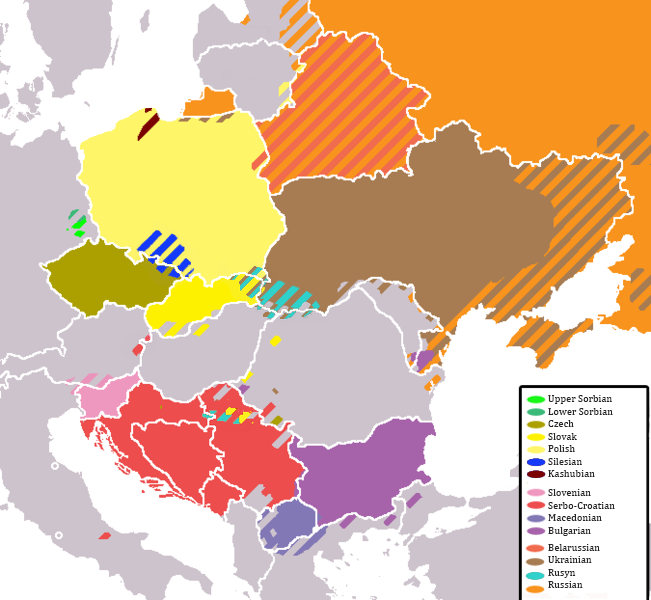
- East Slavic: Russian, Ukrainian, Belarusian.
- West Slavic: Polish, Czech, Slovak, and several smaller languages and dialects.
- South Slavic: Bulgarian, Macedonian, Serbian, Croatian, Bosnian and Slovene.
Each branch contains both standardized literary languages and regional varieties with varying degrees of mutual intelligibility.
History and writing
All Slavic languages descend from a reconstructed Proto-Slavic stage, spoken before the first written records. Christianization and contacts with neighboring peoples influenced early development and led to the adoption of writing. Two primary scripts are used today: Cyrillic in many East and South Slavic languages, and Latin in West Slavic languages and several South Slavic standards. Literary histories diverge: for example, Old Church Slavonic was an early written Slavic norm that influenced later literary forms.
Geographic distribution and usage
Slavic languages are dominant in much of Eastern and Central Europe and the Balkans. They serve as official languages of several states, are used in media, education and administration, and have significant diasporas worldwide. For regional maps and demographic summaries see regional overview, historical spread contacts and migration and contemporary statistics modern usage.
Notable distinctions and importance
Comparative studies of Slavic languages illuminate broader Indo-European developments and processes such as sound change, morphological erosion and syntactic shift. They also reveal how language standardization, national identity and script choice interact. For comparative classification and resources consult external summaries: family outline Slavic family and its place within Indo-European language families.
Examples: Russian and Polish are among the most widely spoken Slavic languages; Bulgarian and Macedonian display reduced case systems compared with other Slavic languages; Serbian is written in both Cyrillic and Latin alphabets. These contrasts highlight the internal diversity of the Slavic group while underlining a shared linguistic heritage.
Related articles
Author
AlegsaOnline.com Slavic languages: overview, history and classification Leandro Alegsa
URL: https://en.alegsaonline.com/art/91059