
Silver(I) oxide (Ag2O)
Silver(I) oxide (Ag2O) is a dark brown to black inorganic solid used in button cells, as a mild oxidant in synthesis and as a precursor to ammoniacal silver reagents; it reacts with strong reducing agents.
Overview
Silver(I) oxide is an inorganic compound with the empirical formula Ag2O. In this substance silver is present in the +1 oxidation state, a fact often noted when discussing the chemistry of silver compounds (oxidation state +1). As a bulk material it appears as a fine dark brown or black powder and is commonly handled as a solid reagent in laboratories and industry.
Image gallery
5 Images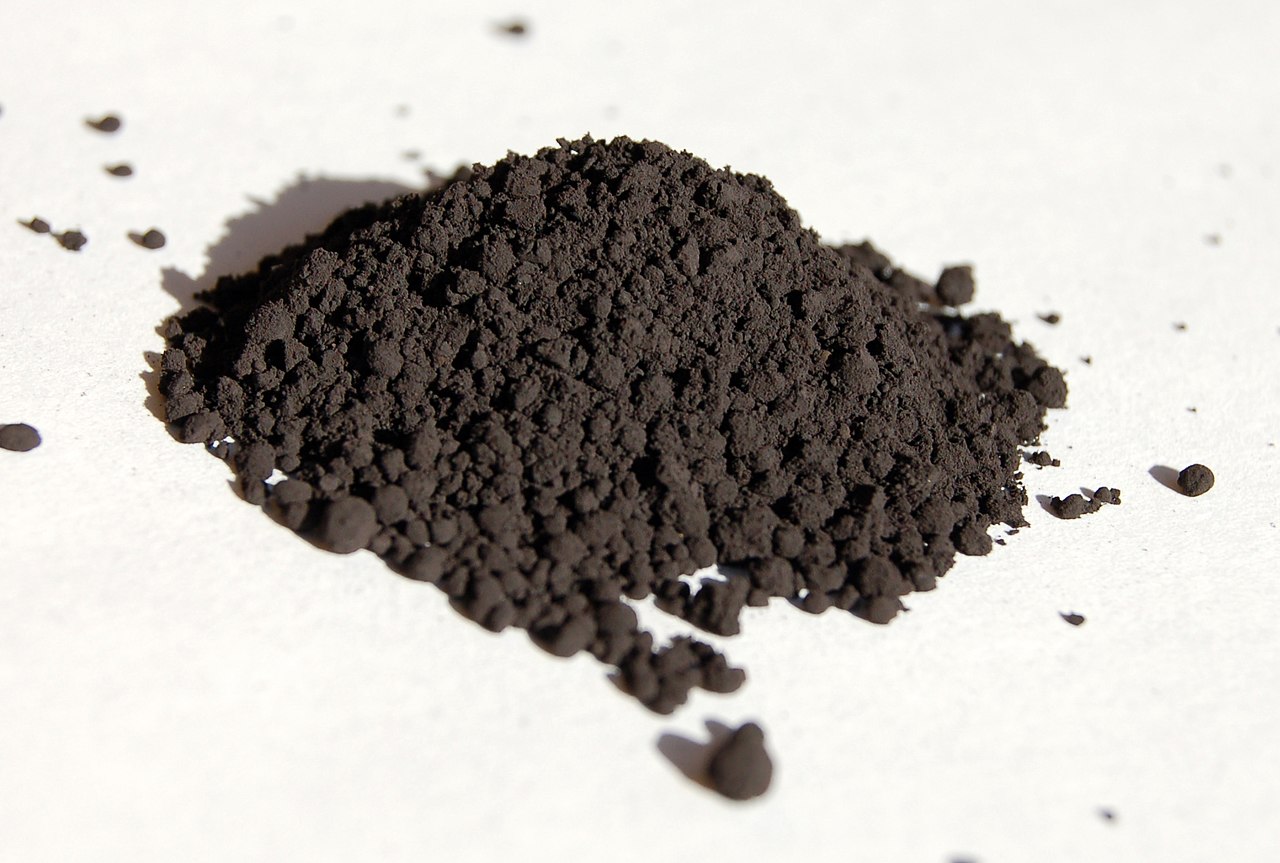


Properties and behavior
The material is essentially insoluble in pure water but dissolves in solutions that form strong silver complexes, for example in aqueous ammonia where the diamine silver complex can be generated. On heating, silver(I) oxide decomposes to elemental silver and oxygen rather than melting cleanly. It is considered an oxidizing agent and therefore reacts vigorously with powerful reducing agents; such encounters can be hazardous and may lead to rapid or even violent reactions (reactivity with reducers).
Preparation and typical reactions
In the laboratory Ag2O is commonly prepared by precipitation from a soluble silver salt (such as silver nitrate) by addition of a base. The precipitated material can be filtered, washed and dried for use. Silver(I) oxide reacts with acids to give corresponding silver salts and water and can be converted into ammoniacal silver solutions used in qualitative tests and coatings (the basis of the traditional silver mirror reaction).
Applications
- Primary batteries: Ag2O is widely used as the cathodic depolarizer in silver oxide button cells and watch batteries; these cells are valued for stable voltage and long shelf life (silver oxide batteries).
- Chemical reagent: it serves as a mild oxidant and as a precursor to Tollens' reagent (ammoniacal silver), which is used to detect aldehydes and to deposit metallic silver films.
- Materials and antimicrobial uses: silver compounds including Ag2O are employed in coatings and ceramics for their antimicrobial properties and as sources of silver in catalysts.
Comparisons, safety and environmental notes
Silver(I) oxide is more expensive than some legacy battery materials such as mercury(II) oxide but is much less environmentally harmful than mercury-containing alternatives (mercury(II) oxide, mercury batteries). Chronic exposure to soluble silver compounds can cause argyria (a benign but persistent discoloration of skin), so industrial hygiene is advisable. Because Ag2O is an oxidant and forms reactive silver species, it should be stored away from organic matter and strong reducing agents and handled with appropriate protective equipment.
For practical use and handling consult material safety data sheets and authoritative references; the links above provide starting points for general information and specific applications.
Related articles
Author
AlegsaOnline.com Silver(I) oxide (Ag2O) Leandro Alegsa
URL: https://en.alegsaonline.com/art/90478