
Smelting: extracting metals from ores by heat and chemical reduction
Smelting is the high-temperature process that separates metals from ores by chemical reduction and melting. This article explains principles, methods, historical background, environmental issues and typical metal examples.
Smelting is the high-temperature process used to separate a metal from its naturally occurring ore. In most ores the metal is chemically combined with non-metal elements such as oxygen, sulfur or carbonates and must be freed by heating and reduction. Native metals such as gold are exceptions because they can occur in a metallic state and require less chemical processing to be usable.
Principles and inputs. A basic smelting operation combines heat with a reducing environment to remove or transform the non-metal component of an ore. Typical ores include oxides, sulfides and carbonates; these are usually concentrated by mineral processing (crushing, grinding, gravity or flotation) before smelting. A reducing agent such as coke or charcoal provides chemical species (carbon or carbon monoxide) that react with oxygen in an oxide ore to produce carbon dioxide or monoxide and leave the metal behind. Fluxes such as limestone or other silicates are added to bind impurities and form a separate molten slag that can be removed. Control of temperature, atmosphere and residence time is essential to obtain the desired metal and to limit the carryover of impurities.
Preparatory steps. Many ores are roasted or calcined before reduction. Roasting can remove volatile compounds, drive off sulfur from sulfide ores and convert complex minerals into oxides that are easier to reduce. Calcination typically heats carbonates to expel carbon dioxide and prepare the oxide form of the metal. These pre-treatments change the chemistry of the ore and influence furnace design, fuel choice and emission control measures.
Types of reduction and furnaces. Pyrometallurgical smelting uses high temperatures and chemical reductants. A classical example is the blast furnace for iron: iron ore, coke and limestone are charged from the top and hot air is introduced from the bottom; the coke burns, producing heat and a reducing atmosphere that converts iron oxides to liquid pig iron and creates a separate slag layer. Earlier small-scale methods include the bloomery, which produced a spongy mass of wrought iron that required further working. For some metals, electrolytic methods or hydrometallurgical techniques are used instead of, or after, pyrometallurgy.
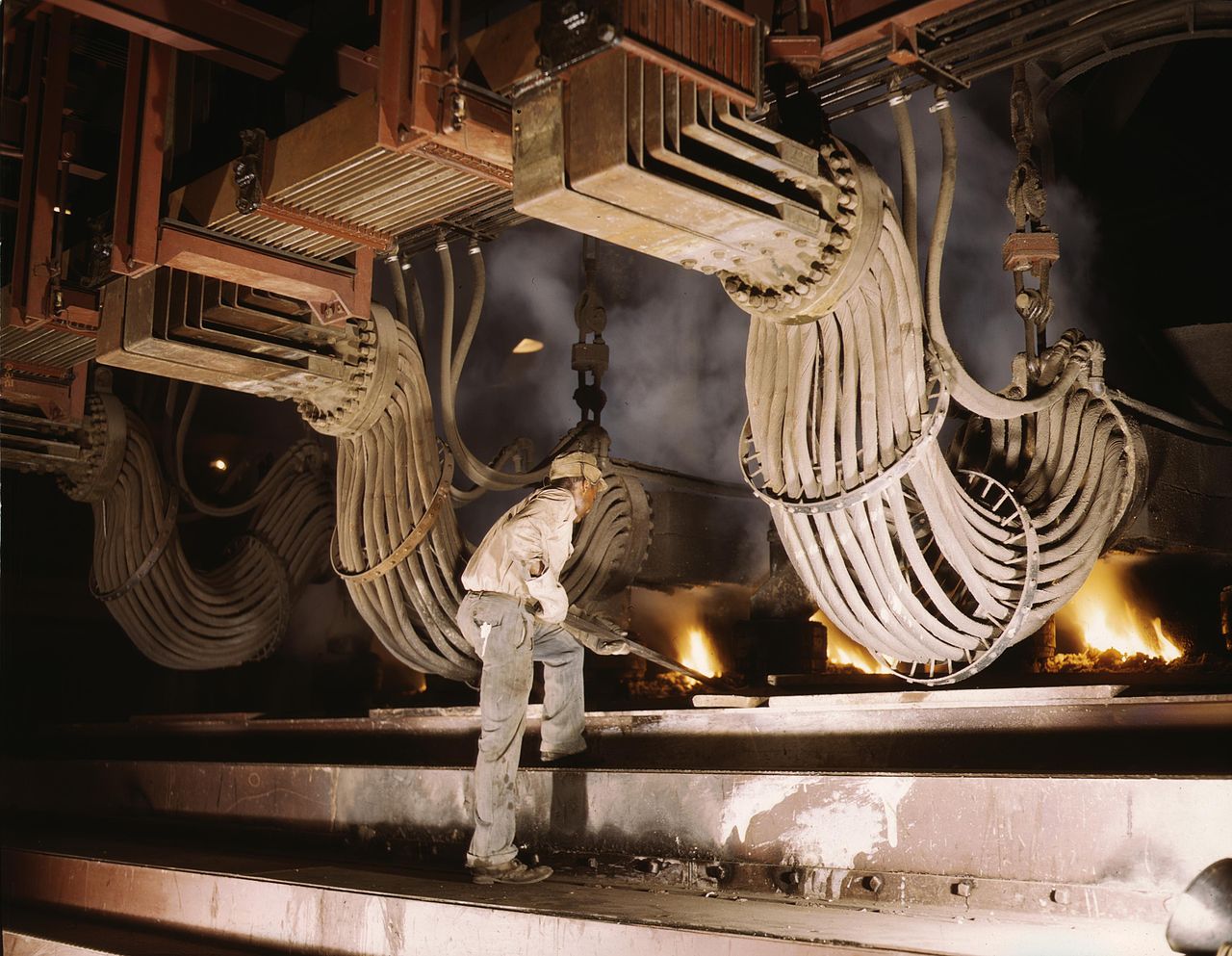
Electrolytic and alternative methods. Aluminum is produced by electrolytic reduction of alumina dissolved in molten cryolite (the Hall–Héroult process), which consumes large electrical energy but avoids carbon reduction of the oxide. Copper smelting is often followed by electrolytic refining: impure blister copper is cast into anodes and an electric current is used in an electrolyte bath to plate high-purity copper onto cathodes. Zinc, nickel and other metals may be recovered by a mix of pyrometallurgical and hydrometallurgical steps depending on mineralogy and economics. Emerging approaches include hydrogen-based reduction of oxides and increased electrification to lower direct carbon emissions.
Byproducts and uses of slag. Slag is the glassy or stony byproduct formed when fluxes react with gangue minerals and impurities. It is commonly used in construction materials such as cement, road aggregate or insulation products, though the composition of slag varies and requires testing to ensure suitability and environmental safety. Proper handling and reuse of slag can reduce the volume of waste and capture useful material value.
Refining and finishing. Smelting is often the first major step; further refining removes residual impurities and brings a metal to the required purity for industrial applications. Refining methods include electrolytic refining, chemical treatments, zone refining for high-purity metals and thermal or vacuum treatments. Melting alone is distinct from smelting because it does not change chemical bonds; refining is distinct because it starts from metal rather than ore.
Environmental and economic considerations. Smelting is energy- and emission-intensive. Combustion of carbon-based reductants produces carbon dioxide; roasting of sulfide ores can generate sulfur dioxide unless captured and converted to sulfuric acid or elemental sulfur. Other environmental concerns include emissions of particulate matter and heavy metals, groundwater contamination from tailings, and the long-term management of slag and waste rock. Modern plants focus on energy efficiency, emission controls, recycling of metal scrap and process integration to reduce environmental impact. Carbon capture and the use of renewable electricity or hydrogen for reduction are active areas of development.
Historical significance. Mastery of smelting was a major technological advance in human history. Copper and bronze technologies transformed tools, weapons and trade networks and later ironworking supported further social and economic change. Archaeological evidence indicates early copper-smelting activities in multiple regions; some of the earliest secure sites for copper processing have been reported from southeastern Europe between about 5500 and 5000 BC. Over centuries furnace designs, fuel sources and metallurgical knowledge evolved from small hearths to large industrial plants.
Practical examples. Iron is commonly produced in blast furnaces and converted to steel by removing carbon and other elements. Aluminum production uses the Hall–Héroult electrolytic process and is electricity intensive. Copper is produced by smelting sulfide ores to make matte and then converting and refining the metal; high-purity copper is obtained by electrorefining. Zinc can be recovered by roasting and reduction or by hydrometallurgical leaching and electrolysis depending on ore type.
Trends and future directions. The metals industry is adapting to resource quality changes, stricter environmental regulations and the need to decarbonize. Key trends include greater recycling of scrap metal, electrification of heat and reduction processes, advanced gas-cleaning systems, and shifting to lower-carbon reductants such as hydrogen. Improving material efficiency and circular economy practices reduce the need for primary smelting and its associated environmental footprint.
Image gallery
6 Images


Related topics and further reading
- metal (general overview)
- ore (mineral deposits and extraction)
- iron production and blast furnaces
- copper smelting and refining
- zinc metallurgy
- silver extraction and refining
- reducing agents in metallurgy
- coke as a fuel and reductant
- charcoal and traditional smelting fuels
- oxide ores and their chemistry
- carbonate ores and calcination
- nonmetallic components and gangue
- limestone and flux chemistry
- slag: formation and uses
- blast furnace design and operation
- aluminium production overview
- electrolysis in metal extraction
- bloomery furnaces and early ironworking
- electrolyte solutions and refining baths
- cathode technology in electrolytic refining
- metallurgy as a discipline
- archaeological smelting sites
- Serbia and early metallurgical evidence
Questions and answers
Q: What is smelting?
A: Smelting is the process of extracting a metal from its natural ore.
Q: What metals require smelting?
A: Metals such as iron, copper, zinc, and silver need to be extracted from their ore through smelting.
Q: What is used in the smelting process?
A: The smelting process usually involves heating the ore and may also use a reducing agent like coke or charcoal. A flux such as limestone is added to carry away impurities.
Q: How is iron produced from its ore?
A: Iron is produced from its ore by using a blast furnace which involves feeding it with coke, iron ore and limestone. Hot air is then blown into the furnace causing the coke to burn and reduce oxygen off the ore producing bare iron and carbon dioxide while the limestone binds off any remaining bedrock. The iron melts in hot temperature at the bottom of the furnace and can then be worked into steel.
Q: How does aluminum get extracted from its ore?
A: Aluminum gets extracted from its ore by using electric ovens called electric arc furnaces where aluminum ore is poured on the bottom of the furnace and electric current led through it resulting in high temperatures that separate oxygen leaving metallic aluminum behind.
Q: How does copper get extracted from its ores?
A: Copper gets extracted from its ores by pouring it on naked flame which burns off sulfur and other impurities leaving raw copper behind or by electrolysis which uses an electric current to separate copper in big pools containing water solution called electrolyte with all copper gathering on an electrode called cathode.
Q: When did metallurgy begin?
A: Metallurgy began around 5500 BC-5000 BC when evidence of copper smelting was found at sites in Pločnik and Belovode, Serbia
Related articles
Author
AlegsaOnline.com Smelting: extracting metals from ores by heat and chemical reduction Leandro Alegsa
URL: https://en.alegsaonline.com/art/91213
Sources
- stonepages.com : "Stone Pages Archaeo News: Ancient metal workshop found in Serbia"
- archaeologydaily.com : "201006274431 | Belovode site in Serbia may have hosted first copper makers"