
Mercury(II) oxide (HgO)
Mercury(II) oxide, HgO, is an inorganic mercury compound appearing as red or yellow solid. It has historical uses in oxygen preparation and pigments, but is highly toxic and now limited by environmental and health concerns.
Mercury(II) oxide is the inorganic compound with the formula HgO. It is an oxide of mercury in which the metal is in the +2 oxidation state. Pure HgO usually appears as a red or orange crystalline solid, although a yellow form can be obtained under different preparation conditions. The compound is sparingly soluble in water and is regarded as a source of mercuric (Hg2+) ions in chemical reactions. More chemical data.
Image gallery
6 Images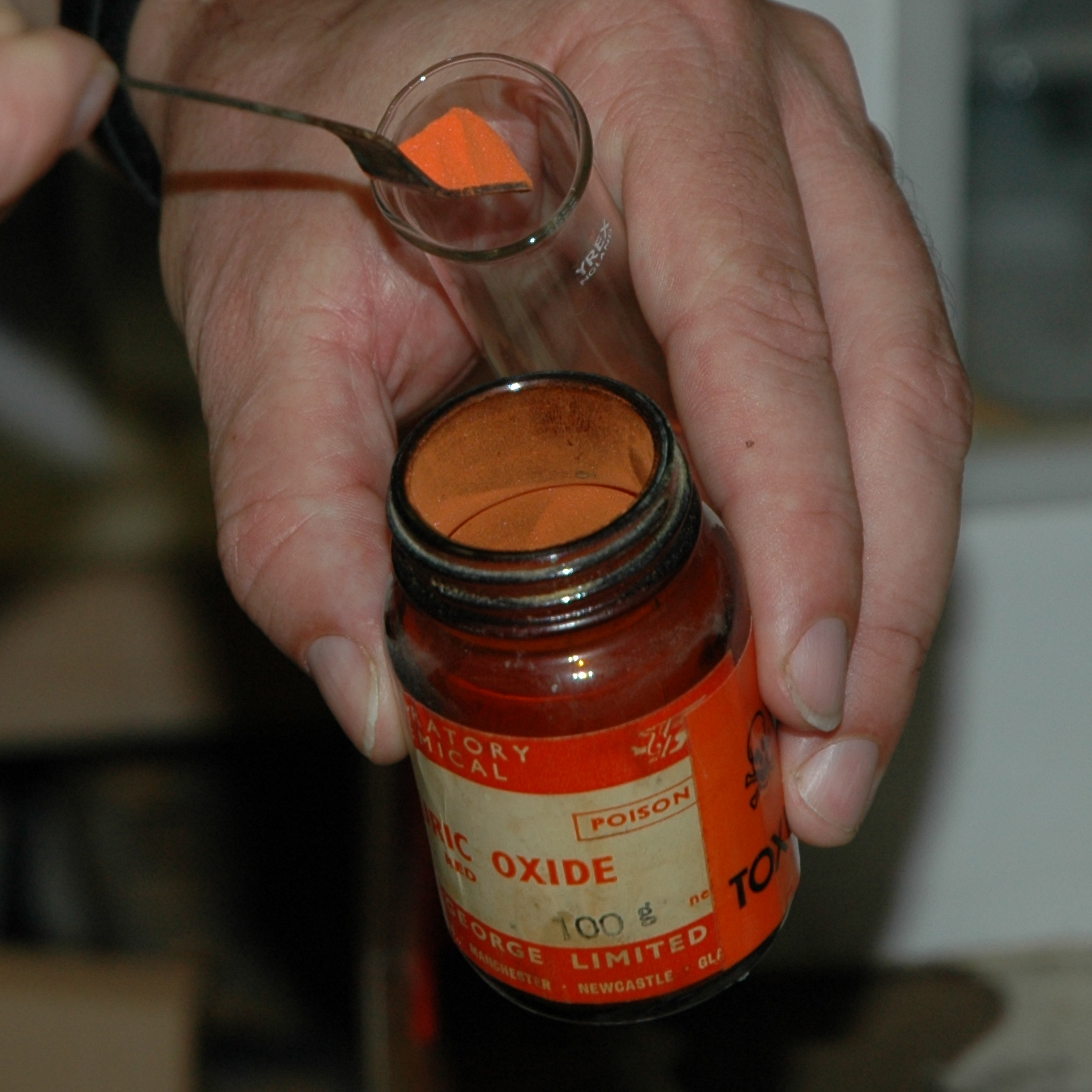

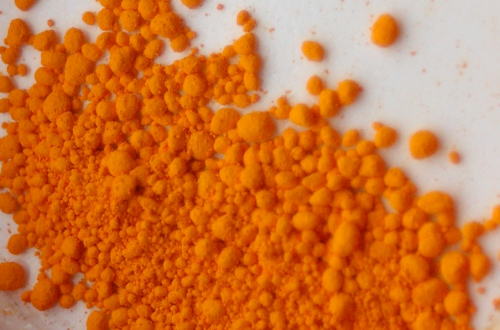

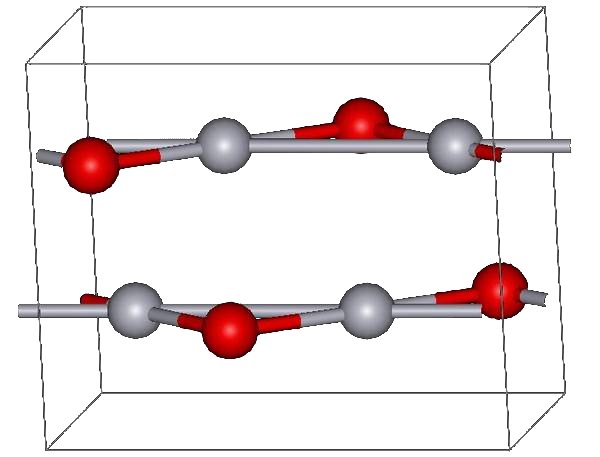
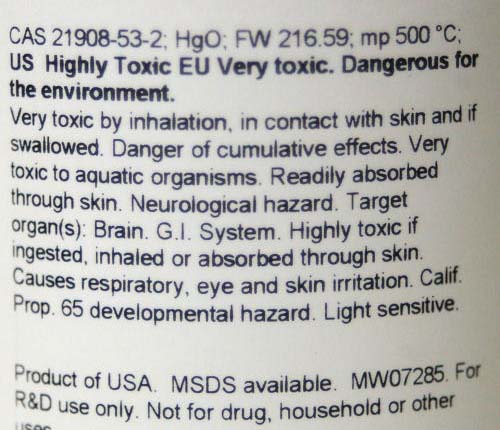
Physical and chemical characteristics
HgO exists in at least two visually distinct forms (commonly described as red and yellow) that differ in crystal arrangement. It decomposes on heating to metallic mercury and oxygen gas, a reaction that can be used to generate oxygen in the laboratory. Chemically, mercury(II) oxide reacts with acids to form soluble mercury(II) salts and may be converted from or to other mercury compounds by standard inorganic reactions. Properties and structure.
Synthesis and reactions
- Preparation: made by heating mercury in oxygen or by precipitating from aqueous mercury(II) salts with a base (for example, adding an alkali to a solution of a mercuric salt produces HgO as a precipitate).
- Decomposition: upon strong heating HgO yields elemental mercury and oxygen.
- Chemical behaviour: it dissolves in acids to give Hg(II) salts and participates in redox and complexation reactions typical of mercury(II).
In classical chemistry demonstrations, heating HgO was used to collect oxygen; this experiment contributed to 18th-century studies of gases. Historical context.
Uses, hazards and notable facts
Historically HgO found uses as a pigment and in some medicinal and antiseptic preparations, and it served as a convenient laboratory reagent for preparing mercuric compounds and oxygen. Modern use is greatly reduced because of mercury's toxicity and environmental persistence: exposure can harm the nervous system and mercury species bioaccumulate. Handling HgO requires careful controls, appropriate protective equipment, and waste disposal to prevent environmental contamination. Distinctly, mercury(II) oxide should not be confused with mercury(I) (mercurous) compounds, in which mercury has a lower +1 oxidation state. Safety and regulation.
Related articles
Author
AlegsaOnline.com Mercury(II) oxide (HgO) Leandro Alegsa
URL: https://en.alegsaonline.com/art/63939