
Silver oxide battery
Silver oxide batteries are small primary cells using a silver oxide cathode and zinc anode in an alkaline electrolyte. They provide a stable 1.55 V output and are used in watches, calculators and small electronics.
Overview
Silver oxide batteries are small primary cells typically found as button or coin cells. They produce electricity by a chemical reaction between a zinc anode and a silver oxide cathode. Unlike older alternatives that used mercury, these cells do not contain mercury, which reduced a major environmental concern and made them common for precision portable electronics.
Image gallery
2 Images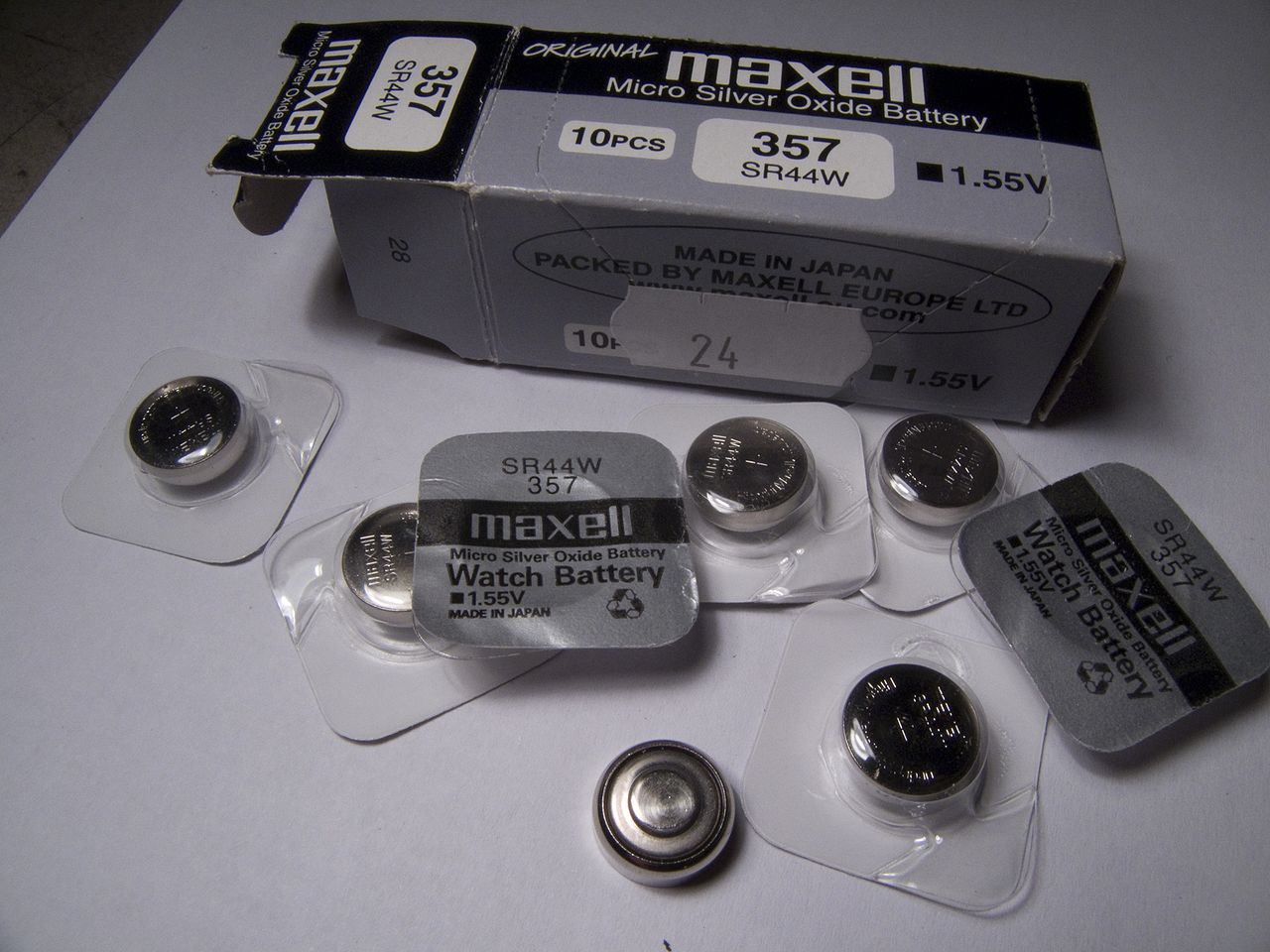

Chemistry and construction
At the heart of a silver oxide cell is metallic zinc and silver(I) oxide. During discharge zinc is oxidized and silver oxide is reduced, with an alkaline electrolyte conducting ions between electrodes. The electrolyte is basic rather than acidic; common formulations use hydroxide solutions. Typical internal components include a stamped zinc anode, a pressed silver oxide cathode, separator, and a stainless steel case that often doubles as the cell terminal.
Performance and characteristics
Silver oxide button cells deliver a nominal voltage of about 1.55 V and are valued for a flat discharge profile and good capacity for their size. They have relatively low self-discharge and can maintain a steady voltage over much of their useful life, which is why they are favored in timekeeping devices. The presence of silver makes them more costly than zinc–air or alkaline button cells, but the chemistry yields stable output and reliable performance in low-current applications.
Common uses
- Wristwatches and clocks
- Calculators and small electronic toys
- Some medical devices and sensors
Their compact size and steady voltage make them ideal for devices that require a reliable low-current supply over months or years.
History and environmental notes
Silver oxide cells became popular as manufacturers moved away from mercury-containing designs. The replacement reduced toxic metal disposal concerns but increased material cost because silver is a precious metal. For that reason, recycling programs often recover silver from spent cells, and many jurisdictions treat these batteries as recyclable electronic waste rather than ordinary trash.
Safety, handling and distinctions
Silver oxide batteries are primary (nonrechargeable) cells and should not be placed in chargers unless a device specifically supports a rechargeable variant. They can leak alkaline electrolyte if damaged or overheated, so proper storage and disposal are important. For technical reference, these cells are classified among button cells and are distinguished from mercury, alkaline, and zinc–air types by their silver oxide chemistry and relatively stable 1.55 V output.
For basic definitions and types see primary cell, and for comparison with earlier technologies see mercury battery. The anode material is zinc and the cathode is silver(I) oxide. The electrolyte is alkaline (basic electrolyte), commonly potassium hydroxide or sodium hydroxide solutions.
Related articles
Author
AlegsaOnline.com Silver oxide battery Leandro Alegsa
URL: https://en.alegsaonline.com/art/90468