
Shenandoah Valley
A geographic and cultural region of Virginia and West Virginia, the Shenandoah Valley is a fertile Appalachian valley known for its history, agriculture, parks and distinctive landscape.

The Shenandoah Valley is a long, fertile lowland in the eastern United States that runs roughly northeast–southwest through western Virginia and the Eastern Panhandle of West Virginia. Framed by the Blue Ridge Mountains on the east and the Appalachian front to the west, the valley stretches from the Potomac River in the north toward the James River in the south and covers about 200 miles of continuous valley floor. The name "Shenandoah" is applied both to the valley and to the rivers that flow within it and has become a widely used regional identifier.
Image gallery
6 Images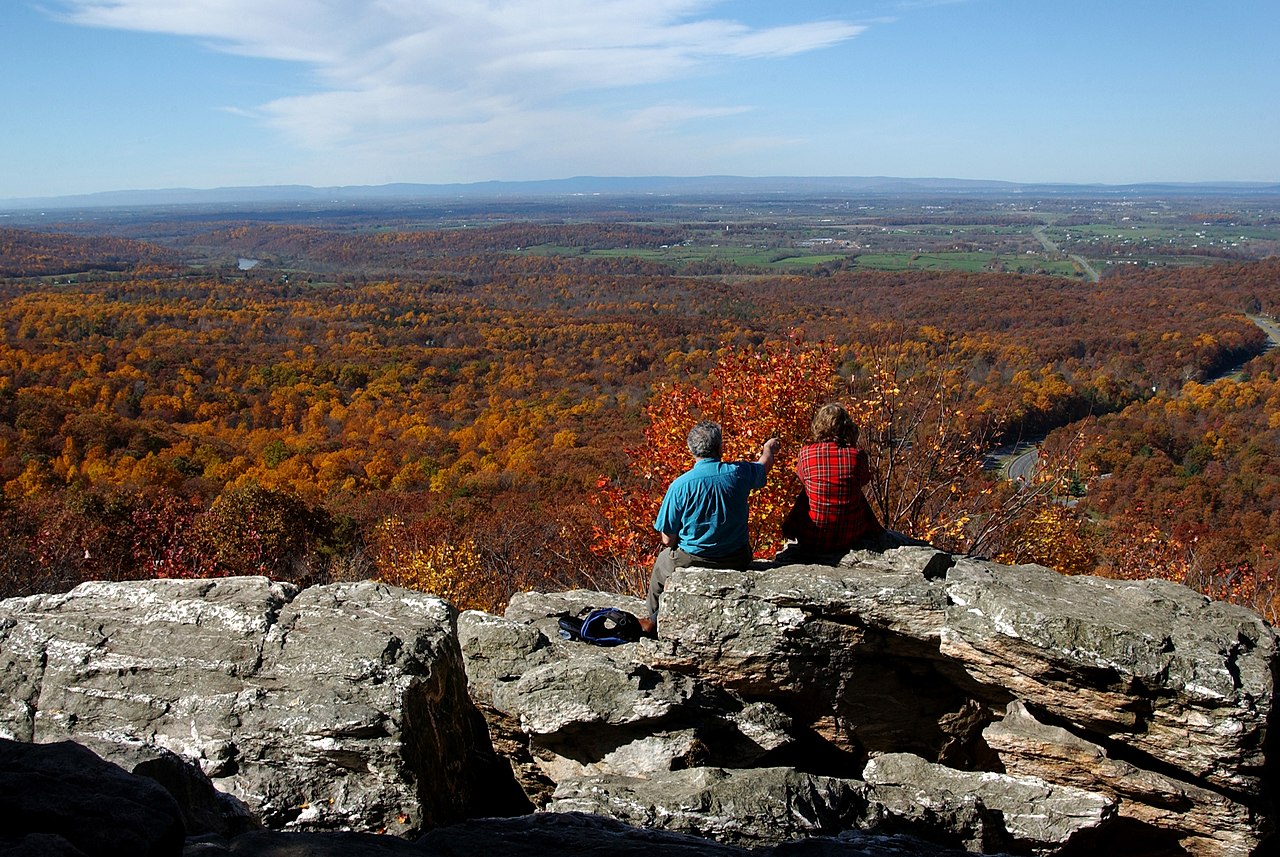


Geography and natural features
The valley is part of the larger Great Valley of the Appalachians and is characterized by a mix of rolling farmland, limestone outcrops, karst terrain and river corridors. Soils deposited over limestone and shale are generally fertile, supporting mixed agriculture. The Shenandoah River, which has north and south forks, drains much of the valley; other tributaries eventually reach the Potomac or James rivers. Elevations are modest compared with surrounding ridgelines, which create distinct microclimates and scenic vistas along the adjacent mountains.
History and cultural development
Historically the valley has been an important corridor for migration, trade and military movement. In colonial times and into the 19th century it attracted settlers of English, Scotch-Irish and German origin who established farms and towns. During the American Civil War the valley's agricultural output and strategic position made it the focus of numerous campaigns and battles; it was often described as the Confederacy's "breadbasket" because of its productivity. Over generations the region developed a distinctive Appalachian-influenced culture visible in local customs, architecture and music.
Economy, land use and institutions
Agriculture remains a visible part of the valley economy: orchards (notably apples), dairy, poultry and mixed crops are common, alongside growing wine and craft-beverage industries. Transportation corridors such as Interstate 81 follow the valley floor and support manufacturing, logistics and tourism. The region is home to several colleges and universities which contribute to local economies and cultural life, and many towns emphasize historic preservation and agritourism.
Recreation, parks and conservation
Outdoor recreation is a major draw. The Blue Ridge to the east contains Shenandoah National Park and Skyline Drive, offering hiking, scenic drives and protected recreation. River access, hunting, fishing and cycling are popular in the valley itself. Conservation efforts balance farmland preservation, water quality in karst areas and development pressures near growing urban centers. Local organizations and state and federal agencies work to protect important habitats and scenic corridors.
Distinctive facts and modern significance
The Shenandoah Valley remains a region where landscape, history and contemporary life intersect: agricultural production continues alongside growing tourism and commuter suburbs, while a strong interest in heritage and outdoor recreation shapes planning and community identity. It is also important to distinguish the valley as a geographic region from Shenandoah National Park (which sits on the nearby Blue Ridge) and from the Shenandoah River system that drains much of the valley floor.
Related links and resources
- Geographic overview and maps
- Cultural region descriptions
- Western Virginia context
- State of Virginia information
- Eastern Panhandle background
- West Virginia regional links
- United States regional resources
- National-level overview
- Boundary and physiography details
- Blue Ridge Mountains information
- Northern valley features
- Potomac River connections
- James River watershed
- Virginia highlands and adjacent areas
- Higher education in the valley
- Notable universities and institutions
For readers seeking deeper study, local historical societies, state parks services and university libraries hold extensive primary sources on settlement patterns, Civil War history and land-use change in the Shenandoah Valley. These resources complement the general overviews and preserve the region's natural and cultural heritage for future study.
Questions and answers
Q: What is the Shenandoah Valley?
A: The Shenandoah Valley is a geographic valley and cultural region of western Virginia and the Eastern Panhandle of West Virginia in the United States.
Q: Where is it located?
A: The valley is bounded on the east by the Blue Ridge Mountains, on the west by the eastern front of the Appalachians, to the north by the Potomac River, and to the south by James River.
Q: How long is it?
A: The Valley is about 200 miles (320 km) long.
Q: What universities are located in this area?
A: Two well-known universities, James Madison and Shenandoah University, are located in this area.
Q: Does this region include other areas besides just "the valley"?
A: Yes, this cultural region covers a larger area that includes all of the valley plus the Virginia highlands to the west, and Roanoke Valley to south.
Q: What nickname does this region have?
A: This region has been nicknamed "The Big Valley".
Related articles
Author
AlegsaOnline.com Shenandoah Valley Leandro Alegsa
URL: https://en.alegsaonline.com/art/89655
Sources
- virginia.org : "The Big Valley"
- goblueridgetravel.com : "Shenandoah Valley of the Virginias"
- visitshenandoah.org : "History of the Shenandoah Valley"
- firstsettlersshenandoahvalley.com : "Shenandoah Valley in the Eighteenth Century"
- visitshenandoah.org : "Visit the Beautiful Shenandoah Valley"
- radford.edu : "Potomac-Shenandoah River System"