
Shafiʿi school of Sunni Islamic jurisprudence
One of the four major Sunni legal schools, founded by Imam al-Shafiʿi; noted for systematising usul al-fiqh, emphasizing hadith, regulated use of analogy (qiyas), and wide presence across Asia and East Africa.
Overview
The Shafiʿi school (Arabic: الشافعي) is one of the four principal Sunni schools (madhahib) of Islamic jurisprudence. Founded by Imam Muḥammad ibn Idrīs al-Shafiʿi in the late eighth and early ninth centuries CE, the school is recognised for its systematic treatment of legal theory (usul al-fiqh) and for placing strong emphasis on the authority of the Qurʾan and authentic hadith. It is commonly considered one of the larger Sunni schools and is widely practised in parts of Asia and East Africa. For context within Sunni legal history see broader surveys of Sunni jurisprudence.
Image gallery
5 Images


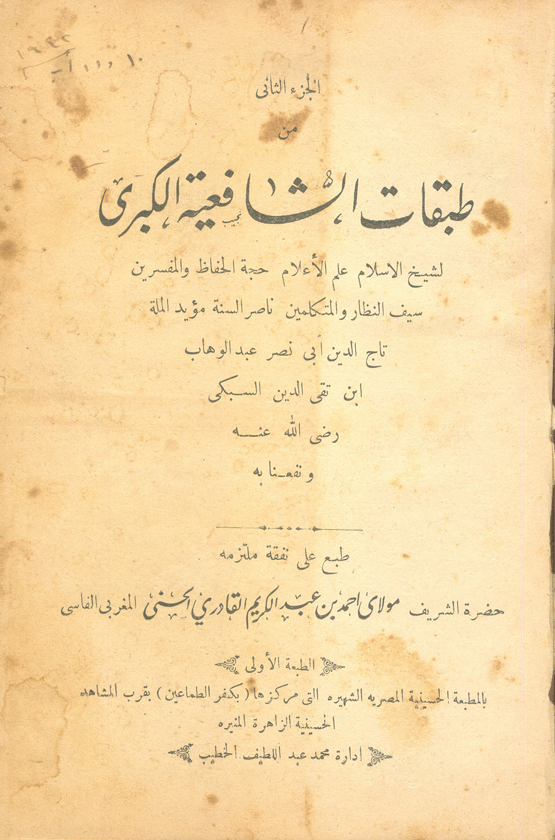

Founder and principal works
Imam al-Shafiʿi (d. 820 CE) combined earlier methods of the medina-based jurists and the Iraq schools into a coherent legal methodology. His two most influential works are the treatise on legal theory often referred to as Al-Risala, in which he set out principles for deriving law from texts, and a manual of jurisprudence and rulings sometimes known as Al-Umm. Through these writings he formalised rules for weighing evidence, for resolving conflicts between texts, and for the use of analogical reasoning.
Usul (methodology) and legal reasoning
The Shafiʿi methodology ranks sources in a clear hierarchy: the Qurʾan first, followed by the Prophet's Sunnah as transmitted in authentic hadith, then consensus (ijmaʿ), and finally analogical reasoning (qiyas) where direct texts are absent. Al-Shafiʿi argued against unfettered reliance on personal opinion (raʾy) and juristic preference (istihsan) when these lack textual support, preferring instead documented reports and controlled rules for analogy. His work greatly influenced later formulations of usul al-fiqh and provided a template for how jurists should evaluate hadith evidence in practical law.
Practical characteristics
- Emphasis on the authenticated corpus of hadith as a key source for rulings.
- Use of qiyas (analogy) within defined limits rather than expansive discretionary reasoning.
- Preference for transmitted knowledge when it can be reliably established over local custom that conflicts with textual evidence.
- Development of concise legal manuals and commentaries that became standard teaching texts in many regions.
Historical development and later scholars
After al-Shafiʿi's death, his students and later jurists systematised and expanded his jurisprudence. The school produced many influential commentators and jurists, among them medieval scholars such as Al-Ghazali and Imam al-Nawawi, who wrote widely read works of law, ethics and spirituality. Over centuries the Shafiʿi school was transmitted through teaching institutions, madrasas, and informal scholarly networks across the Muslim world.
Geographic distribution
The Shafiʿi school is especially prominent in parts of South and Southeast Asia and in portions of eastern and northeastern Africa. Regions with notable Shafiʿi presence include:
- South Asia: the Maldives and Sri Lanka (Sri Lanka), and parts of southern India such as Tamil Nadu, Kerala, Karnataka and Andhra Pradesh; communities are also found in western Indian urban areas including the Mumbai region.
- Southeast Asia: Indonesia (Indonesia), Malaysia (Malaysia), Singapore (Singapore), parts of the southern Philippines (Philippines) and southern Thailand (Thailand).
- Western Asia and the Levant: communities in parts of eastern Turkey and adjacent Levantine areas; Shafiʿi traditions have also been present in southern Arabian regions such as Hadramawt and other coastal areas.
- Africa and the Horn: established Muslim communities in Ethiopia (Ethiopia), Eritrea (Eritrea), Kenya (Kenya), Tanzania (Tanzania) and Mozambique (Mozambique), where trade and historical ties helped transmit Shafiʿi teachings.
Comparison and influence
In comparison with the Hanafi, Maliki and Hanbali schools, the Shafiʿi approach is notable for its codified principles and for seeking a balance between strict reliance on textual transmission and the disciplined use of analogy. Its manuals and commentaries have been central to religious education in many regions, shaping curricula in seminaries and influencing local legal practice. The school's insistence on methodological clarity contributed significantly to later debates in Islamic legal theory.
Modern relevance and institutions
Today Shafiʿi jurisprudence continues to be taught in traditional seminaries and modern universities. In countries where the school predominates, its principles inform personal status law, ritual practice, and elements of communal jurisprudence. At the same time, contemporary scholars engage with the tradition to address new questions about legal interpretation, social change, and interschool dialogue.
Further reading
For introductory material and primary texts consult translations and studies of Imam al-Shafiʿi's works and later commentaries. Useful starting points include surveys of classical usul literature, regional legal histories, and modern comparative studies available in academic and religious libraries. See also resources relating to Arabic sources (Arabic), general studies of Sunni law (comparative studies), and regional histories for South Asia (Sri Lanka), urban studies of the Indian subcontinent (Mumbai region), and national overviews for Singapore (Singapore), Malaysia (Malaysia), Indonesia (Indonesia), the Philippines (Philippine Islam), Thailand (Thailand), Ethiopia (Ethiopia), Eritrea (Eritrea), Kenya (Kenya), Tanzania (Tanzania) and Mozambique (Mozambique).
Related articles
Author
AlegsaOnline.com Shafiʿi school of Sunni Islamic jurisprudence Leandro Alegsa
URL: https://en.alegsaonline.com/art/89352