
Shaykh al-Islām: title, roles, and historical development
Shaykh al-Islām is an honorific for preeminent Islamic scholars and, in some eras, a formal office. This article explains its meaning, qualifications, historical uses, and institutional forms.
Shaykh al-Islām is a traditional honorific applied to leading authorities in Islamic learning. The phrase itself comes from Arabic and is rendered in English as "the elder of Islam" or "master of Islam." In classical usage it identified men widely respected for deep knowledge of the Qur'an, prophetic tradition, jurisprudence and theology. Many cultures also used local forms of the title to name a formal office combining religious authority with public duties.
Image gallery
3 Images

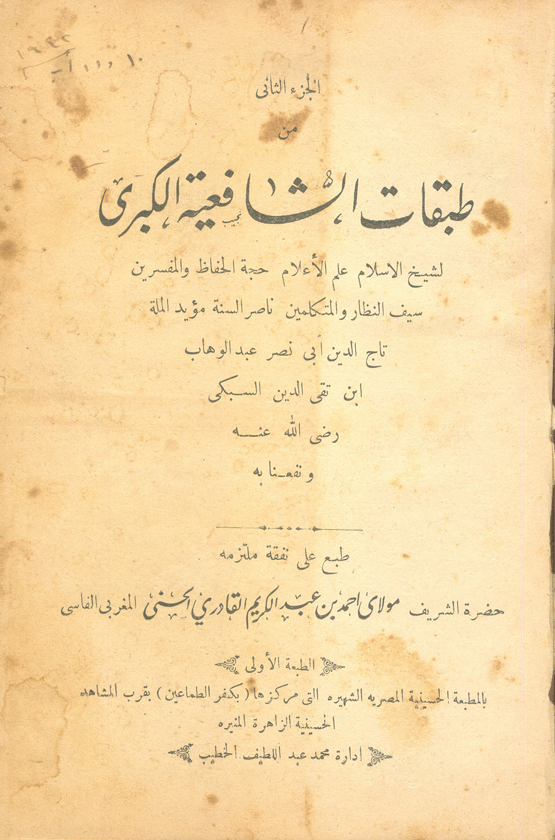
Meaning and criteria
As an honorific, the title denotes exceptional scholarship rather than a single standardized credential. Authorities historically associated the term with scholars who had mastered the principles of Islamic sciences, were fluent in legal methodology, and could extract rulings from primary texts. A widely cited medieval definition emphasizes both textual competence and the ability to engage competing scholarly opinions. The Arabic form of the name appears in many biographical and legal sources; see the original term in Arabic: shaykh al-Islām (Arabic).
Functions and activities
- Issuing legal opinions (fatwas) and advising courts or rulers.
- Teaching advanced students and supervising religious institutions.
- Acting as a public moral and doctrinal authority in times of dispute.
In some contexts the title simply signaled peer recognition among outstanding scholars, while in others it named the chief expert responsible for overseeing religious law in a city or even a kingdom. The underlying standard was fidelity to the foundational texts—the Qur'an and the prophetic example—often alluded to as adherence to the Book of Allah and the Sunnah.
Historical development
The title emerged in the medieval Islamic world when scholarly reputation and institutional power became intertwined. In many regions notable jurists, theologians, and hadith masters acquired it by consensus of peers and students. Later states sometimes formalized the designation: for example, several Muslim polities appointed an official "chief mufti" or chief jurist who functioned as a public Shaykh al-Islām with administrative duties. The precise standing of the office varied widely from one polity to another.
Regional variations and examples
Different languages and administrative systems adapted the phrase—Ottoman Turkish used a comparable term for the empire's highest religious official, while Persianate and Arabic-speaking lands preserved the honorific as a mark of exceptional learning. Many celebrated medieval scholars are commonly cited as having borne this title in later biographical tradition; it served both as a sign of scholarly eminence and, at times, as a title carrying legal influence.
Distinctions and modern relevance
Important distinctions: the title is not a single universally regulated academic degree, and being called Shaykh al-Islām could reflect either communal veneration or formal appointment. Today the phrase survives in historiography and in some religious institutions, where it continues to connote high scholarship and authority, though modern state systems and universities have introduced other formal qualifications for religious office.
For further reading about the terminology and institutional history, consult specialized studies and biographical dictionaries that track how the honorific was used across regions and eras. See also comparative discussions of religious offices and muftiates in institutional histories: term origin, scholarly roles, official functions, urban offices, state appointments, textual foundations.
Questions and answers
Q: What is the meaning of the title "Shaykh al-Islam"?
A: "Shaykh al-Islam" is a title of respect for outstanding scholars of Islam. It can also be used for the chief expert in Islamic Law of a city or kingdom.
Q: Who is usually given the title "Shaykh al-Islam"?
A: The title "Shaykh al-Islam" is usually reserved for very few scholars, usually those with the greatest merits.
Q: How does al-Sakhawi define "Shaykh al-Islam"?
A: Al-Sakhawi defines "Shaykh al-Islam" as a title attributed to that follower of the book of Allah Most High, and the example of His messenger, who possesses the knowledge of the principles of the science [of religion], has plunged deep into the different views of the scholars, has become able to extract the legal evidences from the texts, and has understood the rational and the transmitted proofs at a satisfactory level.
Q: What is the expertise of a person given the title "Shaykh al-Islam"?
A: A person given the title "Shaykh al-Islam" is an expert in Islamic Law, possesses knowledge of the principles of the science of religion, and is able to extract legal evidences from texts.
Q: How significant is the title "Shaykh al-Islam"?
A: The title "Shaykh al-Islam" is a highly respected title for outstanding scholars of Islam, suggesting great knowledge and expertise.
Q: Who can be called "Shaykh al-Islam" according to the text?
A: According to the text, only outstanding scholars of Islam with great knowledge and expertise can be called "Shaykh al-Islam."
Q: Is the title "Shaykh al-Islam" given to many people?
A: No, the title "Shaykh al-Islam" is usually reserved for very few scholars with the greatest merits.
Related articles
Author
AlegsaOnline.com Shaykh al-Islām: title, roles, and historical development Leandro Alegsa
URL: https://en.alegsaonline.com/art/89553