
Second Vatican Council (Vatican II)
An overview of the Second Vatican Council (1962–1965): its origins, major documents and reforms, participants, and long-term significance for the Roman Catholic Church.
Overview
The Second Vatican Council, commonly called Vatican II, was the twenty-first ecumenical assembly of the Roman Catholic Church. Convened to examine the Church's life and mission in a rapidly changing world, it met in Rome between 1962 and 1965 over four sessions. Pope John XXIII called the council with the intention of updating the Church's approach to modern society (often expressed by the Italian word aggiornamento), and its public work was brought to a close under Pope Paul VI.
Image gallery
10 Images


Participants and timeline
The council gathered bishops, theologians and invited experts from across the world. It included many figures who later became prominent in the Church: Cardinal Giovanni Battista Montini (later Pope Paul VI), Bishop Albino Luciani (later Pope John Paul I), Bishop Karol Wojtyła (later Pope John Paul II), and the young theological consultant Joseph Ratzinger (later Pope Benedict XVI). The sessions brought together observers from other Christian communities and non‑Christian religions, reflecting the council's interest in dialogue.
Key documents and reforms
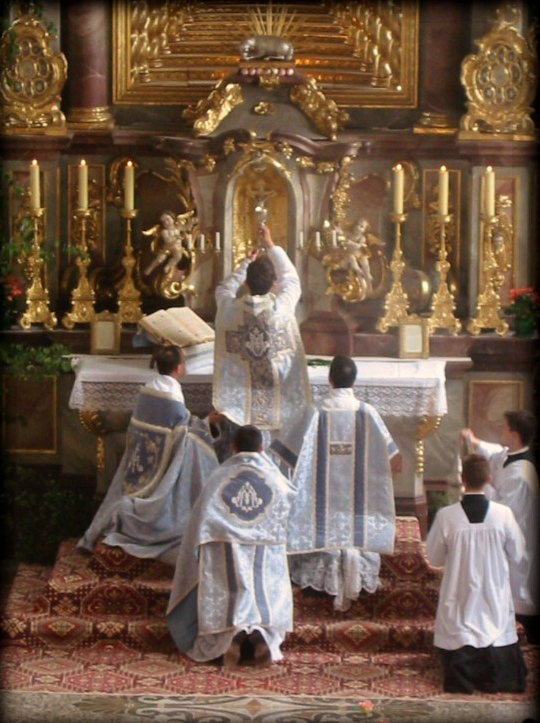
- Sacrosanctum Concilium — liturgical renewal and permission for greater use of the vernacular in the Mass.
- Lumen Gentium — theological description of the Church, including the role of bishops and the laity.
- Dei Verbum — teaching on divine revelation and the use of Scripture.
- Gaudium et Spes — pastoral constitution on the Church's relationship with the modern world.
- Nostra Aetate — statements on relations with non‑Christian religions, notably Judaism and Islam.
- Unitatis Redintegratio — decree on ecumenism and efforts toward Christian unity.
- Dignitatis Humanae — affirmation of religious freedom as a human right.
Major themes and practical changes
Vatican II emphasized aggiornamento: pastoral renewal rather than doctrinal revolution. It promoted active participation by laypeople, encouraged liturgical texts and rites to be adapted to local languages and cultures, and fostered academic engagement with Scripture and modern social sciences. The council prioritized ecumenical outreach and improved relations with other religions, recommending respectful dialogue and cooperation.
Impact and ongoing debates
Many scholars and Catholics regard Vatican II as the most consequential Catholic event of the 20th century, reshaping worship, theology, and institutional life. Its implementation generated varied responses: some welcomed rapid change and experimentation, while others urged a careful, continuity-minded approach. Debates over the council's meaning—whether it represents a rupture or a development within tradition—remain influential in contemporary Catholic discussion and policy.
Legacy
The council produced a set of authoritative texts—constitutions, decrees and declarations—that continue to guide Catholic teaching and practice. Vatican II's call to engage the modern world and to open channels of dialogue transformed ecumenical relations and interfaith encounters and reshaped parish life and seminary education. For further reference on the council as an ecumenical assembly see Ecumenical council, and for perspectives on its place in modern history see discussions of the 20th century. Additional resources explore the documents in full and their liturgical consequences, including reforms to the Mass.
For a concise introduction and authoritative texts consult general guides and the official translations and commentaries available from ecclesiastical publishers and academic commentators. Further reading and archival materials can be located through specialized libraries and institutional collections linked to major Church repositories and university research centers.
Related articles
Author
AlegsaOnline.com Second Vatican Council (Vatican II) Leandro Alegsa
URL: https://en.alegsaonline.com/art/88447