
Pope Benedict XVI (Joseph Ratzinger): life, papacy, theology, and legacy
Overview of Pope Benedict XVI (born Joseph Ratzinger): his life, theological career, 2005–2013 papacy, resignation and retirement as Pope Emeritus, major writings, controversies and historical significance.
Overview
Joseph Aloisius Ratzinger (born 16 April 1927) served as head of the Roman Catholic Church and sovereign of the Vatican City State from 2005 until his resignation in 2013. Known to the world as Pope Benedict XVI, he was elected the 265th Pope on 19 April 2005. His personal names are familiar in several languages — for example, in German and in Italian — and after stepping down he held the title of Pope Emeritus. His papacy combined a long career as a scholar and Vatican official with a public role that emphasized continuity of doctrine and liturgical tradition.
Image gallery
10 Images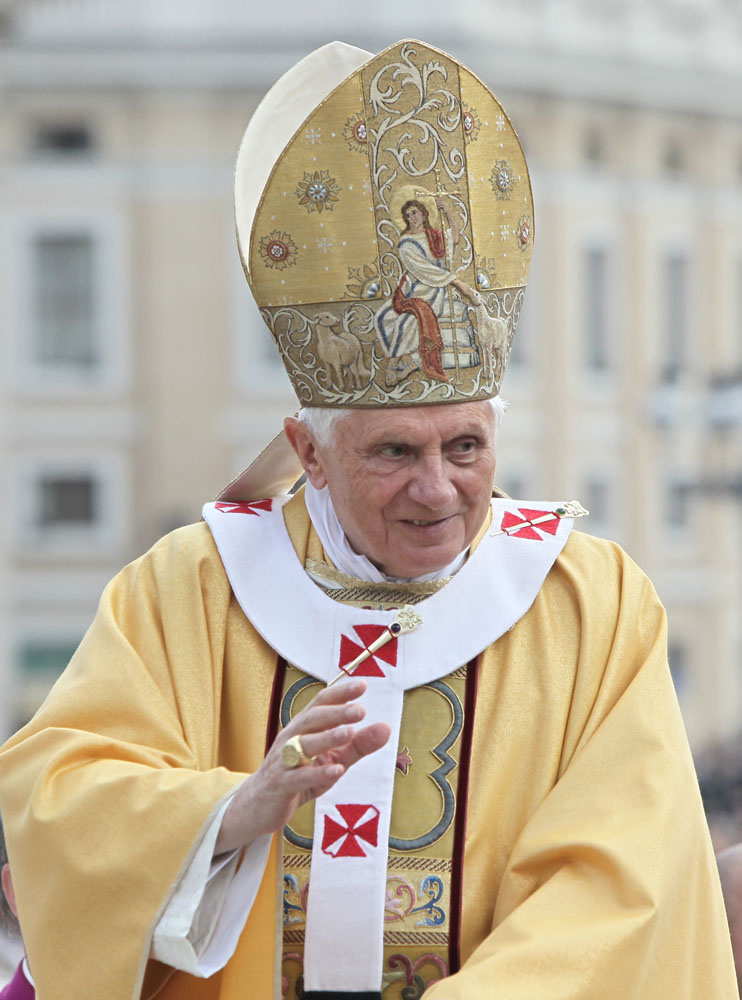



Early life and career
Ratzinger was born in the Bavarian town of Marktl and was ordained a priest in 1951. He taught theology at several German universities and became widely known as a conservative but respected academic. In 1977 he was appointed Archbishop of Munich and Freising and was made a cardinal later that year. In 1981 Pope John Paul II called him to Rome to lead the doctrinal office of the Holy See, where he served for more than two decades and became one of the pope's closest theological advisers.
Papacy (2005–2013)
Following the death of Pope John Paul II, the conclave elected Ratzinger as pope on 19 April 2005. He celebrated his papal inauguration Mass on 24 April and formally took possession of the Lateran cathedral in May. His time as pope was marked by efforts to articulate a clear theological vision for the modern church, promote the centrality of the liturgy, and respond to the moral and social questions of the era. He issued several encyclicals and other documents that addressed charity, hope, and human development, and he advanced measures intended to strengthen priestly formation and doctrinal clarity.
Theology, writings and notable acts
- He was widely recognized as a leading theologian of the 20th and early 21st centuries, authoring numerous books and essays, including later works written after his retirement.
- Major papal documents under Benedict included encyclicals on love, hope and social ethics; he also issued a motu proprio that broadened access to the traditional Latin Mass.
- Some of his public statements, including a 2006 lecture that touched on religion and reason, prompted international debate and diplomatic responses.
Resignation and retirement
On 11 February 2013 Benedict announced his unexpected decision to resign, citing a diminished strength of mind and body that made it difficult to carry out the demands of the office; the announcement is often referenced simply as his resignation. He became the first pope to resign since Pope Gregory XII in 1415 and the first to do so by personal choice since Pope Celestine V in 1294. After his resignation took effect on 28 February 2013 he retained the style of His Holiness in certain formal usages and continued to wear the white papal cassock. He moved into the Mater Ecclesiae monastery in the Vatican for retirement and lived there while his successor, Pope Francis, began his pontificate.
Legacy and controversies
Benedict XVI left a complex legacy. He is remembered for clear doctrinal statements, a large body of theological writing, and efforts to emphasize continuity in Catholic teaching and liturgical practice. He also faced criticism over the church's handling of clerical sexual abuse cases during earlier decades of his service in the Roman Curia and as a diocesan bishop; later public scrutiny and inquiries focused on institutional responses and accountability. His decisions — such as greater provision for the pre‑Vatican II liturgy and attempts to reconcile with traditionalist groups — continue to influence internal debates. He died on 31 December 2022, and assessments of his impact combine respect for his scholarship with ongoing debates about governance and pastoral choices.
For further reading about his works, speeches and the developments of his papacy, consult official Vatican resources and published scholarly studies that examine both his theological contributions and the practical challenges faced by the church during his years of service.
Questions and answers
Q: Who is Pope Emeritus Benedict XVI?
A: Pope Emeritus Benedict XVI is the 265th Pope of the Catholic Church, serving from 2005 to 2013. He was born Joseph Aloisius Ratzinger on 16 April 1927.
Q: When did he become pope?
A: Benedict was elected on 19 April 2005 in a papal conclave after the death of Pope John Paul II and celebrated his papal inauguration Mass on 24 April 2005.
Q: How long did he serve as pope?
A: He served as pope for 8 years, from 2005 to 2013.
Q: Why did he resign?
A: He resigned due to "lack of strength of mind and body" because of his old age. His resignation became effective on 28 February 2013.
Q: What title does he retain after resigning?
A: As Pope Emeritus, Benedict retains the style of His Holiness, and the title of Pope. He will continue to dress in the papal colour of white.
Q: Who succeeded him as pope?
A: He was succeeded by Pope Francis on 13 March 2013.
Q: Where did he move for his retirement?
A: He moved into the newly renovated Mater Ecclesiae monastery for his retirement on 2 May 2013.
Author
AlegsaOnline.com Pope Benedict XVI (Joseph Ratzinger): life, papacy, theology, and legacy Leandro Alegsa
URL: https://en.alegsaonline.com/art/128848