
Selma to Montgomery marches (1965)
A series of civil rights demonstrations in Alabama in 1965 that protested voter suppression, most famously Bloody Sunday, and helped spur the Voting Rights Act.
Overview
The Selma to Montgomery marches were a sequence of nonviolent protests in Alabama in March 1965 aimed at securing equal voting rights for African Americans. Organized by civil rights groups and local activists, the events drew national attention after law enforcement violently attacked marchers on March 7—an episode that became known as "Bloody Sunday." Televised images of the clashes helped build public support for federal voting-rights legislation.
Image gallery
8 Images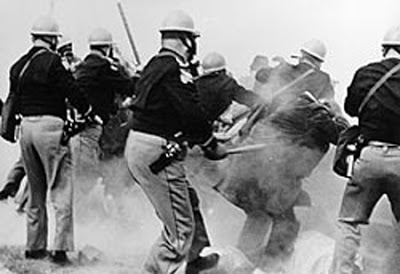



Key events and timeline
The first demonstration on March 7, 1965 began with approximately 500–600 protesters who attempted to walk from Selma toward the state capital in Montgomery. At the Edmund Pettus Bridge local law enforcement and deputized possemen confronted the marchers and used batons, tear gas and mounted charges to disperse the crowd; dozens were injured and at least 17 were hospitalized. Two days later a smaller group returned in a symbolic act that ended with a voluntary turn-around after a short prayer gathering.
- March 7, 1965: "Bloody Sunday"—violent confrontation at the Edmund Pettus Bridge.
- March 9, 1965: A symbolic, less confrontational return called "Turnaround Tuesday."
- March 21–25, 1965: A sustained, federally protected march completed the 54-mile route to the Alabama State Capitol in Montgomery.
Participants, leadership and tactics
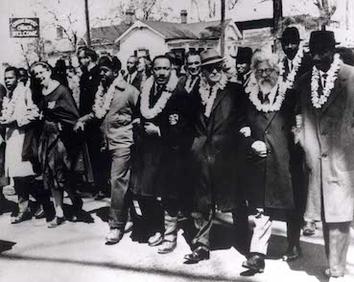
Organized by the Southern Christian Leadership Conference (SCLC), the Student Nonviolent Coordinating Committee (SNCC) and other groups, the marches featured local Black voters and national civil rights leaders, including Martin Luther King Jr. and other prominent organizers. Marchers relied on disciplined, nonviolent resistance—prayer, singing and orderly procession—to dramatize the moral case against disenfranchisement and racially discriminatory voting practices such as literacy tests and intimidation.
Government response and legal protection
After images of the March 7 violence reached a national audience, President Lyndon B. Johnson pressed Congress to act and moved to provide federal protection for demonstrators. Federal courts and the administration intervened; the Alabama National Guard and federal law enforcement escorted the successful march from Selma to Montgomery, which concluded on the steps of the state capitol. These developments accelerated legislative momentum in Washington.
Impact and legacy
The marches were a decisive factor in the passage of the Voting Rights Act, which President Lyndon B. Johnson signed into law later in 1965 as the Voting Rights Act of 1965. The law targeted barriers to minority voting and authorized federal oversight of elections in jurisdictions with histories of discrimination. Public reaction to the brutality in Selma moved many Americans and lawmakers to support reforms that had languished for years.
Notable facts and distinctions
Selma is located in Dallas County; local enforcement there, led by figures such as Sheriff Jim Clark, used deputized civilians to counter the marchers—an action that intensified national outrage. Many historians note the role of television coverage in converting local protest into a national cause. The route and events are commemorated in memorials, scholarly work and public ceremonies that reflect both the courage of participants and the centrality of voting rights in the civil rights movement.
For further reading on the individuals, legal battles and cultural memory surrounding Selma, see resources linked to the march organizers and places: Dallas County law enforcement, Selma, Alabama, and Montgomery.
Questions and answers
Q: What was the purpose of the marches from Selma to Montgomery?
A: The marches were to protest for voting rights for all citizens, and to end discrimination at polling places.
Q: What happened on the first march on March 7, 1965?
A: Between 500-600 civil rights protesters began the march but were stopped by Sheriff Jim Clark, and beaten severely by his deputies and state troopers.
Q: Why were the protesters beaten during the first march on March 7, 1965?
A: The Sheriff of Dallas County ordered that all white men over the age of 21 to report to the court house steps where he made them deputies and equipped them to counter the protesters.
Q: What caused President Johnson to mobilize the Alabama National Guard to protect the marchers?
A: After the events of Bloody Sunday were televised, President Johnson issued an order to protect the marchers on their journey from Selma to Montgomery, Alabama.
Q: When did the second march begin and end?
A: The second march began on March 21, 1965 and ended on March 25, 1965 at the steps of the state capitol in Montgomery, Alabama.
Q: What action did President Johnson take before the second march began?
A: Before the second march began, President Johnson went to Congress to ask them for a bill that would guarantee voting rights for all citizens and end discrimination at polling places.
Q: How many protesters were hospitalized after the events of Bloody Sunday?
A: 17 protesters were hospitalized after the events of Bloody Sunday.
Related articles
Author
AlegsaOnline.com Selma to Montgomery marches (1965) Leandro Alegsa
URL: https://en.alegsaonline.com/art/88713