
Secession: causes, forms, legal context and notable examples
Secession is when a region breaks away from an existing state to create a separate polity. This article surveys definitions, legal frameworks, historical cases, peaceful and violent forms, motivations and remedies.
Overview
Secession refers to the act of a part of a political entity separating to form an independent state or to join another state. It is often described as a declaration of independence by a region or group within a country. Some descriptions emphasize the procedural steps—when a sub‑state authority formally declares its independence—while others focus on the political and social dynamics that make separation plausible.
Image gallery
9 Images







Key characteristics and forms
Secession can take a variety of forms. A separation may be:
- violent, involving an armed conflict between secessionists and the central state;
- peaceful, carried out through negotiation, referendums or legal provisions; or
- de facto, when an area functions independently without broad international recognition.
Constitutions and legal systems play a central role: some national constitutions explicitly forbid or permit secession, while others are silent. Where codes exist, they may state whether secession is allowed and under what conditions, or they may implicitly resist it by asserting the indivisibility of the state. Debates about secession are therefore often as much legal as they are political, involving arguments about what is permissible legally under domestic and international law.
Historical development and notable precedents
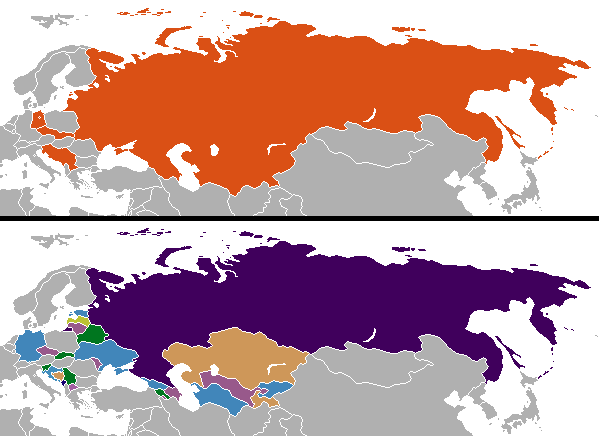
Modern instances of secession range from the breakup of multiethnic federations to regional movements reacting to economic or cultural grievances. Some early twentieth‑century constitutional models, such as those that governed the former Soviet Union or the former Yugoslavia, included provisions allowing constituent republics to secede, a factor that shaped later dissolutions. Prominent violent examples include the attempt by the 11 southern states that formed the Confederate States of America and precipitated the conflict between that Confederacy and the United States leading to the American Civil War. Another violent struggle with a different outcome was the Bangladesh Liberation War, which resulted in the emergence of Bangladesh from Pakistan.
Peaceful secessions and negotiated dissolutions
Not all separations are fought over. The late twentieth century saw largely peaceful exits in which constituent units—such as the Soviet republics—declared independence and gained recognition through political processes. Other regions achieve greater autonomy or devolution as a response to secessionist demands rather than full separation. Movements sometimes use the prospect of secession as leverage to win autonomy or more devolved powers from the central national government, adjusting the polity without changing international borders.
Contemporary examples and strategies to prevent conflict
Governments and regional leaders have used constitutional reform, referendums, fiscal arrangements and cultural protections to reduce secessionist pressures. Notable contemporary cases where devolution and negotiation were emphasized include Quebec, Scotland and Flanders, where long‑running demands for independence prompted altered political settlements short of full separation.
Why secession matters
Secession raises fundamental questions about self‑determination, minority rights, territorial integrity and the stability of states. Whether resolved by force, negotiated settlement or legal adjudication, episodes of secession leave lasting effects on regional politics, international law and the communities involved. Scholars and policymakers therefore study both the causes of secession—economic inequality, ethnic identity, historical grievances—and the institutional arrangements that can manage or resolve such demands peacefully.
For further reading and source material, see introductions and case studies linked here: definition, state context, declaration processes, constitutional frameworks, legal analyses, Soviet model, Yugoslav model, federal republics, American South, Confederacy, United States, Civil War, Bangladesh, Bangladesh state, Pakistan, Soviet republics, autonomy issues, devolution, central government, Quebec case, Scotland case, Flanders case.
Related articles
Author
AlegsaOnline.com Secession: causes, forms, legal context and notable examples Leandro Alegsa
URL: https://en.alegsaonline.com/art/88399