
Yugoslavia: history, federation, and dissolution
Overview of Yugoslavia: origins, political forms from 1918–2006, federal structure, major historical phases including the Tito era, the 1990s breakup, successor states, and its legacy.
Overview
Yugoslavia was a state in southeastern Europe, largely located on the Balkan Peninsula. The name means "land of the South Slavs," referring to a political and cultural idea of unity among Slavic peoples of the southern Balkans. For general orientation see regional maps and geography, and for linguistic and ethnic background see South Slavs.
Image gallery
8 Images



Origins and creation (1918)
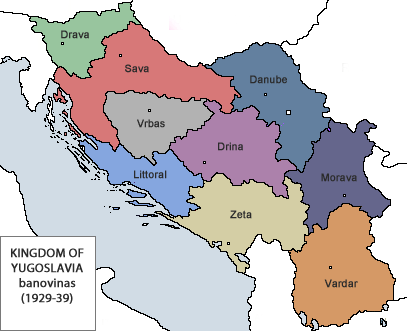
The modern political entity known as Yugoslavia was created in the aftermath of World War I when territories of the collapsed Austro-Hungarian Empire were joined with the Kingdom of Serbia and other South Slavic lands. Initially the state was named the Kingdom of the Serbs, Croats, and Slovenes (1918). In 1928 the name was changed to the Kingdom of Yugoslavia as part of efforts to unify the country under a single dynastic monarchy.
Interwar period and World War II
The interwar years featured competing political visions and tensions among regional and ethnic groups; governance alternated between attempts at centralization and episodic political reform. During World War II the kingdom was invaded and occupied by the Axis powers, a period that reshaped political loyalties and resistance movements across its territory (WWII and occupation).
Socialist Yugoslavia and federal organization (1945 onward)
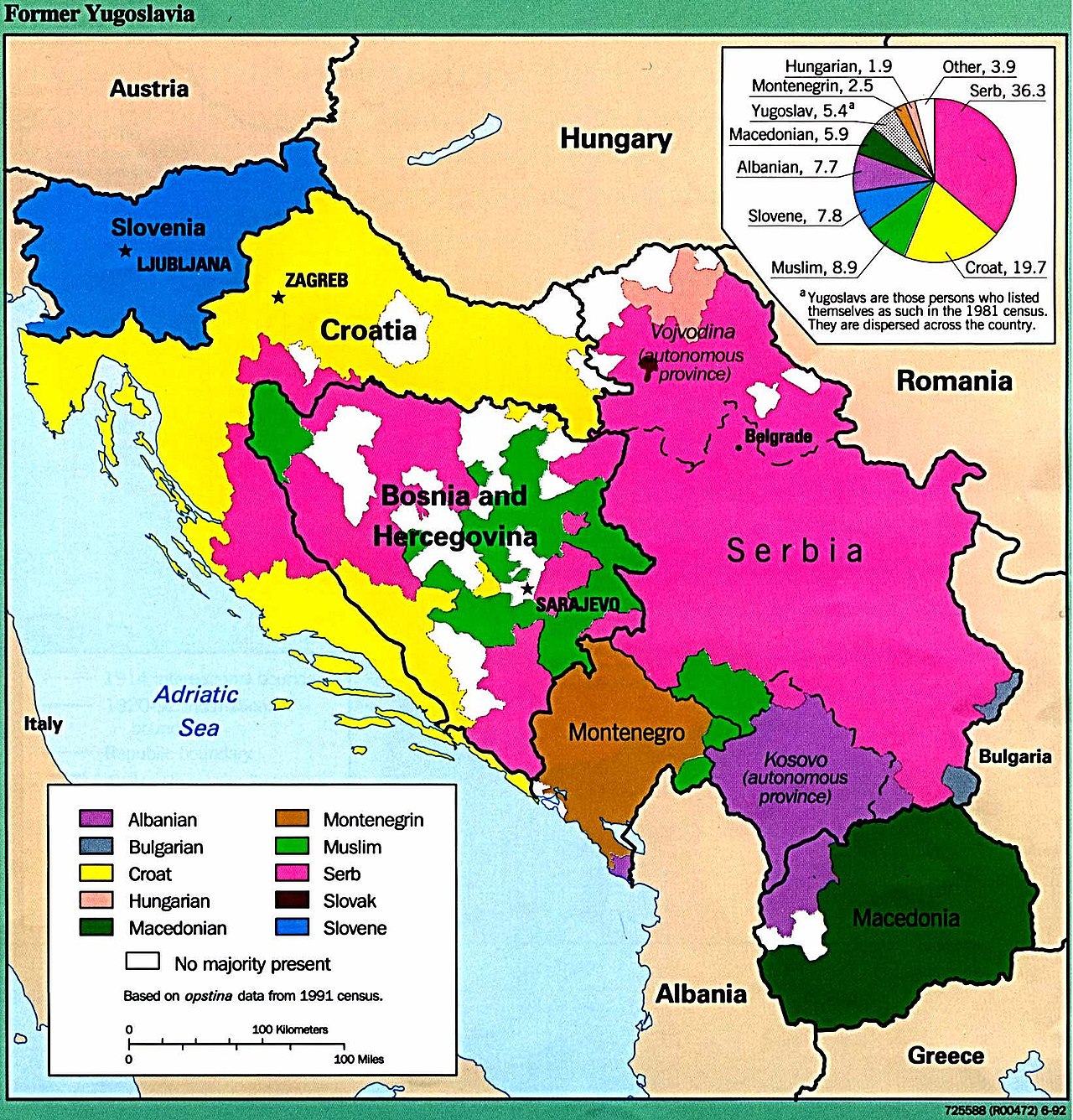
After World War II a socialist federation emerged under the leadership of Josip Broz Tito. The Socialist Federal Republic of Yugoslavia organized itself as a federation of six republics: Bosnia and Herzegovina, Croatia, North Macedonia, Montenegro, Serbia, and Slovenia. Within Serbia two autonomous provinces were recognized: Vojvodina in the north and Kosovo in the south. The federal constitution and institutional arrangements sought to accommodate linguistic, cultural and historical diversity while maintaining a single state framework.
Economy, society, and foreign policy
Yugoslavia pursued a distinctive model of market socialism and worker self-management that differed from the centrally planned systems of the Soviet bloc. Economically and politically it occupied a unique position during the Cold War, helping to found the Non-Aligned Movement and maintaining relations with both East and West. Social policies emphasized education, industrialization, and a range of social services, and Yugoslavia became known for a relatively high level of social mobility compared with other communist states.
Changes after Tito and constitutional reform
The death of Tito in 1980 removed a central stabilizing figure and coincided with economic difficulties, rising regional inequalities, and growing nationalist sentiment in some republics. Constitutional changes during the 1970s had decentralized many powers to republics and provinces, a setup that later contributed to disputes over authority and sovereignty.
Breakup and conflicts of the 1990s
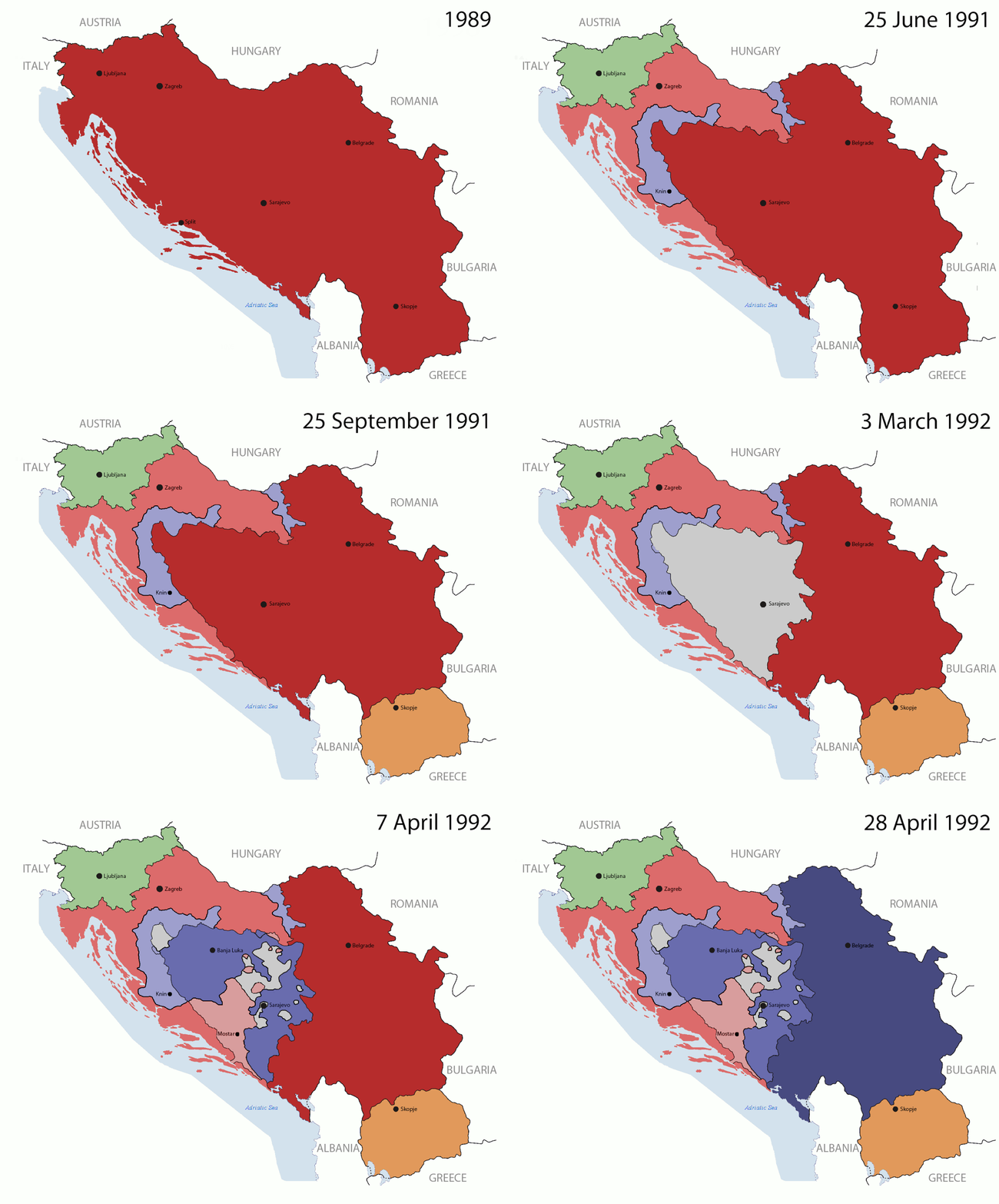
Beginning in 1991 the federation began to dissolve as constituent republics declared independence. Slovenia and Croatia were the first to secede, followed by North Macedonia and Bosnia and Herzegovina. The remaining republics of Serbia and Montenegro formed a reduced Federal Republic of Yugoslavia in 1992. The dissolution process was accompanied in places by armed conflict, large population displacements, and serious humanitarian crises; the pattern and intensity of violence varied between regions and phases. In the late 1990s the province of Kosovo became a focal point of renewed confrontation that drew international involvement.
Successor states and final end of the name
The series of secessions and subsequent political arrangements produced the independent states that occupy the territory today. Over time these successor states pursued separate paths of political and economic development, international recognition, and regional cooperation. The formal use of the name "Yugoslavia" ceased when the last union of Serbia and Montenegro dissolved in 2006; successor states continue to deal with the legacies of the federal era and the conflicts that accompanied its end.
Legacy
The legacy of Yugoslavia is complex and multifaceted. It includes efforts at multiethnic federal governance, cultural and sporting achievements shared across republics, and a notable role in mid-20th-century international politics through non-alignment. It also left unresolved questions about minority rights, memory, historical grievances, and economic transition. These issues continue to shape politics, migration, and cultural life in the region and in diaspora communities.
Further reading and resources
- Regional studies and maps for geographic context.
- World War II and postwar histories for the wartime occupation and postwar settlement.
- Bosnian history and society for detailed accounts of the 1990s conflicts.
- Ethnolinguistic background on South Slavs and regional languages.
- Entries on individual successor states: Slovenia, Croatia, North Macedonia, Bosnia and Herzegovina, Serbia, Montenegro; and provincial histories such as Vojvodina and Kosovo.
Quick facts
- Name meaning: "land of the South Slavs" (etymology).
- Key dates: state forms from 1918; major breakup began in 1991; the last federal union ended in 2006.
- Main components: Bosnia and Herzegovina (BH), Croatia (HR), North Macedonia (MK), Montenegro (ME), Serbia (RS), Slovenia (SI), plus the autonomous provinces of Vojvodina and Kosovo.
- Distinctive features: multiethnic federalism, Tito-era non-alignment, and a dissolution process that reshaped the modern Balkans.
Questions and answers
Q: What was Yugoslavia?
A: Yugoslavia was a country in Europe that existed in one of three forms from 1918 to 2006.
Q: What does the name Yugoslavia mean?
A: Yugoslavia means “land of the south Slavs”.
Q: When was Yugoslavia called the Kingdom of the Serbs, Croats, and Slovenes?
A: Yugoslavia was called the Kingdom of the Serbs, Croats, and Slovenes from 1918 until 1928.
Q: What was Yugoslavia called from 1928 until World War II?
A: Yugoslavia was called the Kingdom of Yugoslavia from 1928 until World War II.
Q: How many republics and autonomous provinces did Yugoslavia have?
A: Yugoslavia had six republics and 2 autonomous provinces: Bosnia-Herzegovina, Croatia, North Macedonia, Montenegro, Serbia, and Slovenia and two autonomous provinces in Serbia: Vojvodina in the north, and Kosovo, next to Albania.
Q: When did the independence of Slovenia and Croatia occur?
A: The independence of Slovenia occurred in 1991 and the independence of Croatia occurred in 1992.
Q: When did the Federal Republic of Yugoslavia end?
A: The Federal Republic of Yugoslavia ended in 2006 with Montenegro declaring independence.
Related articles
Author
AlegsaOnline.com Yugoslavia: history, federation, and dissolution Leandro Alegsa
URL: https://en.alegsaonline.com/art/110170
Sources
- commons.wikimedia.org : Yugoslavia
- wikidata.org : wikidata.org/wiki/Q36704
- hls-dhs-dss.ch : 003360
- isni.org : 0000 0001 2259 4100
- catalog.archives.gov : 10035836
- aleph.nkp.cz : ge129499
- viaf.org : 129724016
- worldcat.org : viaf-129724016