
Bantu peoples: origins, languages and cultural diversity
Overview of the Bantu peoples, a broad grouping of hundreds of African ethnic communities linked by Bantu languages, their origins, migrations, cultural features and modern significance.
The term "Bantu peoples" denotes a large and diverse set of ethnolinguistic communities across sub-Saharan Africa who speak languages of the Bantu family. It is a broad label covering several hundred distinct groups with varied histories, lifeways and identities. The grouping is based primarily on shared linguistic roots rather than a single political or biological identity.
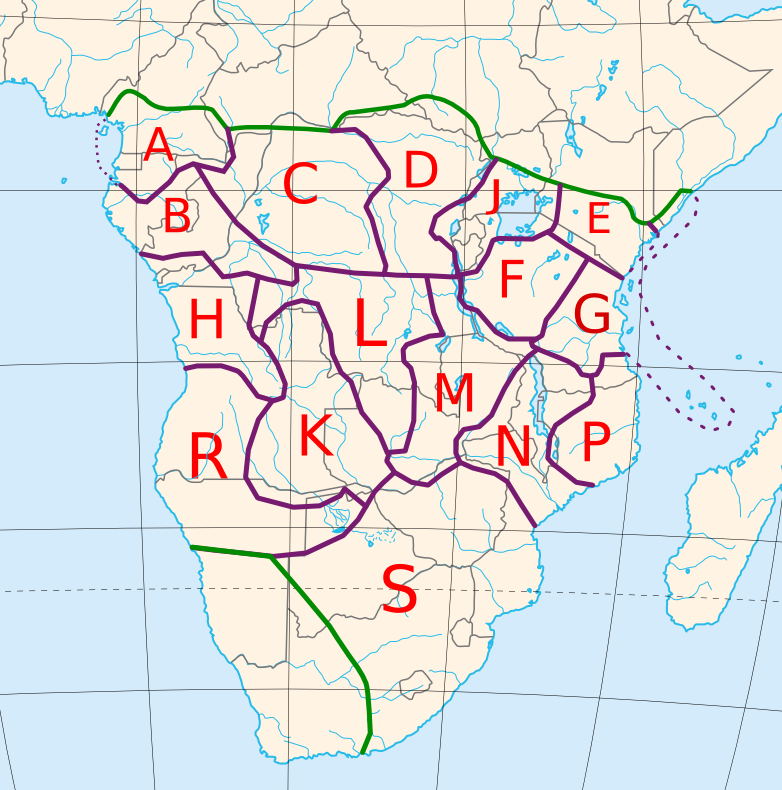
Geographic range and examples. Bantu-speaking communities occupy a wide belt of Africa, extending from the forested regions of Cameroon and nearby areas through Central Africa and the Great Lakes to southern countries such as South Africa. Examples of well-known Bantu groups include the Zulu, Xhosa, Kikuyu, Kongo and many coastal communities whose languages contributed to Swahili. For a general listing of groups see Bantu ethnic groups and more on the continent at Africa.

Image gallery
8 Images




Origins and expansion
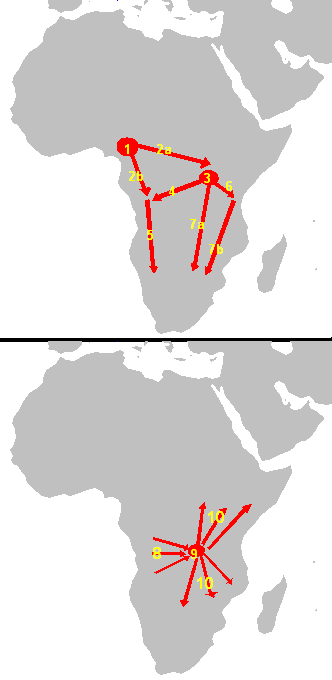
Most historical and linguistic research indicates a common origin in parts of western Central Africa. Over a long period — beginning a few thousand years ago — speakers of Proto-Bantu languages spread outward in a process often called the Bantu expansion. This movement combined migration, cultural exchange and language shift and reshaped demographics across large parts of sub‑Saharan Africa. The spread is linked with the adoption of agriculture and ironworking, although local circumstances produced diverse outcomes.

Language, society and culture
The Bantu label rests principally on the family of related languages, commonly known as Bantu languages. These languages share grammatical features such as noun class systems and complex verb morphology. Social structures among Bantu peoples vary: some communities are organized by patrilineal descent, others by matrilineal lines; leadership forms include chiefs, councils and more fluid age-set systems. Agriculture — especially root and cereal crops — along with cattle-keeping, fishing and trade have shaped many societies.
Historical impact and modern significance
Bantu-speaking peoples have played central roles in Africa's precolonial and modern history. The expansion influenced language maps, settlement patterns and cultural formations across the continent. In the colonial and post‑colonial eras, Bantu languages and identities have been important in national politics, literature, music and urban life. Today, many Bantu languages are national or regional lingua francas, while others remain local and endangered.
Notable distinctions
- Bantu is linguistic, not a single race: the grouping describes language families and cultural affinities rather than a uniform people.
- Diversity is high: ecology, economy and contact with other groups produced wide cultural variation among Bantu-speaking communities.
- Research continues to refine timelines and routes of migration, combining archaeology, linguistics and genetics.
For more detailed treatments, consult specialized works on the Bantu expansion, regional histories and linguistic surveys that examine particular languages and societies in depth.
Related articles
Author
AlegsaOnline.com Bantu peoples: origins, languages and cultural diversity Leandro Alegsa
URL: https://en.alegsaonline.com/art/8808