
Saturday Night Fever
1977 drama film starring John Travolta that popularized disco culture through iconic dance scenes and a bestselling soundtrack by the Bee Gees; noted for its social themes and lasting influence.
Overview
Saturday Night Fever is a 1977 American drama film that made a major cultural impact by bringing disco music and nightclub culture into the mainstream. The movie stars John Travolta as Tony Manero, a nineteen-year-old Italian American from Brooklyn who seeks release from a constrained life through dancing. The story contrasts the character's dull daytime routine with his vibrant nightlife at a local disco, capturing both the allure and the limits of that escape.
Image gallery
2 Images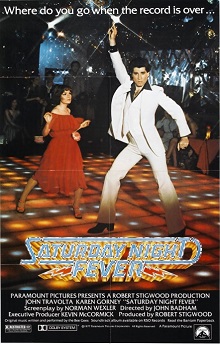

Plot and characters
Tony Manero works a monotonous job in a small store and lives with his family in a working-class Brooklyn neighborhood. His identity and self-worth are tied to his reputation as a dancer at a popular discotheque. The film follows his attempts to better his life, his complicated friendships and romantic entanglements, and the conflicts that arise when personal ambition collides with social realities. Key scenes emphasize the dance floor as a site of competition, community and short-lived transcendence.
Soundtrack and dance
The film's soundtrack is central to its popularity. Released as an album, it features hit disco songs and helped define the sound of late-1970s popular music. Several tracks by the Bee Gees became international hits and are closely associated with the film; the record remains one of the best-selling soundtrack albums. The choreography and on-screen dancing—rooted in disco style—became iconic, influencing fashion, club culture and the public perception of dance as both entertainment and personal expression. The movie also uses a variety of other music to set tone and atmosphere during both intimate and high-energy scenes.
Production, inspiration and setting
Directed by John Badham and produced in the mid-1970s, the film was inspired in part by a magazine piece about urban nightlife. Its setting in Brooklyn and in New York City nightlife locales lends the story a strong sense of place; the protagonist's neighborhood life is portrayed with a realist eye while the club scenes show a stylized, escapist world. The contrast between these environments is a primary device for exploring themes of aspiration, identity and class.
Reception, versions and legacy
On release the film became a commercial success and helped launch Travolta to international stardom, earning critical attention and award nominations for his performance. Because of the movie's mature content, two versions circulated: the original R-rated cut and a later PG-rated edition that softened some material to reach younger audiences. A less successful sequel, Staying Alive (1983), reunited Travolta with a continuation of Tony's story but did not match the original's cultural resonance.
Notable facts and influence
- The film popularized disco and influenced late-1970s fashion and nightlife.
- It presents a layered portrait of youth, ambition and working-class life in Brooklyn and broader New York City.
- Dance and dancing are treated as central narrative elements rather than mere spectacle; the nightclub setting anchors the drama.
- The movie features scenes set in a now-famous nightclub and uses contemporary R&B, soul and disco recordings to build its soundscape.
While strongly associated with the disco era, the film endures because it combines memorable music with a character study of escapism and the search for meaning in constrained circumstances. Its soundtrack and images continue to be referenced in popular culture, making it one of the most recognizable films of the 1970s.
For further reading on its music and cultural context, the film and album remain widely discussed in music history and film studies sources; many summaries and critical essays explore how a single popular movie helped shape a decade's sound and style.
Additional resources: Lead actor, soundtrack contributors, and background on the original article that inspired the screenplay can be consulted via general film reference collections and music histories.
Related articles
Author
AlegsaOnline.com Saturday Night Fever Leandro Alegsa
URL: https://en.alegsaonline.com/art/87485
Sources
- rottentomatoes.com : Staying Alive page