
Samgyetang: Korean Ginseng Chicken Soup
Samgyetang is a traditional Korean soup of a whole young chicken stuffed with rice, ginseng and aromatics. Eaten especially in summer, it is prized for its restorative broth and comforting, mild flavors.
Samgyetang is a classic Korean soup built around a small, whole chicken stuffed with glutinous rice and simmered with medicinal and aromatic ingredients. The name combines sam (ginseng) and gye (chicken) with tang (soup). Light in seasoning but rich in umami and collagen, it is commonly consumed during the hottest days of summer as a restorative dish and everyday comfort food.
Image gallery
7 Images


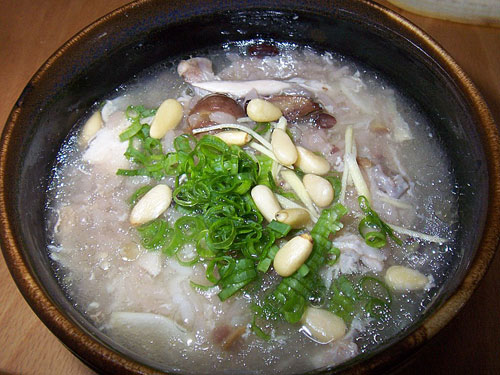
Key ingredients and characteristics
The core elements of samgyetang are a young, tender chicken (often called a poussin or broiler) and a filling of sticky rice. Inside the cavity cooks a small bundle of flavor and nutrition such as ginseng, dried jujube (red dates), whole garlic cloves and slivers of ginger. Broth clarity varies by recipe: some cooks prefer a clear, gently seasoned stock that highlights the chicken and herbs, while others develop a deeper, richer soup by reducing bones and aromatics over a long simmer. The finished bowl is mildly seasoned and often accompanied by a small dish of salt and pepper for individualized dipping.
Preparation and serving
Preparation begins with thoroughly cleaning the bird and stuffing it with soaked glutinous rice together with the herbs. The sealed chicken is simmered whole until the meat is tender and easily pulls from the bone; cooking time depends on size and method. Some restaurants and home cooks prepare a concentrated stock separately and add it back to the pot to intensify flavor. Samgyetang is served hot in an individual bowl or hot pot so the stew remains steaming at the table.
Cultural context and seasonality
Although nourishing year-round, samgyetang is traditionally eaten during the three hottest days of the Korean lunar calendar, known as bok days (sambok). The practice reflects the Korean custom of eating hot, nutritious foods in summer to restore balance and energy. Many Koreans believe the restorative ingredients, especially ginseng, help replenish vitality lost to heat and hard work.
Accompaniments, variations and notable facts
Common side dishes include radish kimchi (kkakdugi) and other fermented vegetables; restaurants typically offer both kkakdugi and kimchi to complement the mild broth. Variations may add chestnuts, ginkgo nuts or medicinal herbs for regional or seasonal nuance. While samgyetang focuses on simplicity and nourishment, modern iterations range from minimalist clear broths to more elaborate preparations intended to extract maximum flavor from bones and fillings.
Why it matters
Samgyetang is valued for its balance of gentle flavor, protein, and traditional medicinal ingredients. It represents a culinary intersection of food and health in Korean cuisine, illustrating how everyday meals can carry cultural meaning and seasonal purpose. Whether served at home or in specialty restaurants, samgyetang remains a widely recognized and beloved Korean dish.
Related articles
Author
AlegsaOnline.com Samgyetang: Korean Ginseng Chicken Soup Leandro Alegsa
URL: https://en.alegsaonline.com/art/86675