
Samarra — Iraqi city, Abbasid capital, and archaeological site
Samarra, on the Tigris north of Baghdad, is an Iraqi city known for its Abbasid-era monuments, the spiral Malwiya minaret, and a large archaeological area inscribed by UNESCO.
Samarra is a historic city on the east bank of the Tigris River in central Iraq. It lies in the Salah ad Din Governorate about 125 km north of Baghdad. The site has been continuously occupied in various forms from prehistoric times through the Islamic Golden Age to the present day and is widely recognized for its cultural heritage and archaeological richness. Modern population estimates in the early 21st century placed residents in the hundreds of thousands (estimate), though figures have varied with migration and conflict.
Image gallery
10 Images




Origins and Abbasid capital
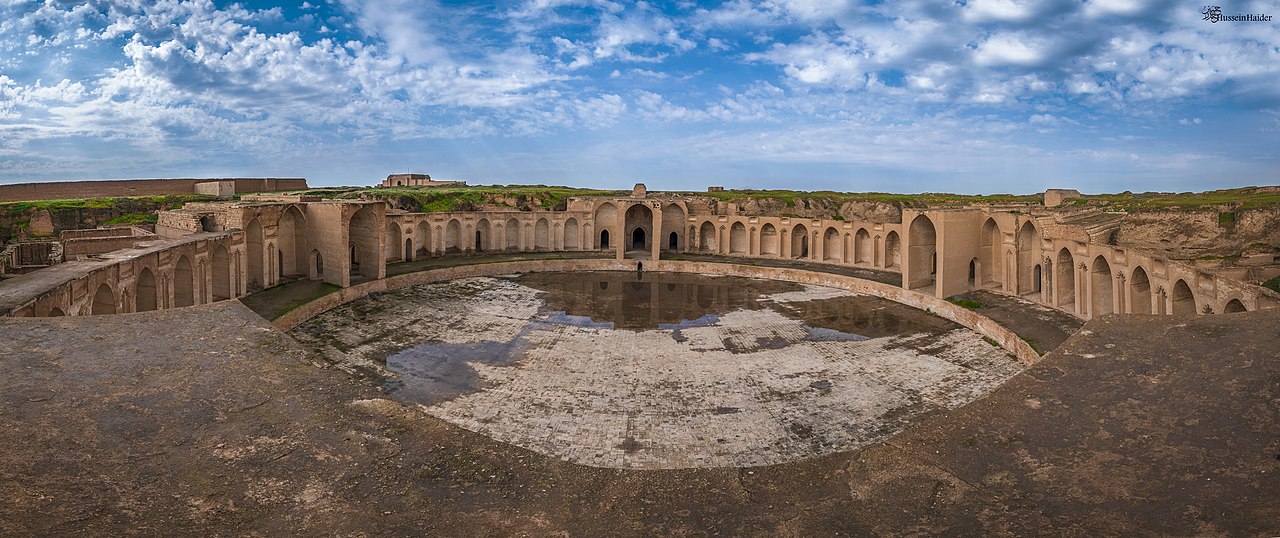
The city was transformed in the 9th century when the Abbasid Caliphate established an administrative and military center there. In 836 CE the caliph al‑Mu'tasim founded a planned capital at Samarra, moving the court from Baghdad and building vast palaces and garrison settlements to house troops drawn from regions such as Central Asia and Iran, including many Turkic soldiers. The city served as the seat of the caliphate for a period and left behind monumental architecture and urban layouts characteristic of Abbasid statecraft.
Monuments and archaeology
Samarra's best-known landmark is the Great Mosque's spiral minaret, commonly called the Malwiya. Nearby are other large religious complexes and palace ruins that reflect the scale of Abbasid construction. The archaeological precinct preserves traces of urban planning, monumental brickwork, and distinctive decorative styles. The city's long timeline is also reflected in the so-called Samarra culture of prehistory — a prehistoric ceramic tradition identified at sites in the region — linking the name to both ancient and medieval heritage.
Heritage, damage and preservation
Because of its outstanding historic value, Samarra's archaeological zone was inscribed on the UNESCO World Heritage List, and it is frequently discussed in studies of Islamic art and urbanism (cultural sources). During the 21st century the city and its monuments suffered from looting, neglect, and deliberate damage in the context of conflict; some structures have been the focus of emergency conservation and reconstruction efforts. The religious shrine at Samarra is also important to different Muslim communities and has been a focal point in modern events.
Modern city and distinctions
Today Samarra functions as both a living town and an archaeological landscape. It is administratively part of Iraq (Iraq) and is commonly described as a town or city in regional accounts. Historical descriptions often point to the Tigris as central to its economy and strategic importance (Tigris). Visitors and researchers approach Samarra for different reasons: to study Abbasid architecture, to examine prehistoric remains associated with the Samarra culture, or to understand the city's continuing religious and social roles.
For more detailed primary sources and archaeological reports see archival and specialist links indexed under local and international repositories (Arabic name and detail, founding date studies).
Related articles
Author
AlegsaOnline.com Samarra — Iraqi city, Abbasid capital, and archaeological site Leandro Alegsa
URL: https://en.alegsaonline.com/art/86649