
Abbasid Caliphate
The Abbasid Caliphate (750–1258) was a major Islamic dynasty centered in Baghdad that advanced administration, culture, and sciences while confronting internal fragmentation and external rivals.
Overview
The Abbasid Caliphate was a major Islamic dynasty that replaced the Umayyad regime in most of the Muslim world in the mid‑8th century. Founded by members of the family of Abbas ibn Abd al‑Muttalib, a paternal uncle of the Prophet Muhammad, the new ruling house proclaimed a caliphate that claimed both political rule and religious leadership. The revolution that brought the Abbasids to power began in the region around Harran and culminated in 750 CE (750 of the Christian era). In 762 the capital was relocated to a newly founded metropolis, Baghdad, which became the symbolic and intellectual center of the caliphate for two centuries.
Image gallery
10 Images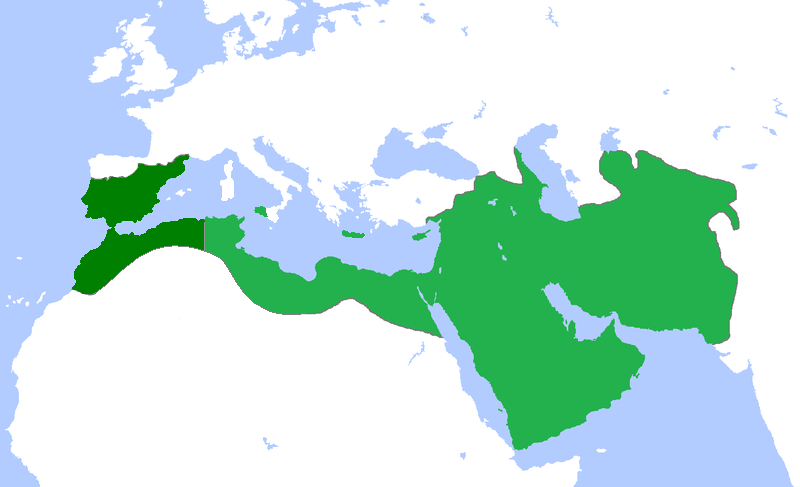






Origins, expansion and rivals
The Abbasid revolution toppled the Umayyad dynasty across most of the eastern Islamic lands, though the Umayyads survived in Al‑Andalus. The caliphs presided over a multiethnic empire stretching from the Arabian Peninsula into Iran and Central Asia. The Abbasids faced significant rivals: a Shia rival dynasty, the Fatimid caliphs, claimed the caliphate from North Africa beginning in 909 and later controlled Egypt and parts of the Levant and the Maghreb; the surviving Umayyads in Spain declared a separate caliphate in 929. The dynasty also contended with regional dynasties and external invaders, including Turkic and Mongol forces; in 1258 Baghdad was sacked by Hulagu Khan of the Mongol empire, an event often marked as the effective end of Abbasid political power in Iraq.
Government, society and culture
The Abbasid period is noted for administrative reform, the development of a more cosmopolitan court, and patronage of learning. Baghdad housed libraries, translation projects, and institutions where scholars, clerics and bureaucrats worked in Arabic and other languages. The caliphal administration drew on Persian bureaucratic models and used a network of provincial governors and military commanders. Social life in cities featured merchants, artisans, and scholars; the rise of urban institutions and commerce contributed to a flourishing of literature, philosophy, mathematics and medical science.
Religious authority and scholarship
Religious life under the Abbasids was dynamic and sometimes contested. The caliphs sought legitimacy through association with Islamic tradition while competing with rival claimants. Some caliphs actively patronized hadith collectors and jurists to shape orthodoxy; for example, the tenth Abbasid caliph, Al‑Mutawakkil, is commonly associated with policies that favored orthodox Sunni positions and supported religious scholarship. Meanwhile, Shia movements and dynasties such as the Fatimid enterprise under leaders like Ubayd Allah al‑Mahdi Billah challenged Abbasid spiritual authority. The result was a complex religious landscape in which competing legal schools and communities produced a rich body of commentary and law.
Crises, fragmentation and end
The political unity of the Abbasid Caliphate gradually eroded through internal revolts and the rise of powerful provincial dynasties. The Zanj Rebellion (869–883) and other uprisings demonstrated social tensions, while autonomous dynasties in North Africa, Persia and Central Asia asserted practical independence. Notable rival polities included the Fatimids in North Africa and Egypt and various Turkish and Iranian dynasties within former Abbasid territory. Despite losing temporal control, some members of the Abbasid house continued to claim spiritual caliphal status from bases elsewhere such as Egypt for a time after 1258.
Legacy and distinctions
The Abbasid era left enduring legacies: the fusion of Arab, Persian and other cultures; institutional innovations in government and finance; and a golden age of learning that transmitted Greek philosophy and developed original scholarship in science and the arts. Their story contrasts with other caliphal traditions—such as the Umayyad rule in Spain, the Maghrebi polities, and the Fatimid Shia state—which together illustrate the political and religious diversity of medieval Islam. Regions once under Abbasid influence included broad territories from the Maghreb through Tunisia and Libya to the Levant (Palestine) and eastwards into areas of historic Pakistan, while individual provinces such as Morocco and Algeria followed differing historical trajectories. For further reading on specific topics—political history, cultural achievements or legal developments—see specialized works and online resources linked by topic providers (caliphates, chronologies, era studies).
Questions and answers
Q: What was the third of the four greatest Islamic caliphates?
A: The third of the four greatest Islamic caliphates was the Abbasid Caliphate.
Q: Who founded the Abbasid Caliphate?
A: The Abbasid Caliphate was founded by a descendant of Muhammad's youngest uncle, Abbas ibn Abd al-Muttalib.
Q: When did it move its capital from Harran to Baghdad?
A: The Abbasid Caliphate moved its capital from Harran to Baghdad in AD 762.
Q: How long did it survive for?
A: The Abbasid Caliphate survived for two centuries, surviving the Zanj Rebellion (869-883).
Q: Who overthrew it in 1258?
A: In 1258, Hulagu Khan, the Mongol conqueror, overthrew and sacked Baghdad, ending Abbasid rule.
Q: Who claimed authority in religious matters after they were overthrown?
A: After being overthrown in 1258, the Abassids continued to claim authority in religious matters from their base in Egypt.
Q: What dynasty challenged Abassid claims to caliphate and when did it end?
A:The Shiˤa Ubayd Allah al-Mahdi Billah of the Fatimid dynasty challenged Abassid claims to caliphate and this dynasty finally ended in 1171.
Related articles
Author
AlegsaOnline.com Abbasid Caliphate Leandro Alegsa
URL: https://en.alegsaonline.com/art/304